
3 Minutes
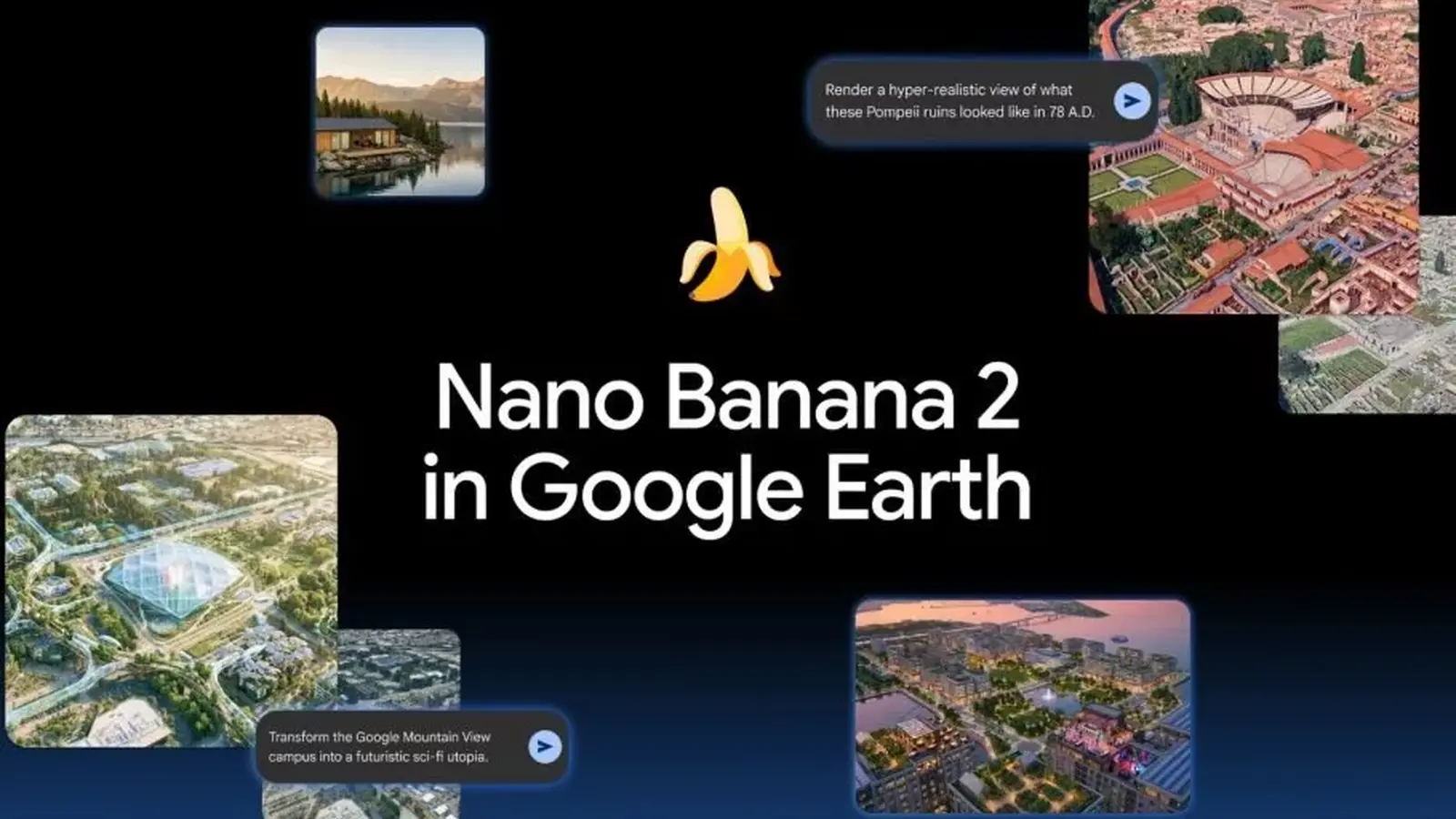
Imagine stepping into Pompeii not through a museum diorama but via an AI-rendered street scene—colorful stalls, chatter in the air, sunlight striking marble as if no eruption ever happened. That’s the kind of preview Google hopes to offer after folding the Nano Banana image model into Google Earth: a prompt-driven, location-aware generator that layers real map data over creative reconstructions.
Reported by The Verge, the tool aims to do more than produce pretty pictures. One of its marquee uses is what Google calls "Visualize the Past": feed the model geographic coordinates and a few descriptive cues, and it will propose how a ruin might have looked in its heyday. Ask for Pompeii in 78 AD, and Nano Banana will sketch a bustling Roman thoroughfare—an evocative, cinematic restoration built from cartography and AI imagination.

That cinematic flourish is also its weak spot. Short, sharp truth: there are no satellite photos of the Roman Empire. What Nano Banana offers are informed guesses stitched from modern maps, historical references and the model’s training. The results can be gorgeous. They can also be misleading. Researchers and historians warn the same thing repeatedly: these images are interpretive, not authoritative.
Outside the realm of ancient rebuilding, Google sees practical value for planners and architects. Developers can visualize empty lots, test urban fabric adjustments, or mock up early-stage concepts without firing up heavyweight CAD suites. It’s fast ideation. It’s not final engineering. Professional teams will still hand off to precision 3D renders and structural models when permits, budgets and safety are on the line.

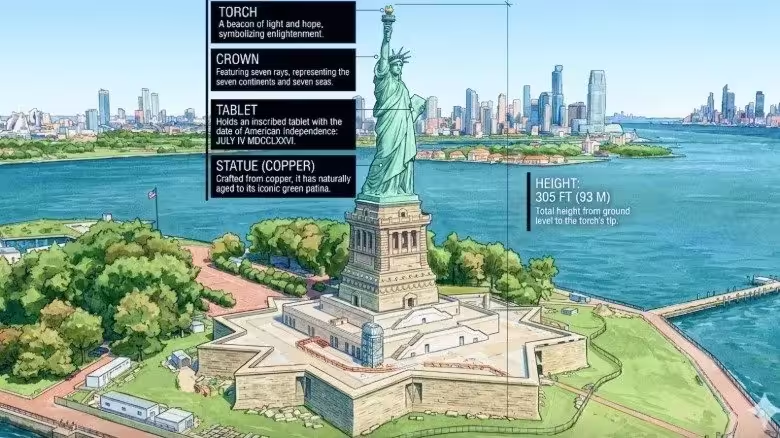
Perhaps the most immediately useful feature is custom infographic creation. Point Nano Banana at a global landmark and it can return a visual dossier—contextual illustrations, construction materials, heights and a short historical primer. The Statue of Liberty, for example, can come back as a compact graphic with layered annotations and measurements. Useful? Yes. Perfect? No. Textual and structural details generated by such models can carry hallucinations or factual slips.
Generated scenes are imaginative reconstructions, not archaeological evidence. To make misuse harder, Google will tag Nano Banana outputs with SynthID watermarks so viewers can distinguish AI-generated imagery from archival photos and verified documentation.
There’s a strange thrill to watching a map sprout a vanished marketplace or to seeing a vacant lot dressed in hypothetical architecture. There’s also a responsibility—curators, educators and casual users must treat these renderings as prototypes of possibility, not replacements for scholarship. In the end, Nano Banana is a creative accelerant: it spins ideas fast, invites curiosity, and nudges us to ask better questions about the past and the future.
.webp "Google Unveils SynthID Detector: A Powerful Tool to Identify AI-Generated Content")

Leave a Comment
Comments
No comments yet. Be the first.