
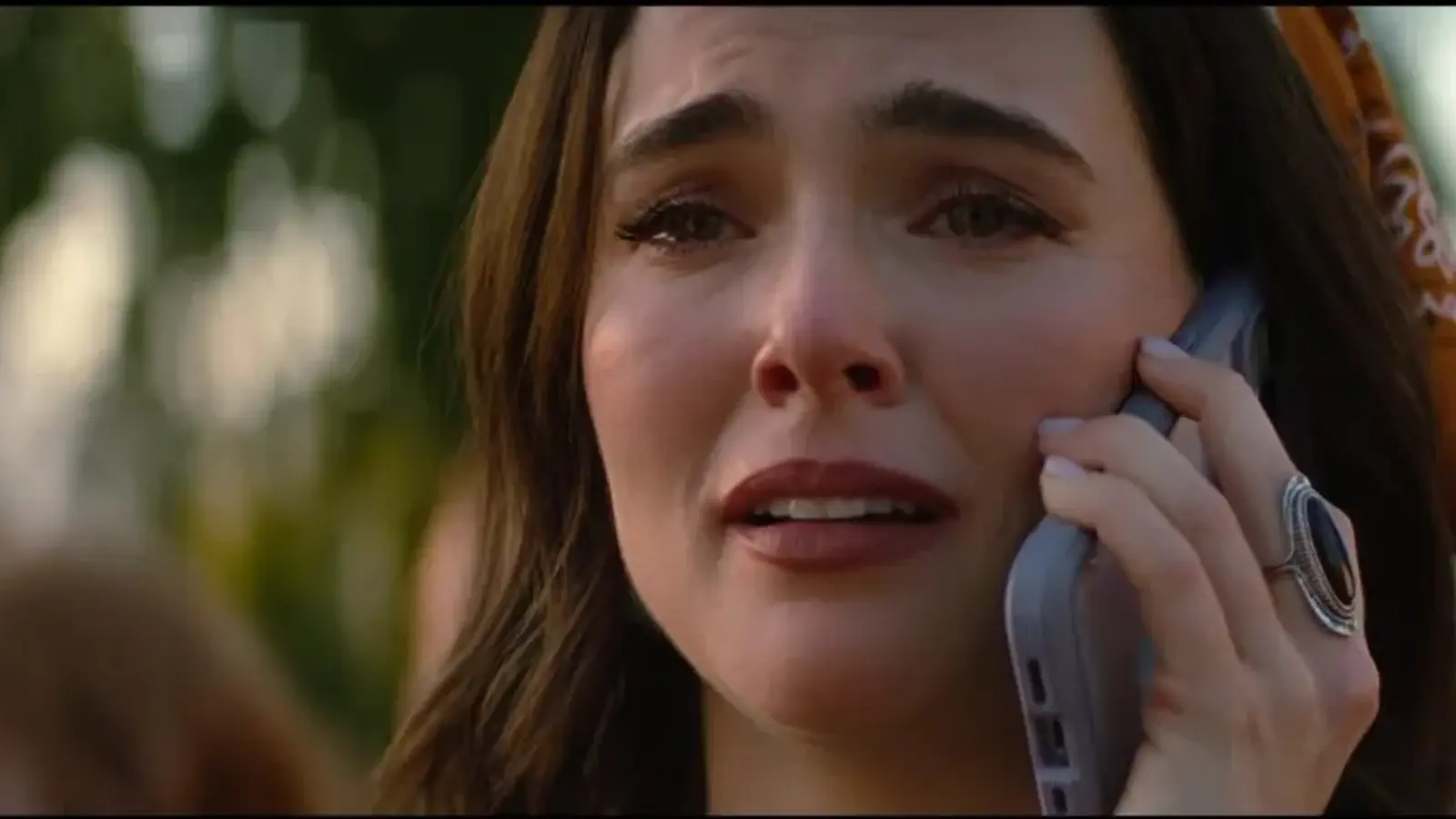
A childhood dance, a phone call, a promise kept in a voice message — the film opens with that fragile magic. Those first minutes, tender and precise, suggest a movie that understands how to show intimacy: two sisters, Jill and Isabelle, knit together by gestures, small rebellions and a song shared over the line. It’s cinematic in the way it trusts the image to carry feeling. It hints at something rare.
So where does the promise go? Right when the story grows up. Leah McKendrick, who wrote, directed and stars here, clearly has an ear for an idea. The screenplay is clever enough to turn voicemail into a structural device, to make a recorded confession feel like a living presence in Jill’s life. But a good idea needs a visual engine to drive it. That engine stalls midway.

As adults, Jill and Isabelle’s bond flattens into exposition. Scenes that once unfolded through movement and look become lines of dialogue. Phone calls replace the choreography of feeling. The result: a relationship we once watched is now something we’re told about. Can voice messages alone carry a film? Not when the camera stops insisting on showing what the heart does.
Character work suffers in the same shift. Jill’s life becomes a string of kitchen scenes and fleeting romances, and though the kitchen moments are often the film’s brightest sparks, they don’t add up to a fully sketched person. Romantic encounters read as teenage-album tropes — meet at a restaurant, sour reaction, move on — which makes Jill feel more like a type than a three-dimensional lead. The choices are logical for plot momentum, but they rarely reveal why Jill feels the way she does.

Enter Wes, a potential fulcrum. On paper he’s the narrative lever: someone who listens to Jill’s voicemails, someone who could complicate everything. In practice, he remains disappointingly schematic. The screenplay teases a secret — that Wes has heard the messages — and for a moment the film tastes like suspense. The shock could have landed if the audience had shared Jill’s discovery in real time. Instead, the reveal is handled in a way that undercuts tension, and poor character definition makes Wes’s subsequent attempts to reconnect feel hollow. Sympathy is earned through nuance; here, it’s mostly declared.

Yet the movie isn’t without merit. The kitchen sequences give the film its pulse. When Jill and her colleagues face the pressure of a cooking competition, the film finally lets form meet function: action, rhythm, sensory detail. The kumquat motif — quirky and unexpected — pays off in that environment, offering a small but satisfying payoff that the rest of the film often refuses to deliver. Those moments prove McKendrick can stage scenes with energy when she trusts visual stakes over verbal explanation.

The core problem is tonal dissonance. Voicemails for Isabelle wants to be both a coming-of-age romantic dramedy and a mature meditation on grief and sibling love, but it never finds the glue between those aims. Scene to scene the tone tilts: a joke lands, then a serious beat arrives too quickly to be felt. Sometimes comedy and drama share a frame; that’s not inherently wrong. The trouble comes when neither side is given enough time to solidify, so the emotional currency of both is diluted. A dinner-table quip about Jill’s math skills lands before the scene has settled into its stakes, and the film slides into sincerity without earning it.
Directorial restraint — or the lack of it — matters most here. McKendrick’s script has the germ of something original, but directing requires translating that germ into lived moments, and the translation stumbles. The film contains moments of astute observation and sharp writing, but pacing choices, an overreliance on explanatory dialogue, and stock romantic beats fragment the whole.

Still, it’s not all wasted. The opening childhood sequences promise a filmmaker who can capture small domestic rituals with clarity. The kitchen camaraderie and the competition scene remind us that McKendrick knows how to stage physical stakes. If she leans into showing rather than telling, future projects could feel much more confident. For now, the movie reads like a concept that needed a tougher editorial eye during direction.
Voicemails for Isabelle is a study in missed opportunities: a screenplay that earns attention, hamstrung by an execution that prefers exposition over embodiment. It’s a film that often asks you to feel, but rarely gives you the sensory map to get there. See it for the moments that work — the opening, the kitchen — and for the idea that still feels worth refining. Judge it for what it almost becomes.

Score: 4/10

Leave a Comment
Comments (2)
Pretty balanced take but I wanted more show not tell, felt like it zig zagged.
wow, that opening sounds gorgeous, but calling it 4/10? feels harsh. the kitchen scenes tho, kumquat got me lol