

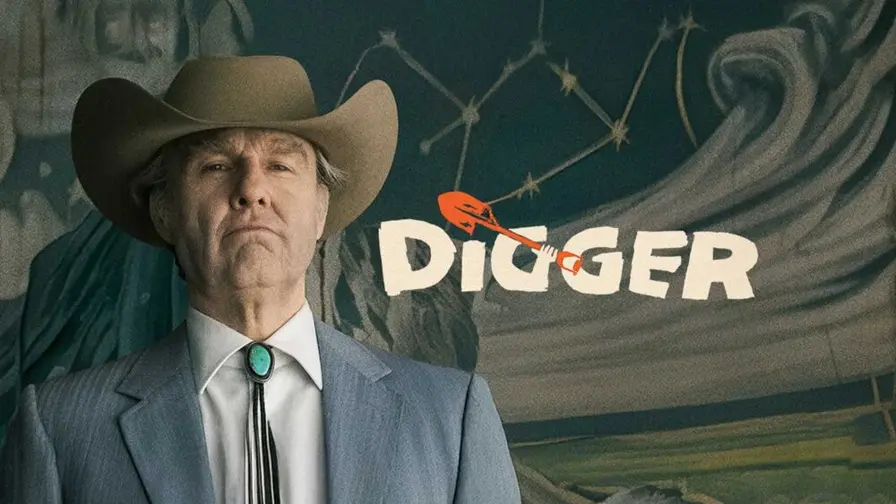
It looked like a bold move: a gritty, R-rated black comedy from Alejandro G. Iñárritu with Tom Cruise playing a ruthless oil magnate. Instead, Digger is rapidly turning into one of the year's most talked-about box-office disappointments.
After opening to just $8 million domestically and $20 million worldwide, the film stumbled again in its second weekend with a 60% drop. That slump left Digger with about $14.4 million in North America and $35.3 million globally — far short of where a tentpole featuring a megastar and an auteur should be.
Industry insiders now warn the picture could saddle Warner Bros. with a roughly $245 million loss. Early projections had studios bracing for a $150–$200 million hit; the latest math paints a harsher portrait. Forecasts that once envisioned Digger finishing near $50 million worldwide now collide with production and marketing bills that stacked up far higher.
Why the gap between hope and reality? Costs spiraled during production. The movie began with a reported $125 million budget but climbed into the $160–$180 million range as filming stretched on. Add an estimated $100 million for global marketing and promotion — and potential awards campaigning on top of that — and the climb to break-even becomes steep. Some analysts say Digger needed roughly $350 million at the global box office to clear costs; a Warner Bros. spokesperson counters that the real break-even sits closer to $300 million. Either way, the numbers are daunting.

Critical and audience responses were colder than the studio expected. High-profile endorsements from names like Anne Hathaway, Jane Fonda, Guillermo del Toro and Mandy Patinkin were not enough to reverse the slide. Nor did Warner's social campaigns, which asked viewers to judge the film for themselves, substantially move the needle.
There are contractual wrinkles, too. Cruise's deal reportedly gives him a share of revenues early, which limits the studio's ability to recoup on a weak theatrical run. That kind of profit participation can turn an underperforming release into a heavier short-term hit for the distributor.
Digger also arrives at a bruising moment for Warner Bros. This was the studio's last standalone release before its merger with Paramount, and it follows other commercial setbacks that have already dented the company's year. Studios will be watching closely to see whether late-year releases, including high-profile tentpoles, can restore momentum at the box office.
The film business is full of surprises. A daring creative gamble can become a classic down the road, or it can vanish quickly from multiplexes and streaming catalogs — depending on word of mouth, awards traction and the arithmetic of distribution deals. For now, Digger's story feels less like a triumphant auteur statement and more like a cautionary tale about scale, timing and risk in modern Hollywood.

Leave a Comment
Comments
No comments yet. Be the first.