

Kalshi severs advisory ties with Donald Trump Jr.
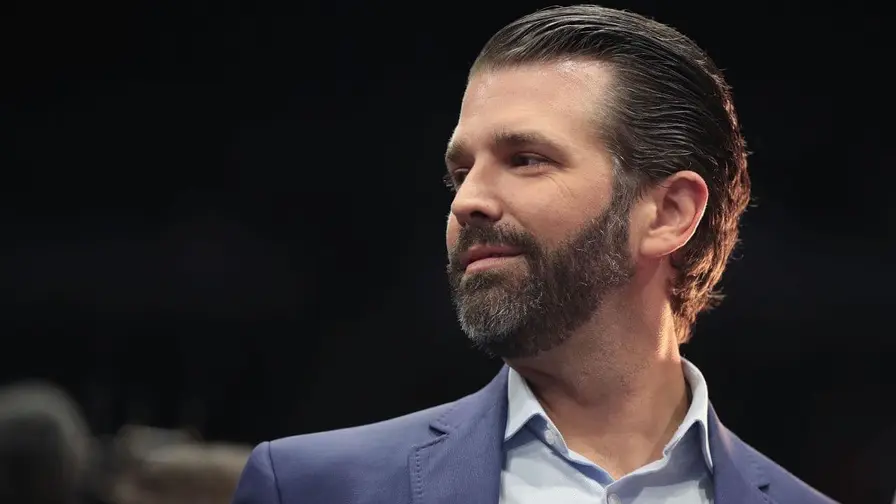
Kalshi announced it has mutually agreed to terminate Donald Trump Jr.'s role as a strategic adviser after his firm, 1789 Capital, substantially increased its stake in competing prediction market Polymarket. The split follows talks that began in August and came to public attention after media reports in November.
Timeline: appointments, investments and the split
The sequence began earlier in 2025 when Kalshi named Trump Jr. as a strategic adviser, a move aimed at broadening market reach and user acquisition. In August, following 1789 Capital's decision to lead a major funding round for Polymarket, Trump Jr. also joined Polymarket's advisory board. Kalshi says discussions to end his advisory agreement started at that point and concluded with a mutual agreement to part ways.
Funding details behind the controversy
1789 Capital committed roughly $300 million toward a Polymarket financing round that sought to raise about $1 billion. That round reportedly pegged Polymarket's post-money valuation near $21 billion, up from an estimated $15 billion before the transaction was announced. Combined with earlier investments, 1789’s total commitments to the rival platform approached half a billion dollars, according to available summaries from the time.

What Kalshi said publicly
A Kalshi spokesperson told reporters the decision to end the advisory relationship was driven by the investment relationship between 1789 Capital and Polymarket. The company thanked Trump Jr. for helping introduce customers to the exchange and indicated the separation was a mutual decision once his firm deepened its involvement with the competitor.
Equity and compensation questions
When Trump Jr. joined Kalshi earlier in 2025, press reports said he received an equity stake valued at roughly $300,000 at the time. Kalshi’s announcement did not disclose the fate of that equity after the separation, and neither Polymarket nor Trump Jr. immediately provided comments to press requests seeking clarification.
Regulatory backdrop: why prediction markets are under scrutiny
Both Kalshi and Polymarket operate in a space where the regulatory landscape is actively contested. Prediction markets trade event contracts — instruments that pay out based on outcomes tied to sports, politics, public events and cultural occurrences. Operators argue that such contracts listed on federally regulated exchanges fall under Commodity Futures Trading Commission (CFTC) oversight, while some state regulators view certain products as unlicensed gambling.
Key court ruling in Minnesota
In late July, a federal court in Minnesota issued a preliminary injunction halting enforcement of the state’s new prediction market statute against exchanges registered with the CFTC. The order granted temporary relief to the federal government, the CFTC and the exchanges involved, concluding that plaintiffs were likely to succeed at least in part on an argument that federal law displaces the state statute. The ruling preserved status quo while lawsuits proceed to determine final merits.
Federal regulatory actions and compliance expectations
Beyond state challenges, federal regulators have signaled heightened attention to product design and manipulation risks. In September, the CFTC issued guidance focused on so-called "mention" contracts — products settled on whether named individuals say certain words, attend events, or interact with others. The agency cautioned that these contracts often carry elevated manipulation risks because payouts depend on individual behavior that can be hard to verify.
Design and reporting requirements
The CFTC reminded designated contract markets that Core Principle 3 of the Commodity Exchange Act requires exchanges to demonstrate that listed products are not readily susceptible to manipulation and to provide contract-specific analyses. The advisory outlined limited circumstances in which mention-style markets could comply with existing law and emphasized strict design and submission requirements for exchanges that offer them.
Enforcement example: the Gabriel Perez settlement
The agency’s concerns about manipulation were underscored by a recent enforcement settlement. The CFTC charged a former White House teleprompter operator, Gabriel Perez, alleging he used nonpublic access to presidential speeches to trade mention contracts. Perez agreed to return approximately $107,539 in trading profits, pay a $65,000 civil penalty and accept a three-year trading ban. Regulators credited assistance from Kalshi’s exchange in the investigation and noted the settlement reflected a discounted penalty due to cooperation.
Implications for the industry and investors
The high-profile advisory split highlights the competitive and regulatory pressures shaping the prediction-market sector. Large venture commitments and valuations underscore investor appetite for innovation at the intersection of trading, politics and culture, but they also amplify legal and compliance risk. Operators, investors and users should anticipate continued scrutiny from the CFTC and state authorities, alongside ongoing litigation that could reshape how event contracts are offered and overseen.
What to watch next
Key developments to monitor include the outcome of the Minnesota litigation, any further CFTC guidance or enforcement actions regarding contract design and manipulation risk, and disclosure from the parties involved about equity or compensation tied to advisory roles. For market participants and crypto-focused investors, these decisions will influence product design, market access and the regulatory roadmap for prediction markets globally.
As the sector evolves, transparency on governance, product safeguards and regulatory compliance will be essential for building trust with traders and institutional backers in a space where political and financial outcomes intersect.

Leave a Comment
Comments (2)
Somebody's playing both sides, seems messy and risky, feels overhyped. Who audits these deals, seriously? kinda sketchy
Wait so he advised Kalshi then backed Polymarket? conflict of interest much. If that's real, what happens to his equity?? Shady move