
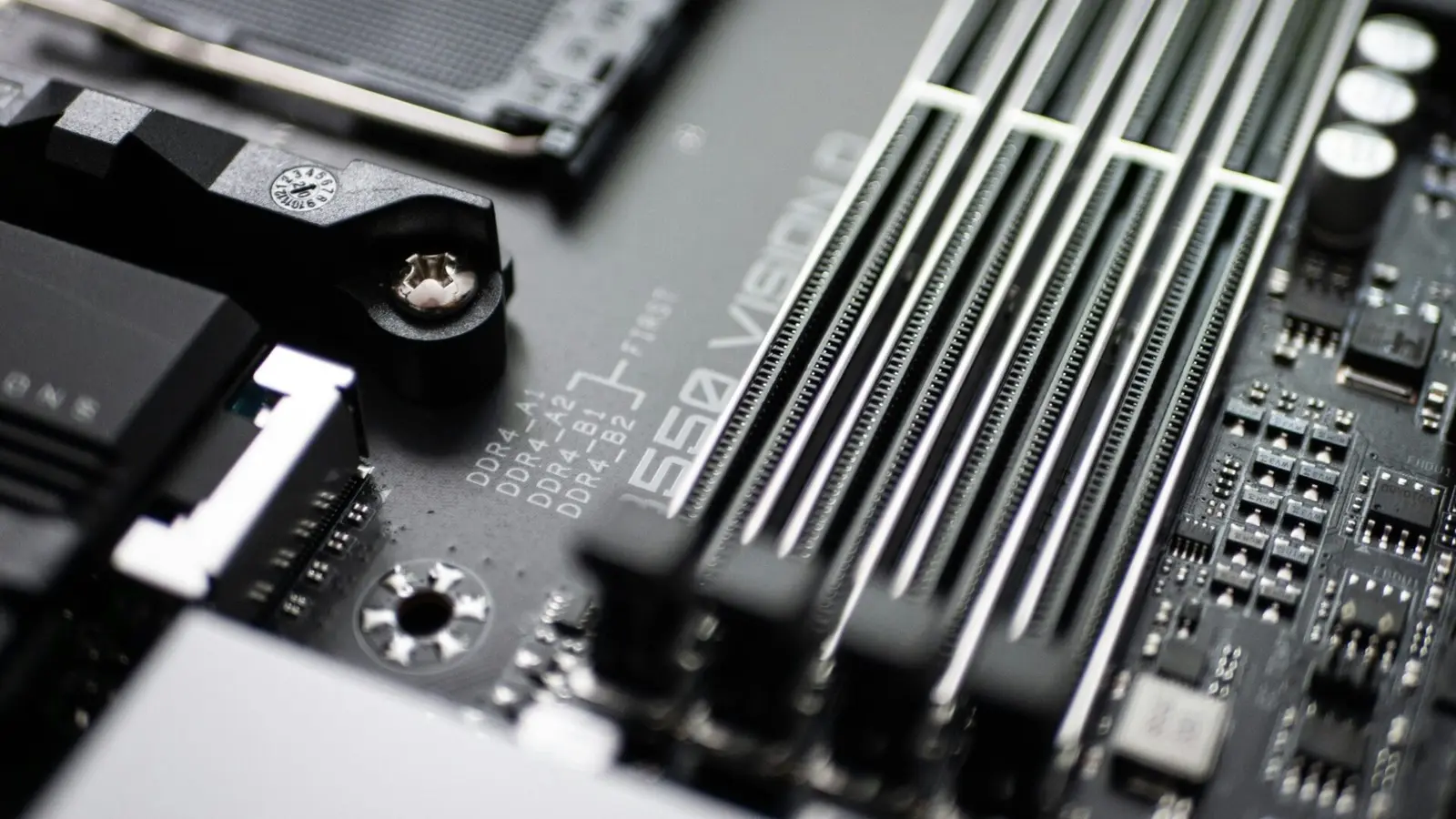
DDR4 spot prices recently recorded week-over-week declines of around 1.6 percent, according to market tracker TrendForce.
That specific drop marks the clearest sign so far that the memory market, which endured months of relentless price climbs through a brutal 2026, is beginning to show relief. TrendForce says spot prices for older standards such as DDR4 and DDR3 are moving lower as consumer-market demand softens, and analysts are dialing back earlier expectations for how sharply contract prices will rise next year.
TrendForce attributes the change to growing buyer caution driven by uncertainty over US data center policies and broader geopolitical factors, and to trimmed server DRAM orders from some Chinese cloud service providers.
Consumer demand and pricing
On the consumer side, extremely high prices pushed many buyers to the sidelines, and retailers and distributors have reduced order sizes while focusing on clearing existing inventory. TrendForce warns that consumer DRAM demand in 2027 could therefore be weaker than previous projections, a dynamic that is already weighing on spot markets for legacy modules.
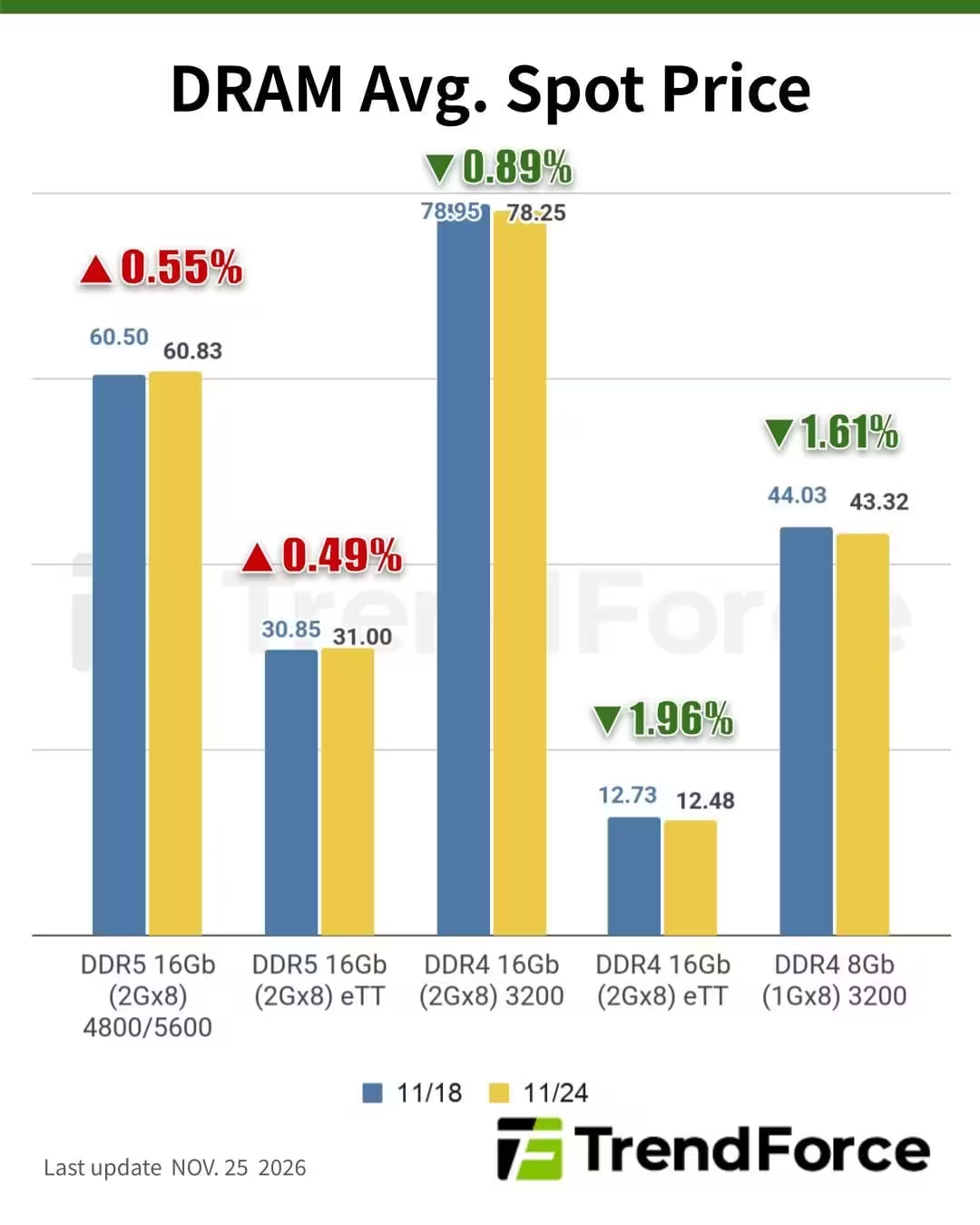
The current weakness is concentrated in older standards. DDR4 and DDR3 spot prices have shown the most consistent declines as mainstream consumer demand cools, while mainstream DDR5 follows a different trajectory: TrendForce still expects contract prices for DDR5 to rise in 2027, but now forecasts a more moderate increase than in its prior outlook.
Supply shifts and production outlook
Supply-side dynamics are also changing. The three largest memory makers—Samsung, SK hynix, and Micron—have redirected substantial capacity toward high-bandwidth memory for AI accelerators, which has constrained conventional DRAM output and complicated short-term supply forecasts. At the same time, TrendForce expects consumer DRAM production to grow significantly year over year in 2027; volumes should nonetheless remain below 2024 levels, and the combination of higher production, softer demand, and inventory-clearing efforts could bring the market closer to balance.
Analysts describe the current environment as a partial reversal rather than a full market turnaround: spot declines for older modules are the most tangible evidence of easing pressure, while contract and next-generation pricing paths remain subject to policy, corporate ordering behavior, and continued shifts in manufacturing priorities.

Leave a Comment
Comments
No comments yet. Be the first.