
5 Minutes
Antgamer pushes refresh-rate boundaries with 1000Hz zoned backlight prototype
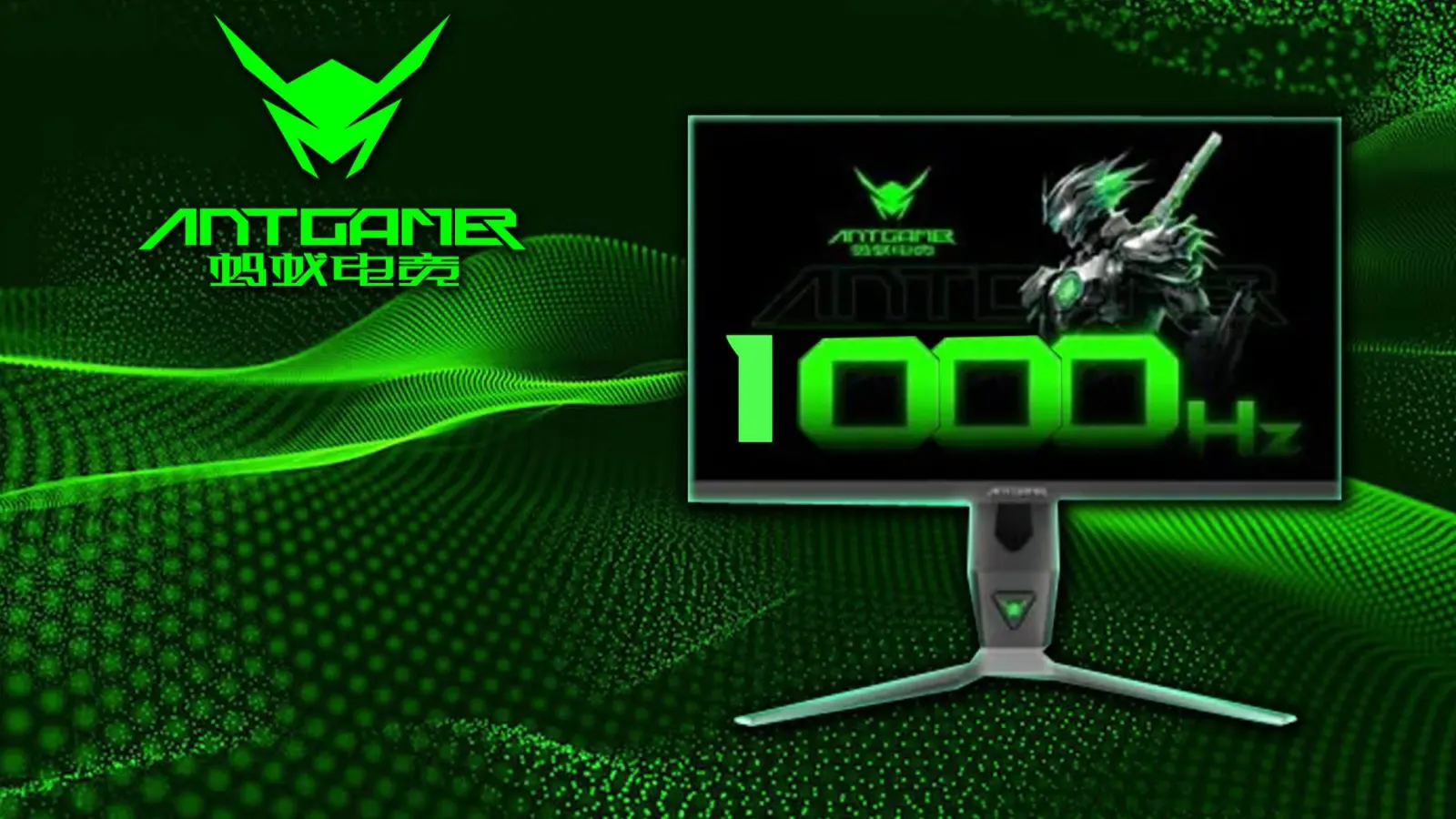
HKC’s gaming-focused sub-brand Antgamer (also known as Ant ESports) has revealed a prototype display that aims to push refresh-rate technology further than ever: a 1000Hz backlit LCD that combines a zoned backlight architecture with black frame insertion to combat motion blur and sample-and-hold artifacts. The company teased the prototype during a recent event, positioning the display as an experimental step toward cutting-edge competitive gaming hardware scheduled for launch in 2026.
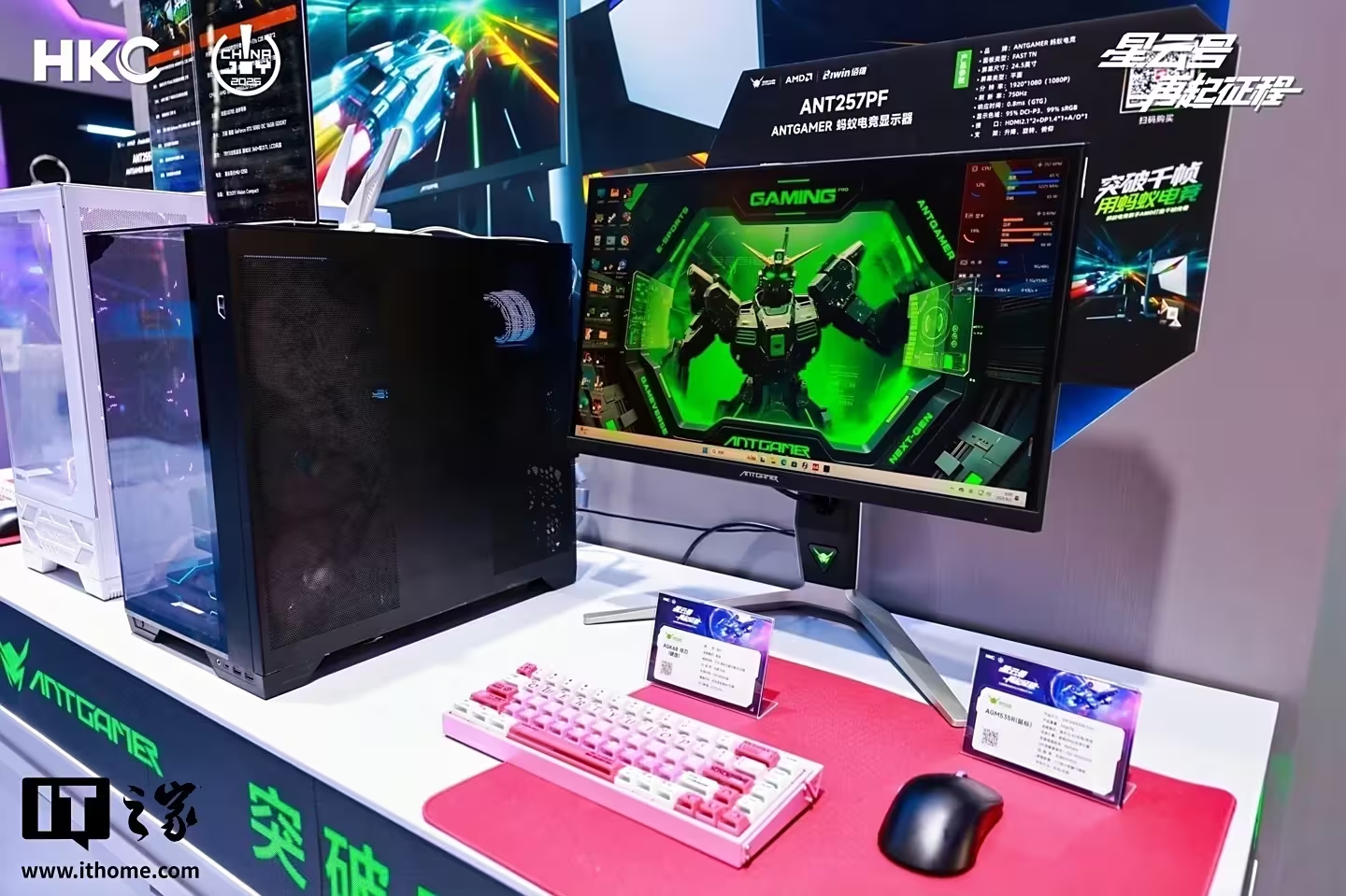
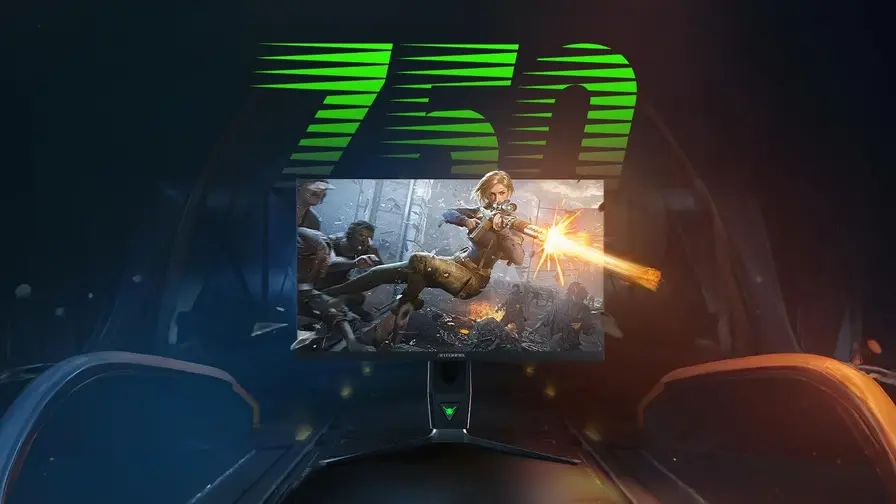
Antgamer made waves earlier with the ANT257PF, a 750Hz TN-panel gaming monitor designed for ultra-fast responsiveness. While refresh rates in the 240–500Hz range already produce extremely fluid visuals for most gamers, Antgamer’s research emphasizes that backlight management and motion-reduction techniques are critical to preserving clarity at extreme refresh rates.
How the 1000Hz zoned backlight works
Conventional LCD monitors use a single, uniform backlight that illuminates the entire panel. Antgamer’s approach shards the backlight into multiple independently controlled zones. Each zone can be strobed or dimmed in tight synchronization with the panel’s refresh cycle, allowing the monitor to time illumination precisely with new frame updates.
Black Frame Insertion + Zoned Strobing
The prototype pairs zoned strobing with Black Frame Insertion (BFI), a technique that inserts brief black intervals between actual frames. When done correctly, BFI and zone-based strobing reduce the perceived motion blur by limiting the time an image is held on the retina (sample-and-hold effect). Antgamer says the synchronized operation — where each backlight zone strobes in lockstep with the 1000Hz refresh — can significantly improve perceived clarity at very high refresh rates.
Key product features
- Target refresh rate: 1000Hz (prototype).
- Zoned backlight system enabling independent control of multiple backlight segments.
- Black Frame Insertion combined with zone synchronization to reduce motion blur.
- Designed with competitive, fast-paced gaming in mind where milliseconds matter.
- Research builds on Antgamer’s existing 750Hz offering (ANT257PF).
Comparisons and technical context
High refresh rate monitors have progressed from 120Hz to 240Hz and onto experimental 360Hz–480Hz panels, and manufacturers have recently demonstrated 500Hz–750Hz displays. Antgamer’s 750Hz ANT257PF used a fast TN panel to minimize pixel response time. But sheer refresh rate alone is not the only factor. Sample-and-hold blur from a continuously illuminated backlight can mask the visual benefits of higher refresh rates.
By combining zoned backlighting with BFI, Antgamer attempts to address both temporal resolution (how often frames update) and perceptual clarity (how long each frame lingers on the eye). This hybrid approach aims to outpace simple refresh-rate increases by tackling the human visual system’s limitations.
How it stacks up against OLED and current LCDs
OLED panels deliver near-instant pixel response and per-pixel dimming, which reduces motion artifacts for many scenarios. However, OLEDs face trade-offs in brightness, burn-in risk, and production cost. Antgamer’s zoned LCD strategy tries to bridge the gap by delivering high brightness, controlled strobing, and improved contrast without the same risk profile as OLED.
Advantages and practical benefits
- Sharper perceived motion at extreme refresh rates due to reduced sample-and-hold blur.
- Improved contrast and localized dimming from zoned backlighting compared with full-array single-zone backlights.
- Potentially better competitive performance for pro players who can leverage ultra-low latency and clearer target tracking.
- A possibility to tune strobe intensity per zone to balance brightness, motion clarity, and eye comfort.
Limitations, challenges and realistic expectations
Reaching a true 1000Hz experience is technically demanding. Driving a panel at 1000 updates per second requires extreme pixel response times and enormous GPU performance to deliver matching frame rates. Even with perfect strobing and zone synchronization, the perceptual gains beyond 500–750Hz may be marginal for most users.
There are additional trade-offs: aggressive BFI can reduce overall brightness and introduce flicker perceived by some users. Multi-zone strobing increases controller and firmware complexity, and manufacturing costs will likely push such products into a niche, premium segment rather than mainstream adoption.
Use cases and target audiences
The Antgamer 1000Hz prototype is tailored primarily to esports pros, lab researchers, and developers of ultra-low-latency simulation systems. Competitive FPS players and esports teams that depend on the slightest visual edge are the most likely early adopters. Broader audiences — casual gamers and content creators — will probably prefer high-quality 240–360Hz or OLED panels due to cost, image quality, and practical benefits.
Market relevance and launch outlook
Antgamer plans to bring the 1000Hz backlit display to market in 2026 if development and validation prove successful. The brand’s previous 750Hz ANT257PF already commands a high price — launched around $1,110 — suggesting that a 1000Hz zoned-strobe monitor would be positioned even higher in price and targeted at a niche professional segment.
While a mainstream breakthrough is unlikely in the immediate term, Antgamer’s research pushes the industry forward by highlighting how backlight architecture and strobing techniques can complement refresh-rate increases. These innovations could inform future gaming monitor designs across manufacturers.
Final thoughts
Antgamer’s 1000Hz zoned backlight prototype is an ambitious attempt to marry extreme refresh rates with advanced backlight management and black frame insertion. For elite competitive players and technical enthusiasts, the potential for crisper motion and lower visual latency is compelling. For the broader market, however, the engineering challenges, cost, and diminishing returns at such high refresh rates mean the product will likely remain a cutting-edge specialty item rather than an immediate mainstream upgrade.








Leave a Comment
Comments
No comments yet. Be the first.