

3 Minutes
Walk into a secure room in Silicon Valley and you would have felt the tension: not a product pitch, not a quarterly forecast, but a national security briefing aimed squarely at the tech industry's supply lines. In July 2023 the CIA told senior executives that China might mount action against Taiwan by 2027 — and the message was meant to spur a single, urgent response: move more chip manufacturing to the United States.
The meeting was convened after public resistance from chip-dependent companies. Commerce Secretary Gina Raimondo pushed to gather top leadership from firms whose products rely on Taiwan Semiconductor Manufacturing Company (TSMC). Present that day were Apple’s Tim Cook, NVIDIA’s Jensen Huang, AMD’s Lisa Su and Qualcomm’s Cristiano Amon, alongside briefers including CIA Director William Burns and Director of National Intelligence Avril Haines.
Reports say the intelligence laid out updated assessments of China’s military planning. The stakes were described in blunt terms. American dependence on Taiwan for advanced semiconductors is a strategic weakness, one the government wants industry to help fix. Tim Cook’s reaction — that he sleeps “with one eye open” — captured how real the threat felt to executives whose devices rely on chips made almost exclusively in Taiwan.
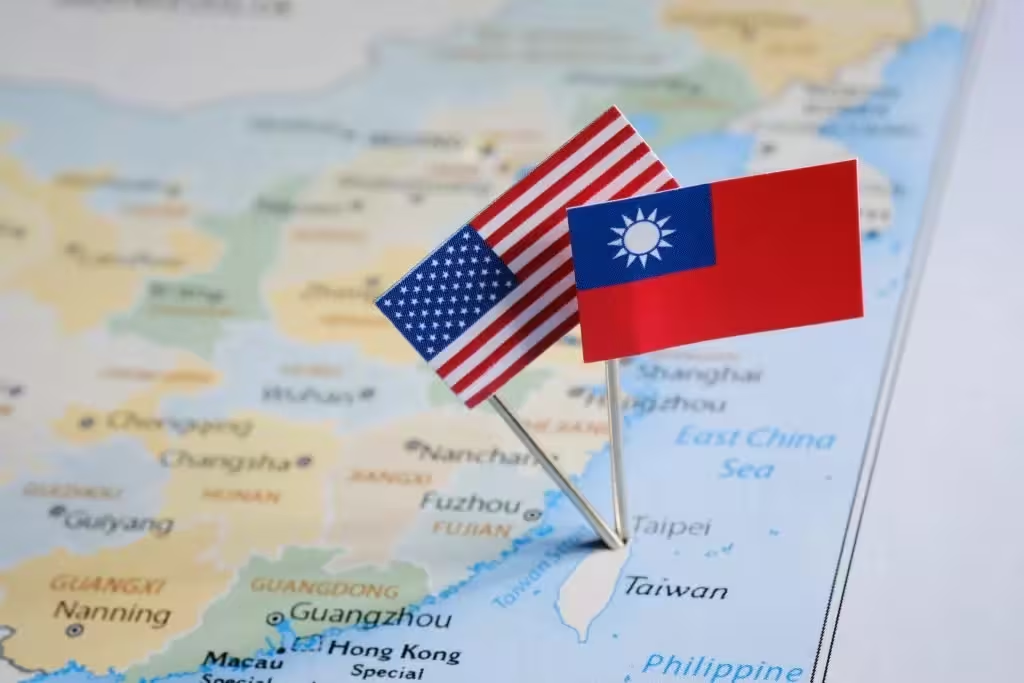
This was not the first quiet alarm. In 2021 a similar discussion took place at the White House after U.S. defense officials warned lawmakers that Chinese leader Xi Jinping had set a timeline to ready military options concerning Taiwan by 2027. That date has since become a reference point for analysts and policymakers.
Policymakers translated concern into incentives. The Biden administration pushed legislation and subsidies — roughly $50 billion in federal support — to seed semiconductor fabs on U.S. soil, culminating in the CHIPS and Science Act of 2022. The goal: shrink the supply-chain bottleneck and encourage onshore production of advanced chips.
Yet the reality on the ground hasn’t shifted overnight. TSMC still makes roughly 90% of the world’s most advanced logic chips, and Apple’s custom processors for iPhone, iPad and Mac are manufactured in TSMC fabs in Taiwan. Silicon Valley remains tightly coupled to that island’s manufacturing ecosystem despite the political push to diversify.
So what now? Governments can offer subsidies and regulatory carrots. Companies can invest billions in new fabs. But building a resilient semiconductor supply chain takes time, engineering muscle and geopolitical will. The 2027 marker hangs like a countdown in analysts’ notes. Will industry match the urgency conveyed behind those closed doors, or will the next shock reveal how brittle modern electronics truly are?

Leave a Comment
Comments
No comments yet. Be the first.