
3 Minutes
If you've ever wrestled with a dim smartwatch display under a midday sun, Amazfit's new Balance 3 might make you stop squinting. At $369.99, the Balance 3 arrives as an upper mid-range timepiece that clearly leans into clarity and endurance: a 1.5-inch AMOLED that claims a peak brightness of 3,000 nits, a beefy 658mAh battery, and a software approach that treats recovery as seriously as reps.
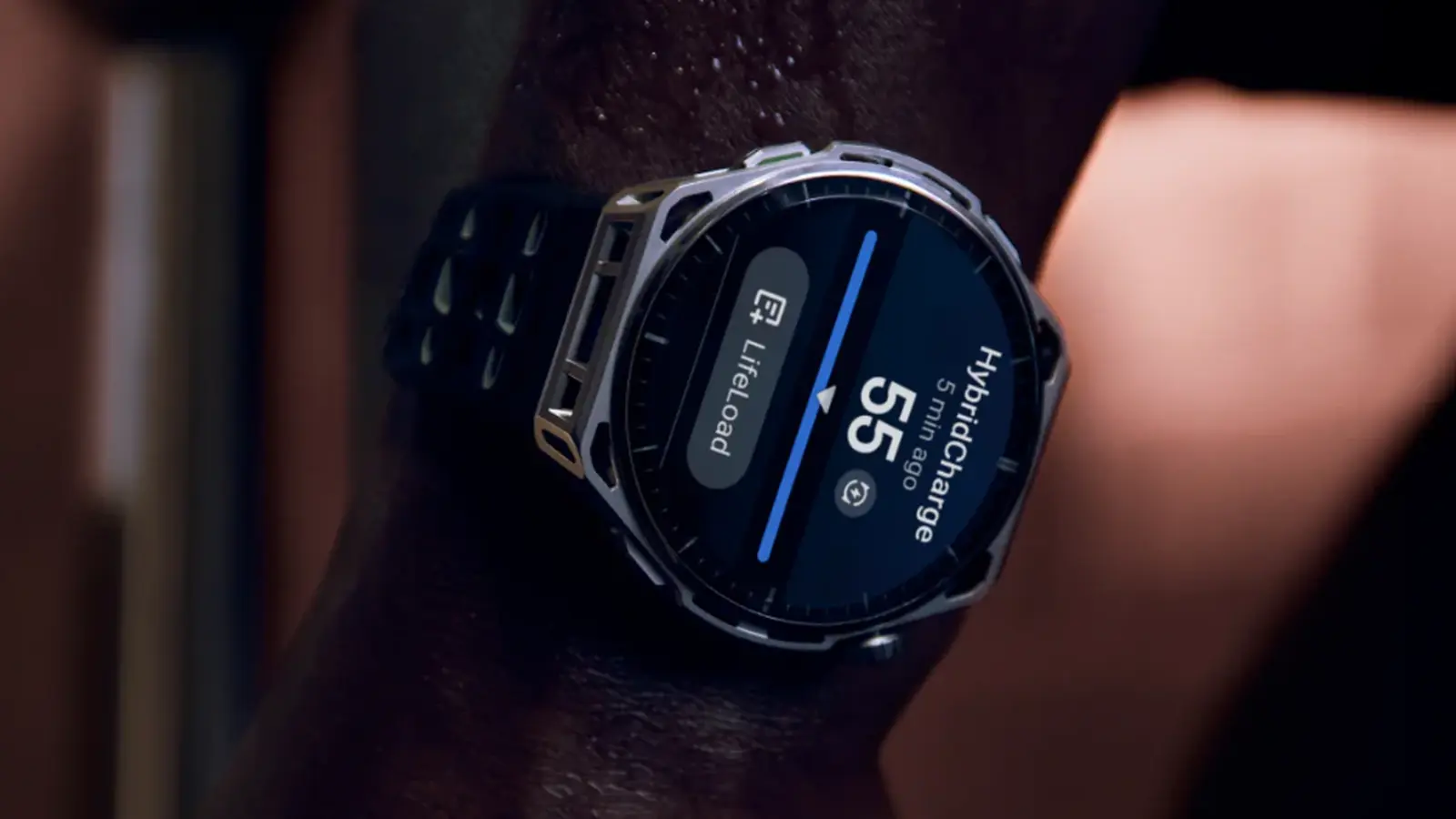
The watch is big and unapologetic about it. A 51.4mm case and a 14.6mm profile give the Balance 3 a presence on the wrist that feels more tool than trinket. The first models ship in stainless steel, roughly 62 grams on the scale, with a lighter titanium option (about 55 grams) slated to follow. Scratch-resistant sapphire covers the display, which is handy when your commute involves keys, straps, or the occasional scrape.

Specs and standout features
- Display: 1.5-inch AMOLED, up to 3,000 nits, sapphire crystal
- Case: 51.4mm × 14.6mm; stainless steel (62g) now, titanium (55g) later
- Water resistance: 10ATM
- Battery: 658mAh — up to 21 days typical, ~7 days with always-on display
- Sensors: 24/7 heart rate, SpO2, skin temperature, stress monitoring
- Sports & navigation: 180+ sports modes, dual-band GPS, offline maps, turn-by-turn navigation
- Extras: Bluetooth calls via built-in speaker/microphone, NFC, red/white flashlight
What sets the software apart is Amazfit's HybridCharge Energy Intelligence. It's not just logging workouts; it's attempting to quantify how training, sleep, and stress add up into real-world capacity. Think of it as a coach that nudges you to back off when your body signals fatigue, or to push when you've recovered — a finer-grained conversation about rest and intensity than simple step counts or heart-rate zones.

For outdoor athletes and explorers, the Balance 3 leans on dual-band GPS and supports offline maps with automatic rerouting — useful if you wander off a planned route or lose mobile reception. The watch also includes specialized training tools, like pace simulations and HYROX-focused plans, which will appeal to niche competitors who want dedicated features rather than generic presets.

On the health side, it tracks the usual suite — continuous heart rate, blood oxygen, skin temperature, and stress — and can flag irregular heart rates or low SpO2. For everyday convenience, the Balance 3 adds Bluetooth calling, NFC payments, and a two-tone flashlight for nighttime visibility. Practical, not flashy.
Battery life is one of the Balance 3's headline claims. Amazfit estimates up to 21 days under typical use, a number that softens to roughly a week if you keep the always-on display active. Real-world results will vary, but the combination of a large cell and power-focused software suggests this watch is built for people who dislike daily charging rituals.

Pre-orders are open in the U.S. with shipments expected in mid-June. At this price point, the Balance 3 aims squarely at users who want advanced tracking and long endurance without stepping into the premium-price territory.
Meanwhile, the competition keeps pace. Asus recently launched the VivoWatch 6 Plus with a 1.43-inch AMOLED and deeper health monitoring, while Rogbid's GeoX2 offers military-style durability, dual-band GPS, and roughly 15 days of battery life. Each of these devices brings a different balance of toughness, health focus, and battery longevity — which means buyers now have to decide what matters most: screen brightness, sensor depth, or rugged endurance.
Whether the Balance 3 becomes a go-to for outdoor athletes or a daily driver for data-minded users will depend on how well its sensors and HybridCharge coaching hold up outside lab conditions. Expect early reviews to focus on those real-world details. And if you care about seeing your stats in direct sunlight, this one just turned the lights up.

Leave a Comment
Comments (2)
Is the HybridCharge actually accurate or just guesses? 21 days sounds great but AOD drops it to ~7 — curious how offline maps and dual GPS affect real battery life on long hikes
Whoa 3,000 nits?? finally a watch you can read in sun! Big, heavy tho, but that battery life sounds unreal. Hope the sensors and HybridCharge are legit, not just hype...