
3 Minutes
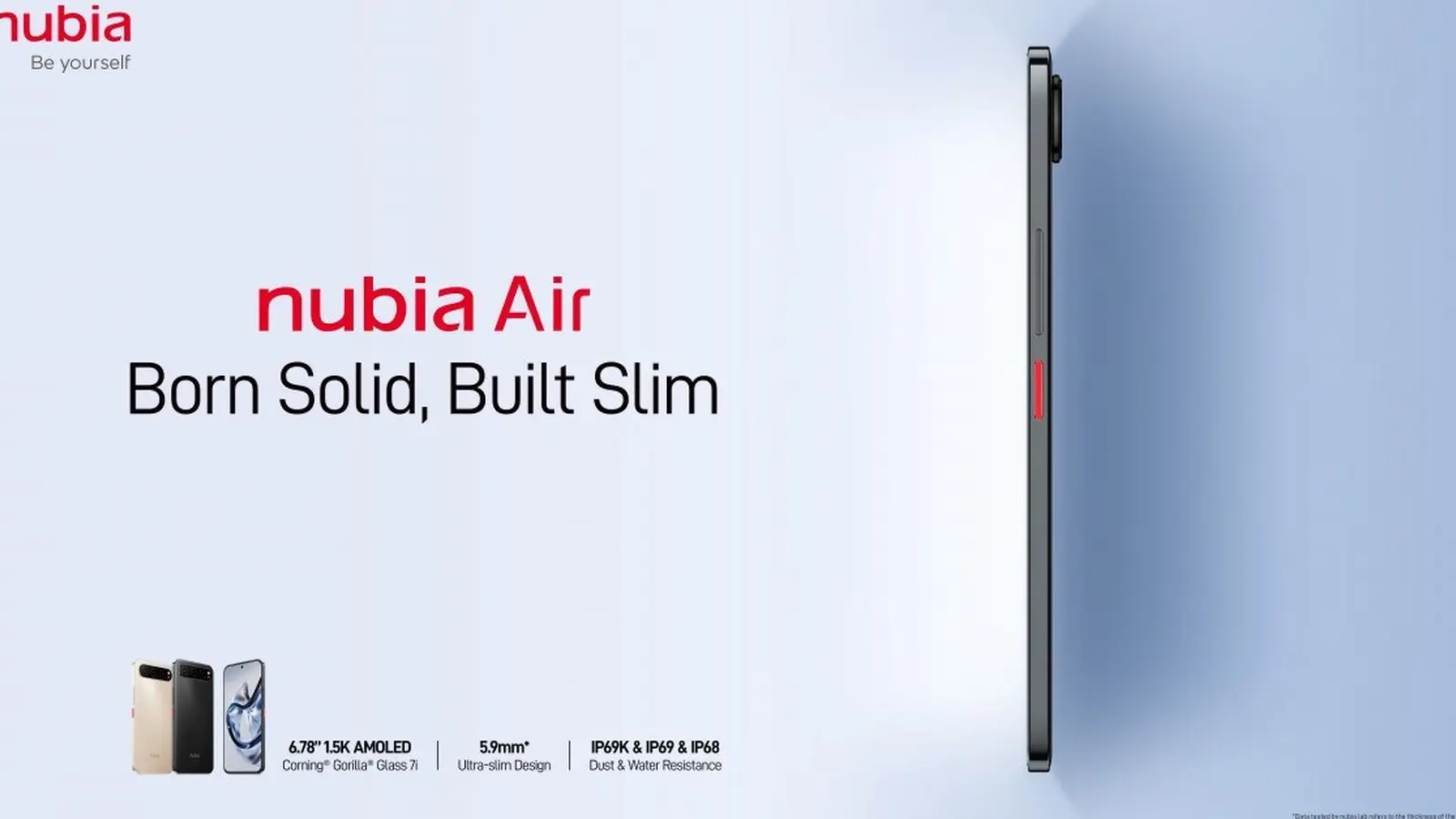
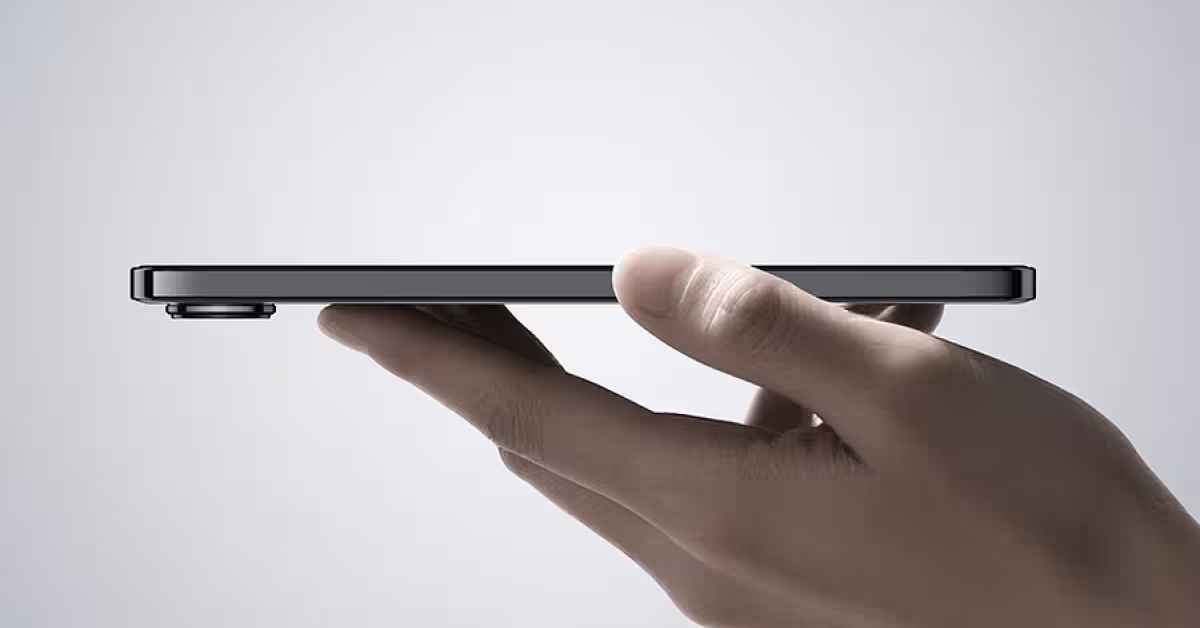
Nubia has unveiled the Nubia Air, an eye-catching slim smartphone that measures just 5.9mm in thickness and targets consumers who prioritize design without breaking the bank. Announced a day after Tecno’s Pova Slim 5G, the Nubia Air competes in the sub-$300 mid-range segment while offering a flagship-feeling display and robust durability credentials.
Key Specifications and Features
Display
The Nubia Air ships with a 6.78-inch AMOLED panel at 1.5K resolution, a 120Hz refresh rate for smooth scrolling and gaming, and an impressive peak brightness of up to 4,500 nits. The screen is protected by Gorilla Glass 7i, positioning the handset’s viewing experience closer to premium devices.
Performance and Memory
Under the hood is an entry-level Unisoc T8300 chipset paired with 8GB of RAM (with virtual expansion up to an additional 12GB) and 256GB of onboard storage. While the Unisoc T8300 keeps costs down, it’s adequate for everyday apps, media consumption, and light gaming rather than intensive multitasking or flagship-level performance.
Cameras and AI Imaging
The camera array centers on a 50MP main sensor with electronic image stabilization (EIS), complemented by two secondary sensors and a 20MP front-facing camera. Nubia adds a suite of AI-driven features — AI Super Night, HDR, VLOG mode, Magic Editor and Magic Eraser — aimed at users who frequently edit photos and short videos on the device.
Battery, Durability and Connectivity
A 5,000mAh battery powers the phone; Nubia has not disclosed charging speeds yet. Surprisingly rugged for its thin frame, the Nubia Air carries IP68, IP69 and IP69K ratings, offering protection against dust, immersion and high-pressure sprays. The device also incorporates AI-based call enhancements, including real-time translation, echo cancellation and noise reduction for clearer voice calls.
Comparisons and Market Position
Compared with the Tecno Pova Slim 5G and other sub-$300 slim phones, the Nubia Air leans heavily on premium display hardware and industrial design while sacrificing raw CPU muscle with its Unisoc T8300. For users who value a top-tier AMOLED experience, strong peak brightness and solid durability, Nubia’s trade-offs may make sense. Power users seeking flagship performance and faster chipsets, however, may prefer alternatives with Snapdragon or MediaTek mid-tier silicon.
Advantages and Use Cases
- Pros: Ultra-slim 5.9mm profile, vibrant 1.5K AMOLED 120Hz screen, IP68/IP69K durability, large 5,000mAh battery, generous 256GB storage and AI photo tools.
- Cons: Entry-level Unisoc chipset limits heavy gaming and intensive multitasking; charging speed details remain unknown.
Ideal use cases include media consumption, photography and on-the-go content creation, plus users prioritizing design and portability with solid battery life and ruggedness.
Price, Availability and Colors
The Nubia Air is priced at $279 (about Rs. 24,600) for the 8GB + 256GB configuration. Sales will begin in Europe this month, followed by launches in Southeast Asia, Latin America, the Middle East and other regions later in the year. Color choices include Titanium Black, Streamer Black and Titanium Desert.
Market Relevance
By delivering a near-flagship display and industrial design at a mid-range price, Nubia is tapping into a growing consumer desire for premium looks without flagship price tags. The phone underscores a broader trend: manufacturers prioritizing form factor and camera AI while accepting modest compromises in chipset selection to keep costs competitive.
Final Verdict
The Nubia Air is a compelling option for buyers who want a slim, durable phone with an outstanding AMOLED display and long battery life at under $300. If you need top-tier processing power, look elsewhere; but if design, screen quality, and AI photography features matter most, Nubia’s new handset deserves consideration.




Leave a Comment
Comments
No comments yet. Be the first.