

6 Minutes
Samsung’s charging strategy under the microscope
Samsung’s Galaxy S26 lineup is still several months from an official unveiling, but early leaks and reliable tips are already fueling a heated debate about charging strategy. Contrary to expectations that next-generation flagship phones would embrace faster wired charging, a well-regarded tipster suggests the Galaxy S26 Pro and Galaxy S26 Edge will remain capped at 25W wired charging — the same limit Samsung has used for years on some of its premium models.
Where the leak came from
Ice Universe, a leaker with a long track record for accurate Samsung scoops, posted on X that both S26 Pro and S26 Edge will stick to 25W wired speeds. The claim is notable because Samsung’s battery capacities appear to be increasing across the S26 family, yet the charging wattage reportedly remains unchanged. If accurate, this could affect real-world charging times and shift Samsung’s product trade-offs toward battery capacity and longevity rather than raw charging speed.
Battery capacity vs charging speed
According to earlier rumors, the Galaxy S26 Pro is expected to house a 4,300 mAh battery, up from the S25’s 4,000 mAh. The S26 Edge is tipped to include a 4,200 mAh pack compared with the S25 Edge’s 3,900 mAh. Larger batteries can improve screen-on time and reduce the anxiety of frequent top-ups, but charging the bigger cells at the same 25W rate would increase total charge time. In short: longer runtimes, longer downtime.
Practical impact
For everyday users, a 25W cap may translate to noticeably longer charging sessions compared with rivals offering higher wattages. An increase of several hundred mAh in battery capacity is helpful, but without an accompanying increase in charging power, the time to reach full charge will rise proportionally. That matters for power users, commuters, and travelers who rely on quick top-ups during short breaks.

Thermal design and the limits of faster charging
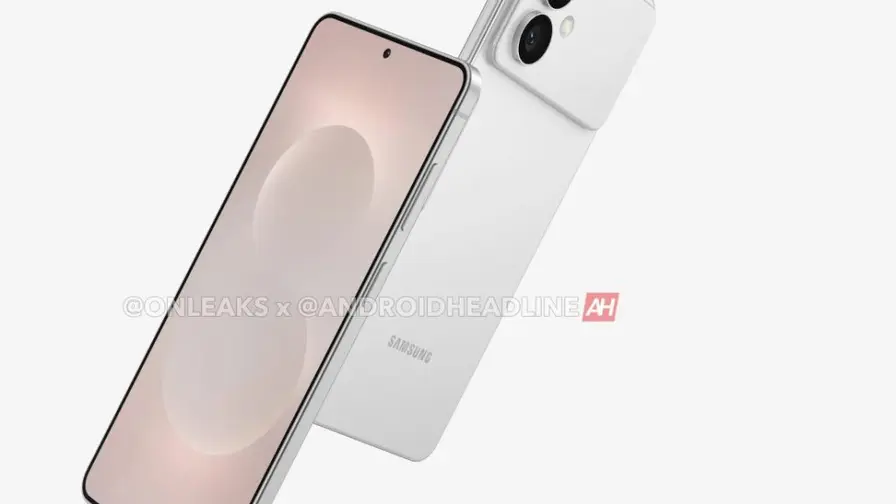
One reason Samsung might hesitate to increase wired charging speeds on the Pro and Edge is thermal management. Reports suggest the S26 Pro’s external design may not deviate significantly from the previous generation, implying there won’t be a major overhaul to heat dissipation. Fast charging at higher wattages produces more heat; without improved cooling infrastructure, a phone cannot safely draw more current without risking higher battery temperatures, accelerated wear, or thermal throttling.
Charging architecture and safety
Modern fast charging combines battery chemistry, charging algorithms, and thermal design. Even if the internal charging IC and adapter support higher wattage, Samsung must balance peak charging rates with long-term battery health. That typically means dialing in temperature-aware charging curves and conservative power caps to maximize battery longevity — an approach that may favor 25W for the Pro and Edge models.
How Samsung stacks up against competitors
From a competitive perspective, Samsung’s rumored conservatism looks more pronounced. Apple’s upcoming iPhone 17 line is reported to support 40W wired charging across standard models, with a lighter iPhone Air hitting around 27W. Meanwhile, many Chinese OEMs routinely advertise charging speeds north of 100W for flagship and even midrange phones. If Samsung keeps the Pro and Edge at 25W, the S26 lineup will lag behind peers in headline charging numbers.
The Galaxy S26 Ultra exception
Interestingly, leaks suggest the Galaxy S26 Ultra could be treated differently. The flagship Ultra may jump from 45W to 60W wired charging, widening the gap between it and the Pro/Edge variants. That kind of tiered approach would let Samsung claim a high-end fast-charging flagship while keeping the broader S26 family more conservative, focusing on battery durability and overall longevity.
Feature breakdown: What to expect from the S26 Pro and S26 Edge
- Battery: Rumored 4,300 mAh (S26 Pro) and 4,200 mAh (S26 Edge).
- Wired charging: Leaked cap at 25W for both Pro and Edge models.
- Thermal design: Minimal external redesign expected, likely limiting heat dissipation upgrades.
- Software and charging controls: Anticipated adaptive charging modes focused on battery health and temperature regulation.
These feature priorities suggest Samsung will market the Pro and Edge toward users who prefer balanced battery longevity and reliable daily performance over ultra-fast top-ups.
Comparisons and advantages
Compared with rivals that prioritize charging speed, Samsung’s approach has trade-offs:
Advantages:
- Battery longevity: Slower charging at cooler temperatures generally yields less battery wear over time.
- Stable performance: Fewer thermal spikes reduce long-term degradation and preserve sustained performance for tasks like gaming and content creation.
- Safety and reliability: Conservative charging profiles reduce the risk of overheating and related issues.
Disadvantages:
- Longer charge times: Users accustomed to rapid 30–100W charging will notice longer charge cycles.
- Competitive perception: Marketing metrics matter. Lower wattage numbers can look dated against rivals touting 100W+ figures.
Use cases: Which users are affected most?
- Heavy users and mobile gamers: Those who need quick top-ups between gaming sessions may prefer higher-wattage options or the rumored Ultra model with 60W.
- Travelers and commuters: Frequent short charging opportunities favor faster charging; the S26 Pro/Edge at 25W could be less convenient.
- Battery-conscious users: People who prioritize longevity and battery health may welcome Samsung’s more measured approach.
- Content creators and professionals: If fast turnaround charging matters for long shoots or remote work, the Ultra or alternative brands may be more attractive.
Market relevance and strategic reasoning
Samsung’s alleged choice to cap the Pro and Edge at 25W could be strategic rather than technological limitation. By differentiating the Ultra with significantly faster charging, Samsung can create product segmentation that steers power users toward the higher-margin Ultra while positioning Pro/Edge models as optimized for durability and balanced daily use. Regulators and consumer preference trends toward battery safety may also factor into Samsung’s calculus.
From a market perspective, the move would play out differently across regions. In markets where fast charging is a major buying criterion — China, India, and other price-competitive markets — Samsung’s conservative numbers may hurt perception. In markets where brand loyalty and ecosystem integration matter more, incremental battery capacity gains and proven reliability may be enough to retain customers.
Practical recommendations Ahead of launch
- If charging speed is your top priority: Consider waiting for the S26 Ultra or looking at alternatives from Chinese brands that push double- or triple-digit wattages.
- If battery health and longevity matter: The S26 Pro/Edge’s rumored approach may be preferable; slower charging generally preserves battery cycles.
- For travelers and professionals: Carry a high-capacity power bank or a USB-PD 60W+ charger if you plan to rely on quick top-ups; verify device compatibility.
- Consider ecosystem: Apple’s iPhone 17 reportedly offering 40W may influence users embedded in Samsung’s or Apple’s ecosystems differently.
Conclusion: A conservative, calculated step

If Ice Universe’s leak is correct, Samsung appears to be prioritizing battery capacity gains and long-term durability for the S26 Pro and S26 Edge over chasing headline charging numbers. That’s a defensible strategy that emphasizes safety, thermal management, and battery longevity — but it’s not without consequences. Faster wired charging is now a key selling point for many consumers, and Samsung risks ceding ground to competitors that advertise much higher wattages.
The true test will arrive at Samsung’s official S26 reveal, rumored for January 2026. Until then, buyers who need high-speed charging should watch for confirmation of the Ultra’s rumored 60W capability or consider third-party alternatives. For the rest, the S26 Pro and Edge may offer a balanced mix of battery capacity, reliability, and longevity — even if they charge more slowly than some competitors.

Leave a Comment
Comments
No comments yet. Be the first.