
4 Minutes
Apple’s design team emerges from post‑Ive turbulence
Apple's design organization has undergone a visible reset since the departure of Jony Ive in 2019. What felt like a revolving door of leaders and a stretch of incremental updates is now giving way to a clearer, more pragmatic design philosophy. Recent reporting and product launches suggest Apple is prioritizing utility and performance—especially on its Pro devices—over pure minimalism.
What changed inside Apple’s design leadership
After Ive left, a number of long‑tenured designers and engineers also exited Apple, leaving younger teams and a handful of senior leaders to steer product aesthetics and engineering. That transition was compounded by other leadership shifts: most notably the retirement of longtime operations chief Jeff Williams, who had been closely involved with product development and design oversight. According to industry reporting, the newest heads of design now report directly to CEO Tim Cook, a move that may reduce layers of sign‑off and allow more autonomy—but also means the design org will be operating with a different set of priorities.
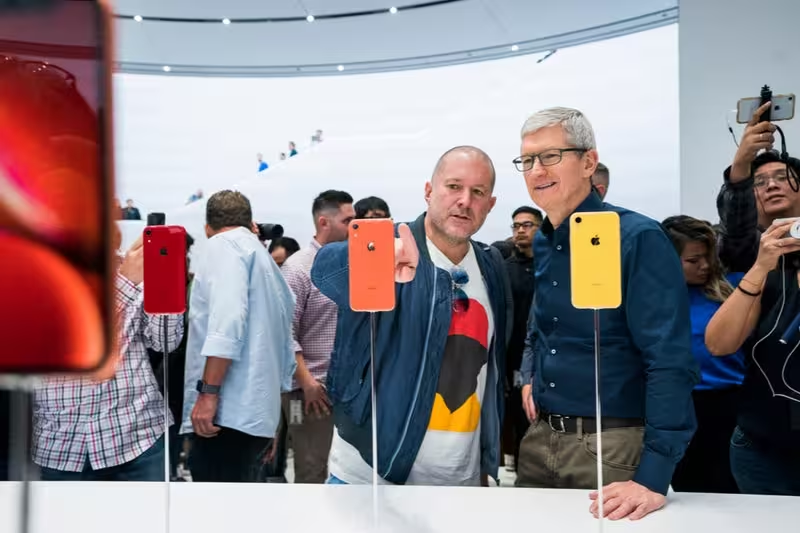
Jony Ive and Tim Cook at the September 2018 launch of iPhone XR. | Image credit — Apple
The practical impact has been visible in recent releases. Where Apple once chased extreme thinness and sculpted minimal lines, newer models—most notably the latest Pro iPhones—have accepted slightly larger dimensions to support bigger batteries, improved camera systems, and enhanced durability. That shift marks a return to a classic product design tenet: form should serve function.
Product features and what’s different
- Battery life: Newer Pro devices are thicker to house larger battery cells, which translates into measurable gains in real‑world endurance for power users and professionals.
- Camera hardware: Increased internal volume allows for more advanced camera modules, larger sensors, and improved optical stabilization—benefits that directly affect photography and video workflows.
- Durability: A focus on sturdier chassis materials and slightly less aggressive thinness improves drop performance and repairability.
- Performance balance: Pro models emphasize thermals and sustained performance, enabling heavier workloads—video editing, photo processing, and AR apps—without throttling.
These design decisions reflect a shift from purely aesthetic optimization toward engineering tradeoffs that favor user experience, longevity, and capability.
Comparisons: Old design mantra vs. new approach
- Classic Ive era: ultra‑thin profiles, seamless minimalism, extreme attention to finish and proportion—sometimes at the cost of battery capacity, port variety, or repair friendliness.
- Current trajectory: slightly thicker, more modular internal engineering, and practical improvements that prioritize features power users actually use—longer battery life, better cameras, and improved thermal headroom.
For buyers deciding between models, the updated Pro line is now pitched as the performance‑first option for creators and professionals, while lighter models (like the iPhone Air) remain optimized for portability and style.

Advantages, use cases, and market relevance
Advantages:
- Better battery life for all‑day professional workflows and field use.
- Enhanced camera systems that reduce the need for external gear for many creators.
- Improved sustained performance for content creators, developers, and enterprise users.
Use cases:
- Mobile photographers and videographers who rely on sensor size and stabilization.
- On‑site professionals (field engineers, journalists) who need dependable battery and ruggedness.
- Developers and creatives using Pro apps for editing, 3D, and AR experiences that demand thermal headroom.
Market relevance: This practical pivot aligns with broader consumer expectations: buyers increasingly value durability, battery life, and real performance over design purity alone. Early sales data and market reception indicate that Apple’s Pro‑first approach is resonating with high‑value customers, reinforcing the commercial case for a function‑led design strategy.
What this means for Apple’s product roadmap
A design culture that prioritizes usability and performance could ripple across Apple’s product families—MacBooks may favor serviceability and thermal performance, iPads could emphasize battery and accessory versatility, and Apple Watch or Home devices might focus more on durable day‑to‑day usability. The transition also signals a healthier organizational dynamic: a new generation of designers can iterate without being overshadowed by a singular aesthetic doctrine.
Final take: a welcome course correction
This reorientation is more than a superficial marketing shift—it’s a course correction that reconnects Apple with one of its founding product mantras: ‘‘Design is how it works.’’ For tech enthusiasts, professionals, and enterprise buyers, the prospect of Apple devices that are more capable, longer‑lasting, and purpose‑driven is a meaningful and welcome change.







Leave a Comment
Comments
No comments yet. Be the first.