
4 Minutes
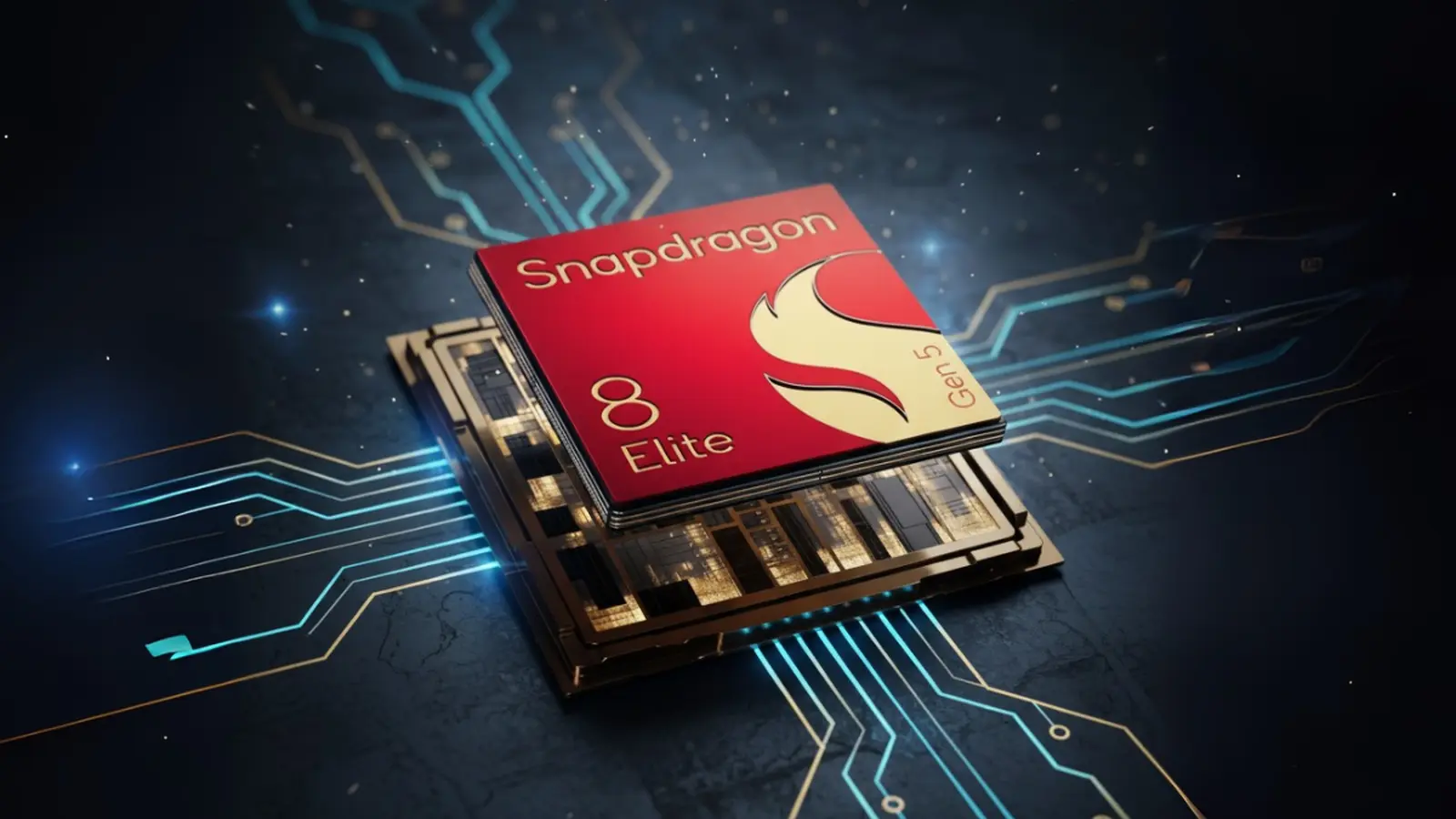
Qualcomm’s Snapdragon 8 Elite Gen 5 arrives with bold claims — and early benchmark results back most of them. Tests run on a high-end reference device show the new 3nm chip leading competitors like Apple’s A19 Pro and MediaTek’s Dimensity 9500 in several key metrics.
Early benchmark roundup and test conditions
The initial scores come from first-party benchmark runs shared by Notebookcheck and additional tests for some rivals. Keep in mind those numbers were measured on a reference device equipped with 24GB LPDDR5X RAM, 1TB UFS4.1 storage and a 6.8-inch 3,200×1,440 AMOLED LTPO display. Real retail phones tune performance for battery life and thermals, so shipping devices may post lower sustained numbers.
CPU performance: single-core nuances, multi-core dominance
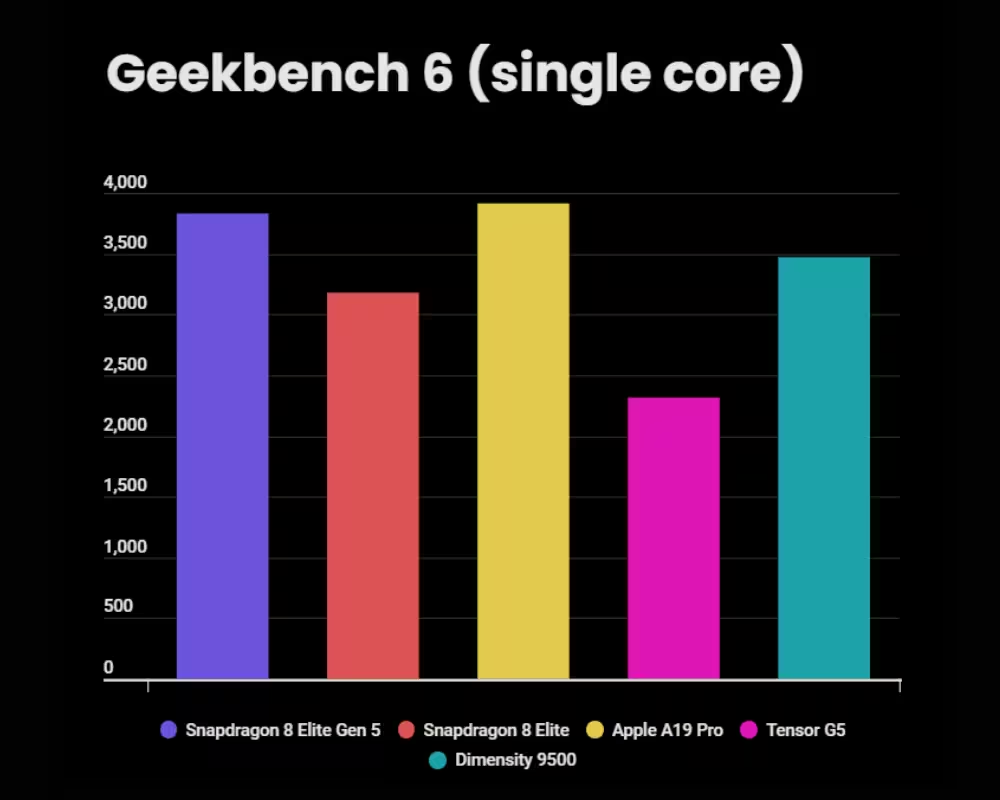
On Geekbench 6 single-core, the Snapdragon 8 Elite Gen 5 posts a notable uplift over last year’s Elite — roughly a 20% gain — and sits slightly behind Apple’s A19 Pro by a narrow margin. Against the Dimensity 9500 it holds about a 10% lead. The Tensor G5 lags well behind in single-core tests.
- Geekbench 6 single-core (reference device): SD 8 Elite Gen 5 — 3,831; Apple A19 Pro — 3,914; Dimensity 9500 — 3,471; Tensor G5 — 2,316.
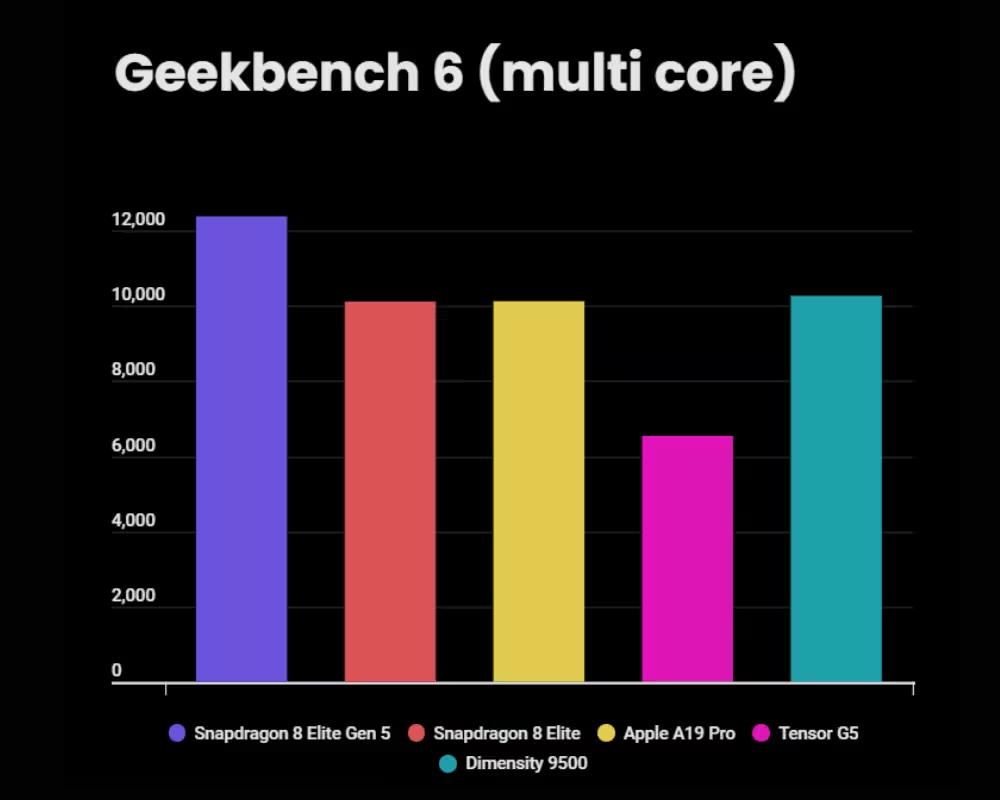
Where Qualcomm’s new chip really stands out is multi-core throughput. The 8 Elite Gen 5 clears the 12,000-point mark on Geekbench 6 (about 12,383), delivering more than a 20% advantage over both the A19 Pro and Dimensity 9500 in multi-threaded workloads. That translates to faster performance in heavy multitasking, video encoding and other thread-parallel tasks.
- Geekbench 6 multi-core: SD 8 Elite Gen 5 — 12,383; A19 Pro — ~10,125; Dimensity 9500 — ~10,269; Tensor G5 — 6,452.
AnTuTu and graphics: scores that matter for gamers

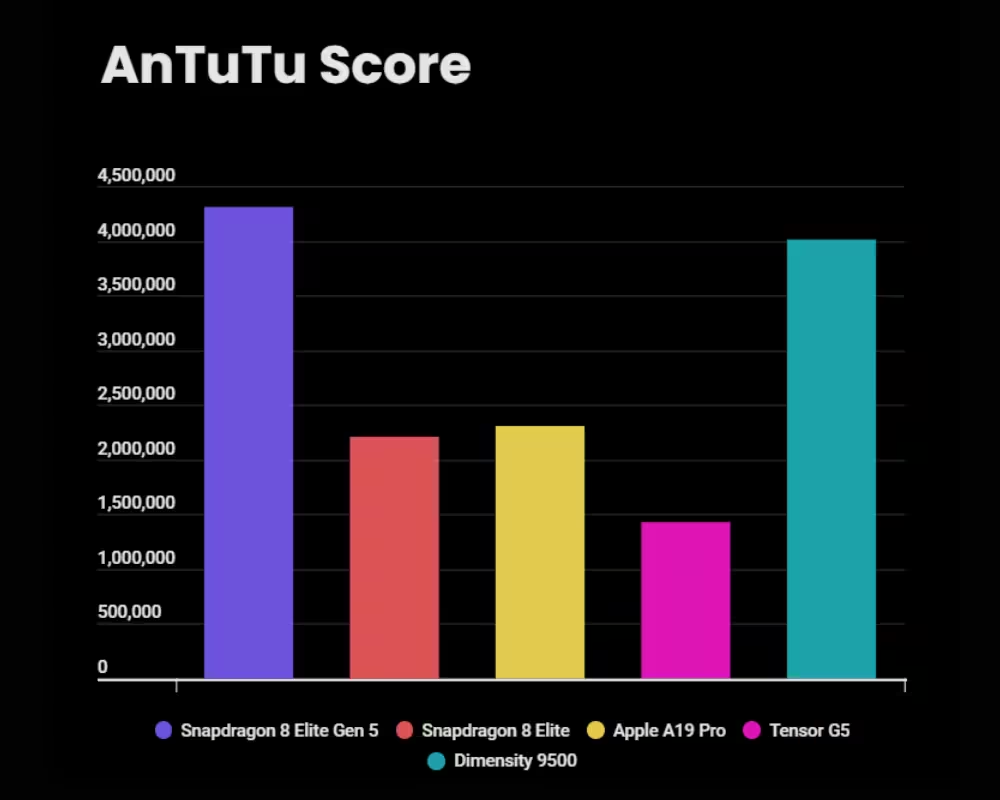
On AnTuTu, the reference device running the Snapdragon 8 Elite Gen 5 scored over 4.3 million points, a figure that separates it from most current flagships. The Dimensity 9500 also reached the 4 million range in leaked tests, but Apple’s A19 Pro and last year’s Snapdragon fall substantially shorter in this cross-platform benchmark. Note that AnTuTu uses different test methods on Android and iOS, which makes direct Android-vs-iOS comparisons less straightforward.
- AnTuTu (total): SD 8 Elite Gen 5 — 4,309,384; Dimensity 9500 — 4,011,932; A19 Pro — 2,308,323; SD 8 Elite (2024) — 2,209,476; Tensor G5 — 1,429,557.
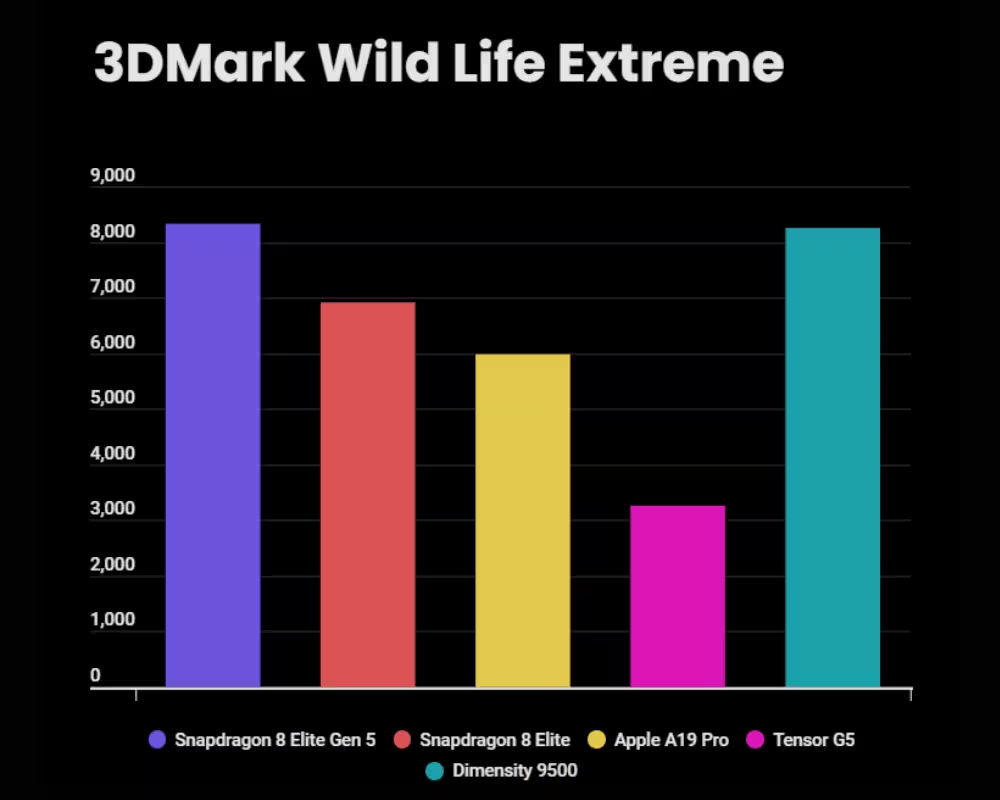
3DMark Wild Life Extreme highlights the Gen 5’s GPU upgrades: the new Adreno implementation posts around 8,329 points, ahead of Apple’s GPU and marginally ahead of the Dimensity 9500 in early tests. That suggests strong raw graphics performance for high-frame-rate gaming and demanding rendering tasks.
- 3DMark Wild Life Extreme: SD 8 Elite Gen 5 — 8,329; Dimensity 9500 (reference) — 8,251; A19 Pro — 5,982; SD 8 Elite (2024) — 6,914; Tensor G5 — 3,261.
What these numbers mean for buyers and OEMs
Benchmarks tell a clear story about peak capability, but they don’t capture battery life, sustained performance under thermal limits, or software-level optimizations. The reference device’s generous RAM, top-tier storage and likely aggressive cooling setup help unlock maximum scores. Shipping phones will balance performance against heat and battery — so expect some variance between these headline figures and day-to-day experience.
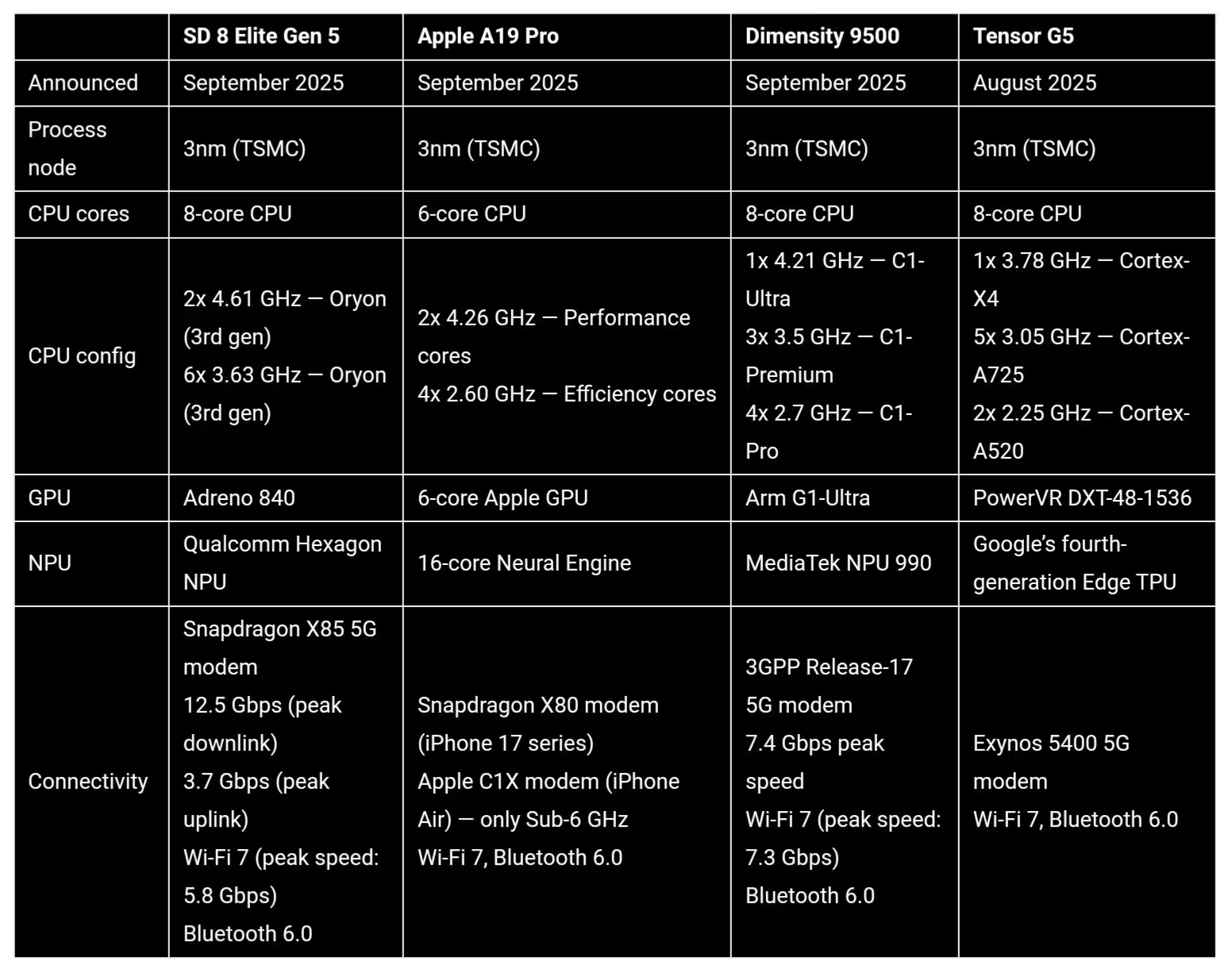
Key architectural highlights to consider: all flagship chips here use a 3nm node from TSMC, but Qualcomm pairs its Oryon CPU cores and Adreno 840 GPU with a Hexagon NPU and a Snapdragon X85 modem (12.5 Gbps peak). Apple’s A19 Pro leans on its 16-core Neural Engine and the company’s modem choices differ across iPhone models. MediaTek’s Dimensity 9500 offers competitive CPU and GPU clocks and strong connectivity, while Google’s Tensor G5 focuses more on AI and specialized tasks than pure benchmark dominance.
Conclusion
Early results position the Snapdragon 8 Elite Gen 5 as Qualcomm’s most powerful mobile SoC to date, leading in multi-core CPU performance, AnTuTu totals and high-end graphics tests. While the A19 Pro remains close in single-core workloads, the new Snapdragon pulls ahead where multi-threaded power and GPU throughput matter most. Consumers should watch for reviews of retail devices to see how these gains translate into battery life, sustained gaming performance and real-world apps.



.webp "Redmi 17C 5G: 6.9-inch Screen and 6,000mAh Power Lands")


Leave a Comment
Comments
No comments yet. Be the first.