

4 Minutes
Season five goes out with a bang
The final chapter of Stranger Things arrived like a cultural comet: timed across the holiday season, teased through Thanksgiving and Christmas drops, and culminating in a two-hour, much-anticipated finale that pushed both fandom and Netflix metrics to new heights. According to industry tallies reported by outlets such as TheWrap, Stranger Things season five surged into Netflix’s list of most-watched English-language series, landing at number nine on the platform’s all-time chart.
Streaming surge and record numbers
In the week ending December 29, the season-five run registered roughly 31.5 million Netflix view counts for that seven-day window, vaulting the show to the top of Netflix’s weekly chart. From the release of part one on November 26 through the holiday run, the season amassed an estimated 105.7 million view counts overall. Those totals place Stranger Things 5 just below Bridgerton season three and above The Night Agent season one in Netflix’s English-language rankings.
Netflix’s counting method—dividing total hours watched by the runtime of each episode—helps explain some of the fluctuations across different publishing windows. When the first four episodes dropped on November 26, they recorded a remarkable 59.6 million views in their opening five days, marking the largest five-day launch for an English-language Netflix series. The second tranche, which arrived around Christmas and contained three episodes, posted roughly 34.5 million views in the week ending December 22. Holiday timing and multiple release events clearly magnified audience momentum.

Theatrical experiment and box-office bump
Netflix also staged a limited theatrical run for the finale: the two-hour episode played in roughly 600 cinemas between the evening of December 31 and January 1. Early box-office estimates put that brief engagement at around $25 million—an eye-catching figure for such a short window and an unusual move for a serialized streaming finale. That theatrical option, while not included in Netflix’s streaming tallies, reflected the showrunners’ and studio’s willingness to meet fans in multiple venues and to treat the finale as a communal event.

Interestingly, the finale’s New Year’s airing helped Netflix set a record for the platform’s biggest viewing day on January 1—a milestone that had already been challenged on Christmas Day during part two’s release and NFL broadcasts. The combined holiday viewing and the theatrical release speak to a rarer hybrid strategy: streaming-first storytelling complemented by selective cinema screenings.
Context, fan reaction, and industry impact
Beyond the raw numbers, the season’s rollout says something about evolving release strategies in the streaming era. Blockbuster series now operate like event films: staggered drops, holiday scheduling and theatrical windows are tools to extend cultural conversation. Fans responded with watch parties, social media threads, and grassroots screenings—factors that keep a show trending long after initial release.
Critically, longer runtimes and varied episode counts can skew Netflix’s metrics in surprising ways. Because the service measures view counts by hours watched, a batch with more or longer episodes can show lower per-week view counts even if total engagement remains massive.
"Stranger Things 5 shows how narrative closure can be treated as both a streaming and theatrical event," says film critic Anna Kovacs. "The limited cinema release gave the finale a ritualistic quality viewers crave, while the streaming numbers confirm the franchise’s global cultural reach."
Where it sits among Netflix hits
The week the finale arrived also reshuffled Netflix’s weekly top ten: Harlan Coben’s Run Away took second with about 12.7 million views, and Emily in Paris season five landed in fourth with around 7.4 million. Meanwhile, earlier seasons of Stranger Things re-entered the top ten, demonstrating how a major season finale can reignite interest across a series’ catalog.
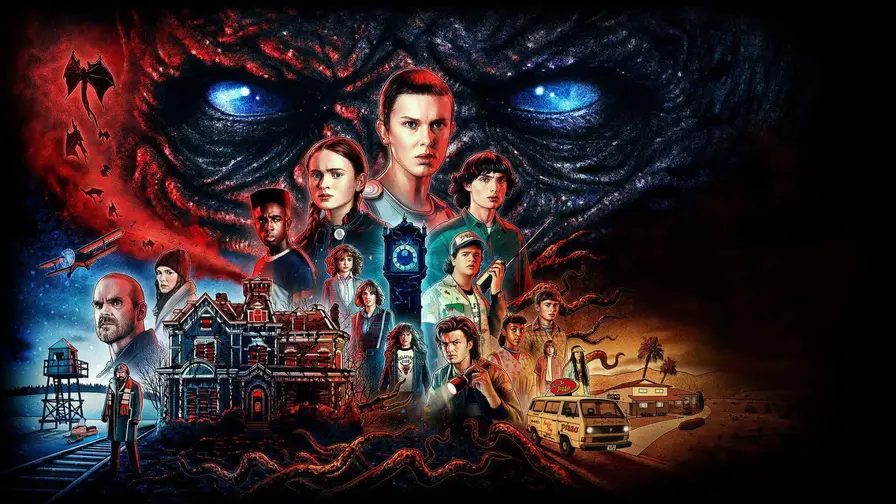
Whether measured in streaming views or box-office dollars, the closing chapter of Stranger Things confirms a simple industry truth: tentpole television still draws appointment viewing. The series’ hybrid release—holiday timing, staggered episode drops, a theatrical curtain call—served both fandom and Netflix’s appetite for headline-grabbing metrics. For fans and industry watchers alike, it’s a case study in how to make a finale feel like an event rather than just another episode.

Leave a Comment
Comments (2)
Wait, Netflix counts by hours watched? so longer eps = fewer "views" even if ppl binge. feels like apples vs oranges, no?
Wow didnt expect the theatrical stunt, 600 cinemas and ~$25M? fandom power. feels like metric theater but still hyped!!