

3 Minutes
Tax policy, not scaling, is the main barrier
Industry voices say the primary reason Bitcoin (BTC) hasn't become a common method of payment is tax treatment — not flaws in scaling technology. Pierre Rochard, a board member of Bitcoin treasury firm Strive, argues that current US tax rules make everyday BTC payments impractical by treating crypto transfers as taxable events that can trigger capital gains or losses.
Rochard summarized the issue with a simple metaphor: even the best athlete can't win if they don't play. Applied to BTC, that means near-instant settlement and low fees alone cannot make Bitcoin a practical medium of exchange when tax policy penalizes routine spending.
Why the de minimis exemption matters
The lack of a de minimis tax exemption for small cryptocurrency transactions means every retail purchase could be subject to capital gains calculations. For consumers, this creates a heavy reporting burden and potential tax liabilities for routine purchases like coffee or groceries, undermining BTC's utility as everyday money despite advances in scaling solutions such as the Lightning Network.
Policy proposals and the debate over stablecoins
In December 2025 the Bitcoin Policy Institute warned that without a de minimis exemption, Bitcoin will remain difficult to use as a payment rail. Some US lawmakers have since proposed narrowing exemptions to overcollateralized dollar-pegged stablecoins — tokenized US dollars backed 1:1 by cash deposits or short-term government securities. That approach drew pushback from Bitcoin supporters who see it as privileging dollar-pegged tokens over native BTC payments.
Legislative moves and industry reactions
Wyoming Senator Cynthia Lummis introduced a bill in July 2025 proposing a de minimis exemption for digital asset transactions of $300 or less, with a $5,000 annual cap and carve-outs for charitable donations. The proposal also suggested deferring tax recognition on staking and mining rewards until the assets are sold, which would ease tax friction for many crypto users.
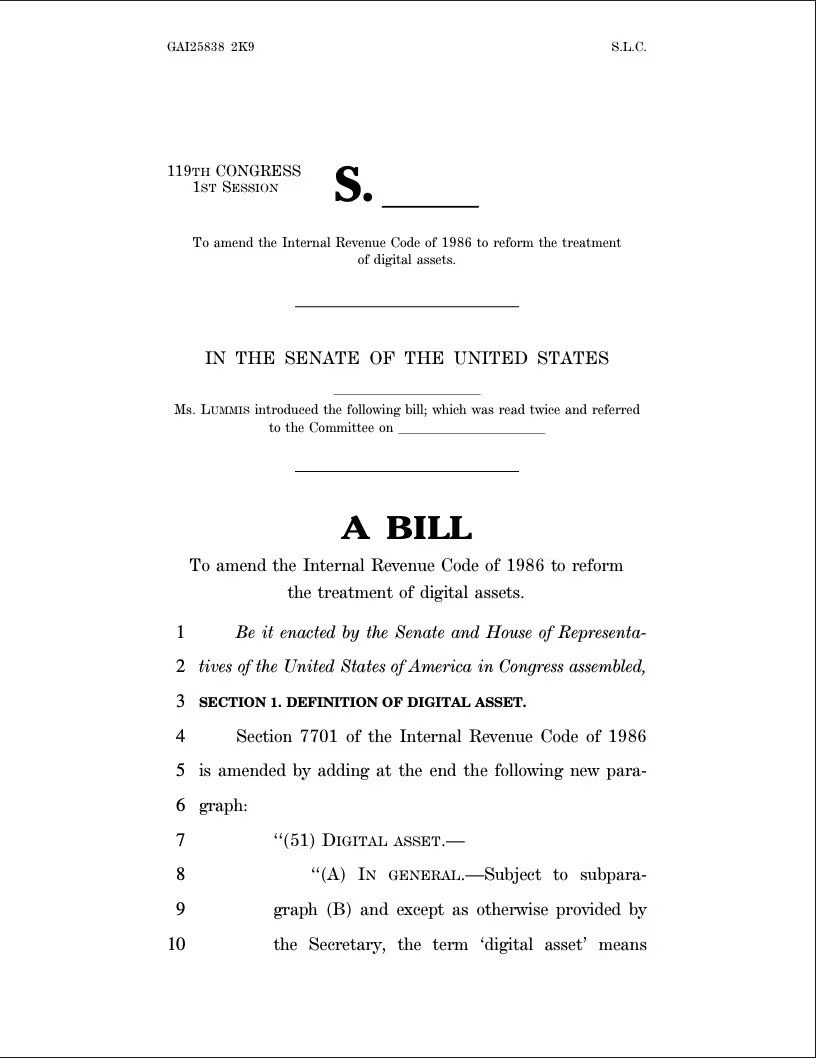
Senator Cynthia Lummis’ bill proposal for crypto tax exemptions.
Voices from the crypto ecosystem
Prominent proponents of Bitcoin payments have weighed in. Jack Dorsey, founder of Block (formerly Square), advocated for tax relief on small BTC transactions after integrating Bitcoin payments into point-of-sale systems. He emphasized the urgency of making BTC viable for everyday commerce. Others, like Bitcoin commentator Marty Bent, criticized proposals that would favor stablecoins over Bitcoin as 'nonsensical', warning of market distortions and an uneven regulatory playing field.
What this means for consumers and businesses
For merchants, startups building payment rails, and consumers hoping to use BTC for daily purchases, the path forward depends largely on lawmakers. Scaling technologies such as layer‑2 networks can reduce fees and settlement times, but meaningful adoption requires clear, sensible crypto tax rules — including practical de minimis exemptions — so that routine transactions don't become tax headaches.
Until tax policy catches up to technical progress, Bitcoin's role as everyday money will remain limited, even as the broader crypto ecosystem continues to innovate.
.webp "Sending Bitcoin to Mars: How Proof-of-Transit Timestamping Could Enable Interplanetary Lightning Payments")













Leave a Comment
Comments
No comments yet. Be the first.