
3 Minutes
Why Ethereum could be headed toward $1,500
Ethereum (ETH) has been under pressure in recent weeks, and several technical, market, and geopolitical factors suggest a deeper correction could be coming. While Ethereum remains a leading smart-contract platform in blockchain and DeFi, its price action, institutional flows, and macro risks warrant close attention from traders and investors.
1. Technical signals point to more downside
On the weekly chart, ETH has been in a sustained downtrend, closing lower for multiple consecutive weeks and slipping toward levels not seen since mid-last year. Most notably, price has broken below a critical support area around $2,145, which invalidated an inverted head-and-shoulders pattern — a structure many traders use as a bullish reversal signal. Falling through that support increases the probability of further declines toward the next major demand zone at $1,500.
Ethereum has also moved beneath key indicators that professional analysts watch: the 50-week and 200-week weighted moving averages (WMAs) and the Supertrend indicator, all signs that bears control momentum. The Relative Strength Index (RSI) is near the oversold threshold of 30; while oversold readings can precede rebounds, they often extend during strong downtrends, meaning ETH could become deeply oversold before any meaningful recovery.
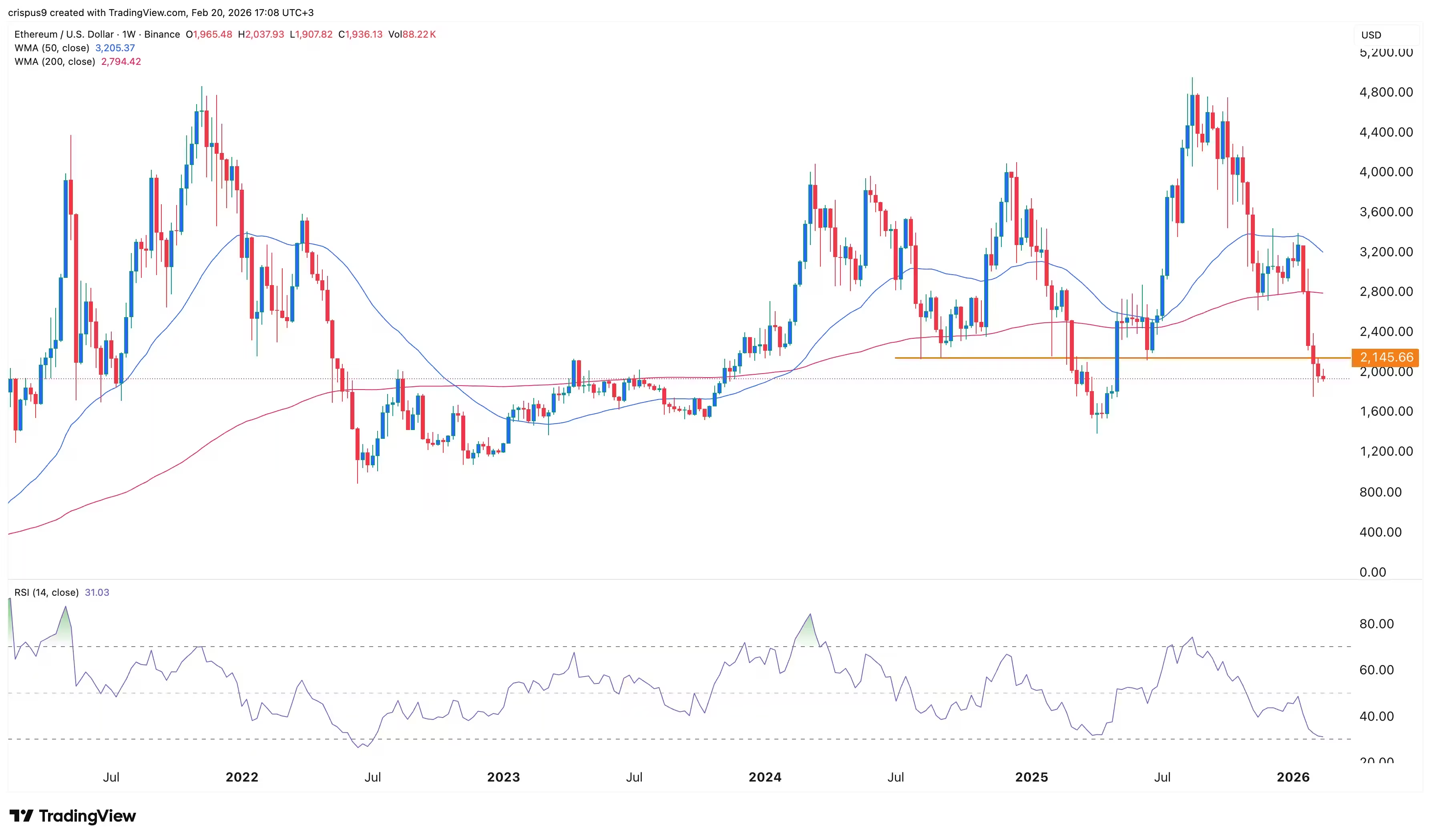
ETH price chart
2. Institutional demand is cooling
A second major bearish catalyst is waning institutional interest. Spot Ethereum ETFs have recorded persistent outflows in recent months — shedding significant assets and signaling weaker long-term buying from professional funds. Reports show these spot ETF withdrawals totaled hundreds of millions this month alone, reflecting a broader pullback.
Futures market metrics add to the concern. Open interest in ETH futures has materially dropped from its year-to-date highs, indicating lower leverage and less speculative demand. When futures OI and ETF inflows decline together, liquidity and bid-side depth can evaporate quickly, amplifying price moves to the downside.
3. Geopolitical shocks could trigger a market-wide selloff
Geopolitics have re-emerged as a major risk driver. Recent statements and military positioning have raised the probability of a U.S. strike on Iran. A significant escalation would likely lift crude oil prices and push inflation expectations higher — a scenario that could prompt central banks, including the Federal Reserve, to maintain or even tighten policy. Higher rates and an elevated inflation outlook generally reduce risk appetite for speculative assets, including cryptocurrencies, potentially accelerating ETH weakness.
Bullish counterpoints and on-chain strengths
Despite the risks, Ethereum’s network fundamentals remain robust in several areas. On-chain activity — transactions, active addresses, and network fees — has been resilient. DeFi total value locked (TVL) denominated in ETH has reached new highs, staking queues continue to grow, and institutional interest in tokenized real-world assets (RWA) on Ethereum is expanding. These adoption and usage trends are structural positives that could limit the duration or depth of any correction.
Market outlook and levels to watch
Traders should watch $2,145 as a near-term resistance pivot and $1,500 as a key support target if selling pressure continues. Monitor spot ETF flows, futures open interest, and macro data (oil prices, inflation prints, and Fed commentary) for catalysts that could accelerate either direction. Technical indicators like the RSI and Supertrend can help time entries, but given the macro and institutional backdrop, risk management is essential.
In summary, the combination of broken technical patterns, shrinking institutional demand, and looming geopolitical risk could push Ethereum toward $1,500 in a pronounced correction. However, on-chain adoption and DeFi activity still provide important structural support, meaning risk-adjusted positions and clear stop-loss rules are prudent for crypto investors.








Leave a Comment
Comments
No comments yet. Be the first.