
4 Minutes
Tesla posts mixed 2025 results but surprises on expectations
Tesla surprised investors by beating Wall Street revenue forecasts for Q4 2025 and the full year, even as its automotive business showed clear signs of strain. The EV maker reported $840 million in net income on $24.9 billion in revenue for the fourth quarter — numbers that point to resilience, but also to a company in transition.
Numbers that tell two stories
On paper the quarter and the year look like a slowdown: quarterly revenue was down roughly 3% versus Q4 2024, while net income plunged about 61% year‑over‑year for the quarter. For the full year, Tesla posted $3.8 billion in net income on $94.8 billion in revenue, declines of 46% and 3% respectively compared with 2024.
Still, those figures exceeded analyst expectations — Wall Street had forecasted $24.8 billion for Q4 revenue — showing Tesla’s ability to absorb a fall in vehicle sales while rebalancing its business mix.
Where the money shifted
- Vehicle sales revenue fell about 11% to $17.7 billion.
- Energy and storage revenue rose some 25%, and services climbed roughly 18%.
- Operating expenses jumped 39% to $3.6 billion, driven largely by investments in AI data centers.
Market headwinds: competition, incentives and lost crown
2025 was a difficult year for Tesla’s global EV sales. The company’s deliveries slid about 8.5% during the year, allowing China’s BYD to overtake Tesla as the world’s top EV seller. That loss of market share was accentuated by falling demand in Europe and fierce competition in China, where local brands have aggressively expanded their model ranges and price competitiveness.
At the same time, global EV sales grew roughly 20% in 2025, underscoring that Tesla’s decline was more about market share erosion than a shrinking EV market. The gradual expiration of emissions-credit incentives and tighter regulatory credits also removed a buffer that had helped Tesla’s margins in prior years.
From carmaker to AI and robotics — reality check

Elon Musk’s repeated framing of Tesla as an AI and robotics company is finally visible on the balance sheet. Major investments in AI infrastructure pushed operating costs higher as Tesla races to fund data centers and software development.
But execution risks remain. Tesla still lacks regulatory approval for its Unsupervised Full Self‑Driving software, and its robotaxi pilots continue to rely on safety drivers and remote monitors in most states. The company plans to begin robot production in Q2 2026 and roll out Robotaxi services to more U.S. states, yet these ventures are unlikely to be immediate profit centers.
"A few rough quarters" — Tesla warned investors, reflecting the transition pains as vehicle sales slow and capital shifts toward AI and robotics.
Products and positioning
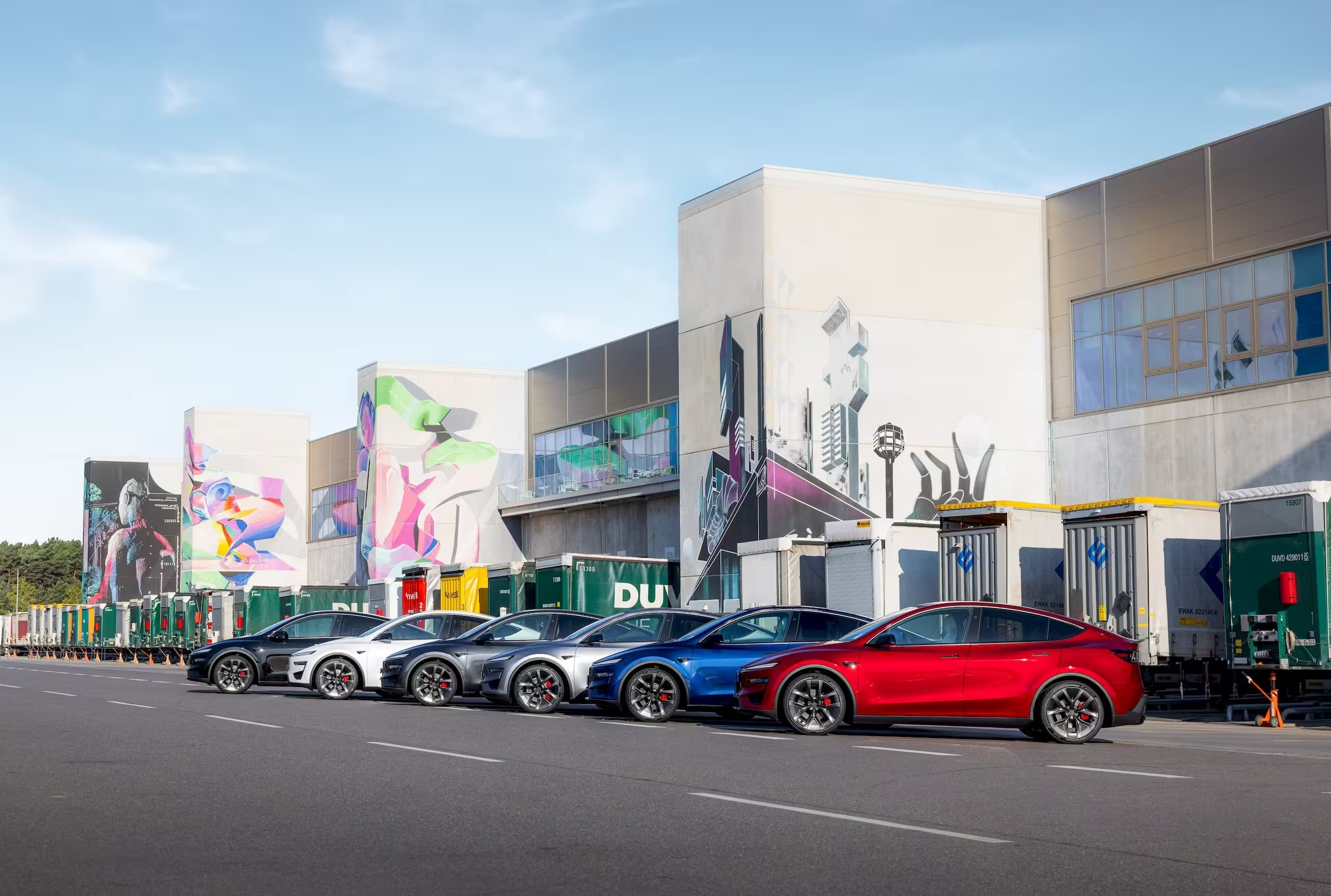
Tesla has trimmed its vehicle portfolio, canceling the Model S and Model X programs with production slated to stop in the second quarter of 2026. That leaves the Model 3 and Model Y as the company’s primary volume sellers, with the Cybertruck still struggling to reach mainstream volume targets. This narrower lineup makes Tesla more vulnerable to swings in consumer demand and regional competition.
Still, the Model Y remains one of the world’s best-selling cars in multiple markets, and Tesla’s software, supercharger network and brand strength continue to offer competitive advantages.
What to watch next
- Progress on FSD approval and robotaxi deployments.
- Early margins and revenue contribution from robot production expected from Q2 2026.
- Integration and returns from a $2 billion investment into xAI.
For investors and car enthusiasts alike, Tesla’s 2025 results are a reminder that the company is in the middle of a risky pivot. Automotive sales are the immediate revenue engine, but management is clearly betting on AI, autonomy and robotics to define Tesla’s future. Whether that bet pays off will depend on regulatory approvals, execution speed and how effectively Tesla can defend its EV market share against global rivals.


Leave a Comment
Comments (2)
Model Y still sells, but trimming lineup makes Tesla fragile. AI bets are cool but costs hit hard, hope robotaxi isnt a money pit
Is this for real? Tesla cutting S/X, pushing AI and robotaxis while car sales slip... risky bet, regulators will wreck timelines imo