
Cancel your subscriptions. Sounds small. Yet one of Silicon Valley's loudest critics says this quiet act could rattle the corridors of power in Washington.
Scott Galloway, the NYU marketing professor known for blunt analysis, has proposed a targeted economic boycott of major tech companies as a new lever of protest against President Trump's immigration policies. The idea is unglamorous and simple: stop paying the platforms that have become woven into daily life — not to shut businesses for a day, but to withdraw consumer dollars for a sustained stretch.
Why this instead of the more familiar mass strike? Galloway argues that broad-day strikes end up hurting small businesses the most. He wants pressure directed where it will bite hardest: at firms whose market value and political clout make them especially sensitive to shifts in revenue and public sentiment. In his view, a month-long pullback starting at the beginning of February could create market ripples that reach the highest offices.
He points to obvious targets: subscription services and cloud platforms whose steady recurring revenue masks how dependent they are on millions of small payments. ChatGPT and other AI services, Amazon Prime, Microsoft Office suites — these are not just conveniences. They are cash streams. Cut enough of them for weeks, and balance sheets, then boardrooms, notice.
'We propose something quieter and more persistent than a day of street protests,' he writes. 'A month-long slowdown would be far more alarming than a one-day disruption.' It's an argument built on leverage: in a capitalist system, money talks louder than slogans.
That leverage matters because, whether by design or convenience, many top tech executives have moved closer to the current administration. Donations to inaugural events and invitations to White House dinners have become part of the routine between industry and state. Names frequently mentioned in reporting include Sam Altman of OpenAI, Mark Zuckerberg of Meta, Tim Cook of Apple and Andy Jassy of Amazon — executives who have mixed commercial motives with political outreach.

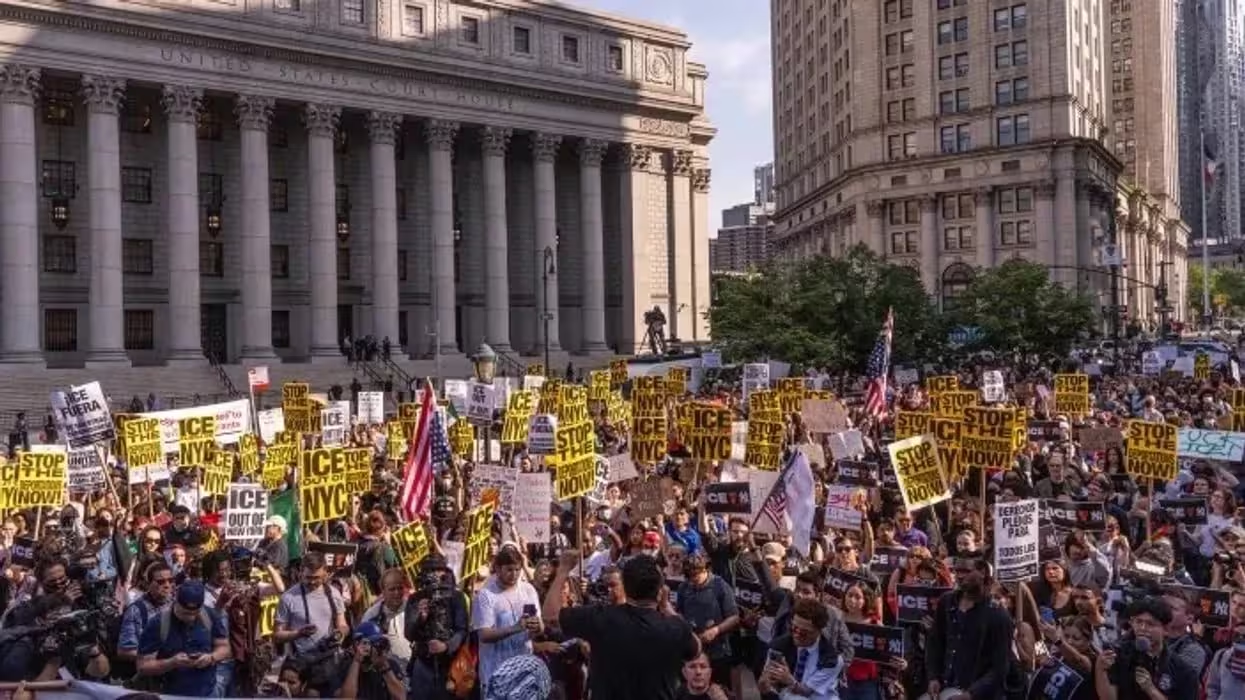
At the same time, the country has seen persistent protests over immigration enforcement. Demonstrations against ICE and border tactics have flared in cities like Minneapolis after the deaths of Reni Good and Alex Perte at the hands of federal immigration officers, incidents that sharpened public anger and kept pressure on policymakers. Protests and calls for strikes raised visibility, but haven't yet forced major policy reversals.
Meanwhile, the Department of Homeland Security reportedly reassigned a senior border official and signaled further changes even as ICE's acting leadership widened warrantless inspection powers. The result is a messy interplay of public unrest, administrative shifts and the kind of incremental policy adjustments that rarely satisfy protesters.
Galloway's thesis is rooted in behavior: small changes by many people, sustained over time, can tilt valuation models and trigger reassessments at the top. Markets are sensitive to consumer patterns. They are also sensitive to narratives about long-term growth. A drop in subscriptions for a month may not bankrupt a company, but it can shave expectations and valuations — and policymakers watch valuations.
There are practical and ethical questions. Will large numbers of users actually pull their subscriptions? Can an online movement sustain collective discipline for a month? And who decides which services are off-limits? Organizing an economic boycott without penalizing workers, contractors or smaller suppliers requires planning that goes beyond social-media calls.
Still, the proposal reframes protest strategy for a digital era. It swaps visible spectacle for invisible pressure. It asks citizens to wield what they use every day — their attention and their wallets — as instruments of civic voice.
Whether this tactic can move policy is uncertain. But it forces a sharper question: in a system where money and influence talk, what does responsible dissent look like when the usual levers of protest fall short?


Leave a Comment
Comments (2)
This idea packs a punch. Using your wallet as protest is smart, weirdly intimate. But what about gig workers, freelance folks who'll get hit? Complicated, and who coordinates it honestly
Could pulling subs for a month actually rattle Congress? Feels risky, who keeps discipline for 30 days, if that's real then... maybe, but ppl burn out fast