
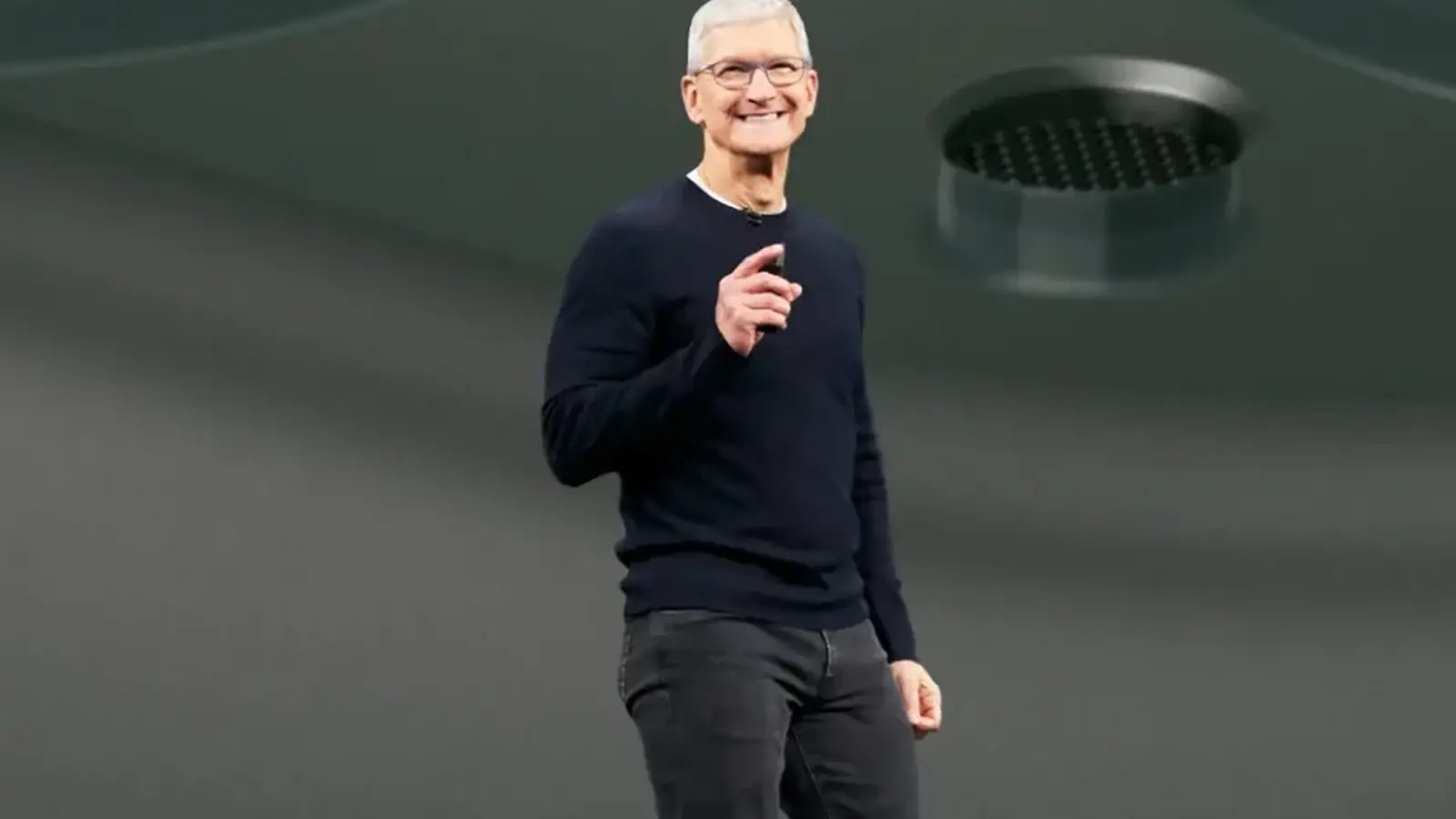
Apple closed its most profitable quarter yet, but Tim Cook didn’t sound like a CEO basking in past glory. He sounded like someone teasing the next act. Why? Because, according to Cook, the company’s most consequential products haven’t even been shown to the world.
Investors heard the message loud and clear. In the company’s recent earnings call, Cook promised a wave of “unprecedented” innovations across hardware and software in 2026. That’s not corporate boilerplate; it follows a string of rumors and small product drops — AirTag 2 arrived this week — that analysts say mark the start of an intensive launch calendar covering more than 20 new devices.
At the center of speculation sits a foldable iPhone, reportedly arriving in fall 2026. Supply-chain whispers describe a device that won’t simply copy existing foldables: Apple is apparently rethinking hinge mechanics, display longevity and the user experience when the phone is half-folded. Can a different approach to hardware and software together make folding phones feel less like a novelty and more like a new standard? That’s the bet Apple seems to be placing.
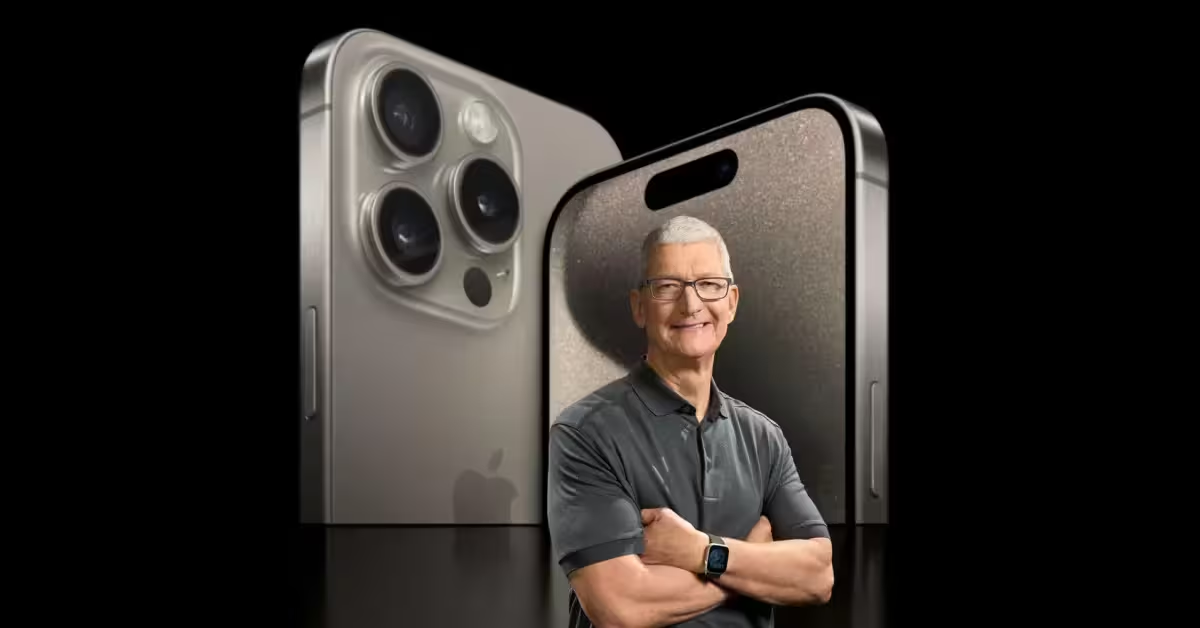
Another headline-grabber is Apple’s first consumer-focused augmented reality glasses. Early prototypes, often referred to as Apple Glasses, could be unveiled in 2026 with a commercial roll-out slated for 2027. Expect a lighter, everyday-friendly form factor compared with the high-end Vision Pro headset — a device designed to layer discreet digital information over the real world rather than replace it.
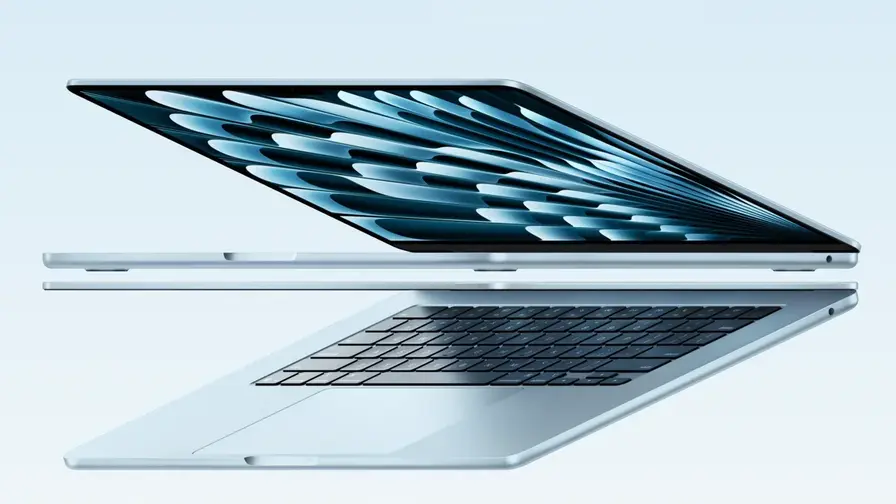
The Mac line is getting attention too. Reports point to a redesigned MacBook Pro powered by an M6 chip engineered for notable gains in performance-per-watt. Changes are likely to touch chassis design, display quality and thermal systems, all intended to keep Apple competitive in the professional laptop market where power and silence matter equally.
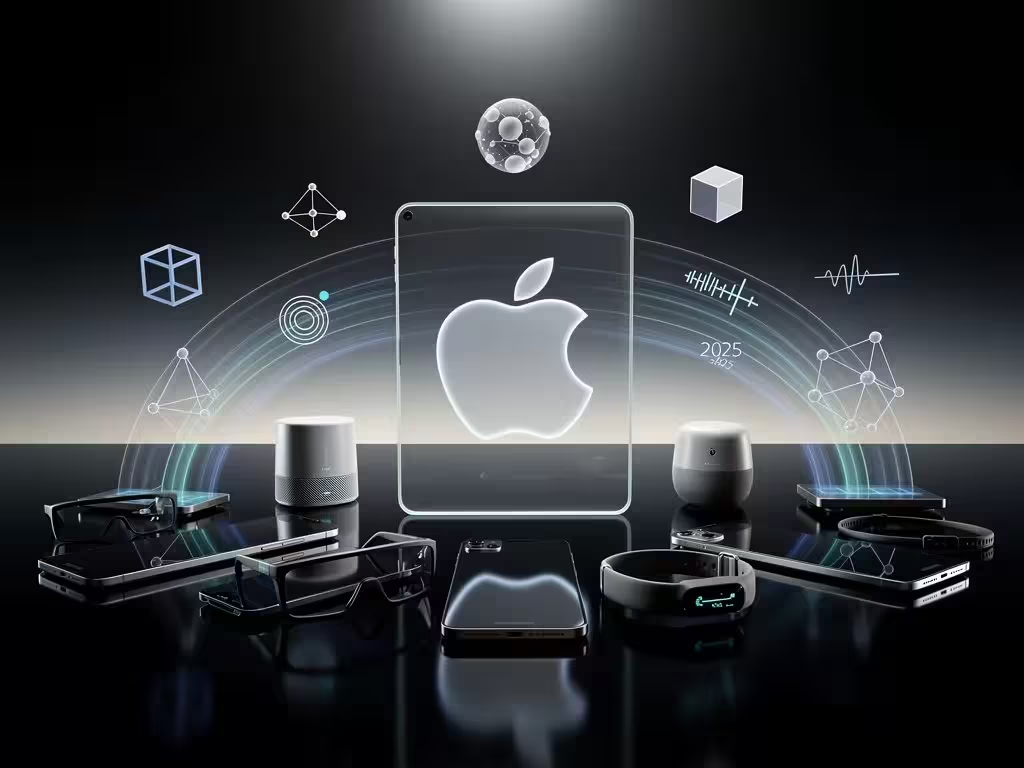
Hardware is only half the story. Apple’s roadmap reportedly leans heavily on machine learning and a refreshed Siri, with tighter AI integration across iOS and macOS. The aim is ambient personalization: smarter search, more capable content generation, and device control that anticipates needs rather than merely responding. In short, Apple appears to be blending silicon advances with software that tries to feel less like a tool and more like an assistant.
These initiatives aren’t isolated experiments. With a rumored portfolio exceeding twenty products for the year, Apple is orchestrating a broad push that spans wearables, phones, laptops and AI. If deliverables match the rhetoric, consumers and developers will face a rapid succession of new hardware and novel software capabilities.
Apple is signaling that 2026 won’t be a year of incremental updates — it aims to reset expectations. Whether that yields a wave of category-defining products or a series of intriguing but scattered releases remains to be seen; either way, it’s shaping up to be a year tech-watchers won’t want to ignore.

Leave a Comment
Comments
No comments yet. Be the first.