
2 Minutes
Barcelona's halls were loud, bright, and tiring by noon. Yet one booth forced visitors to pause: TCL CSOT, laying out a vision for displays that feel less like hardware and more like instruments for work, learning, and commerce.
At ISE 2026 the company didn't push specs for the sake of numbers. It presented APEX — an operating idea that threads image quality, eye comfort, environmental care, and creative flexibility into every product. The message was clear: displays should serve people before they serve benchmarks.
APEX ties real-world usability to sustainability and health, not just pixel counts.
Take the 27-inch In-Cell Touch Ultra-Thin Smart Display. Integrating touch into the panel trims weight and depth, producing a device that travels easily between classrooms and huddle rooms. It ships Full HD clarity, nearly full sRGB coverage, and a virtual 120Hz touch sampling rate that makes handwriting and gestures feel immediate. In short: interaction that doesn't interrupt the flow of a lesson or a meeting.
On the low-power side, TCL CSOT showed a 13.3-inch E-Paper signage panel driven by E Ink Spectra 6. No backlight — just ambient light and a near-zero power draw in standby (around 0.01W). E-paper's headline stat is endurance: months of battery life for remote tags and timetables, and an operational profile that dramatically reduces energy and maintenance costs for distributed signage.

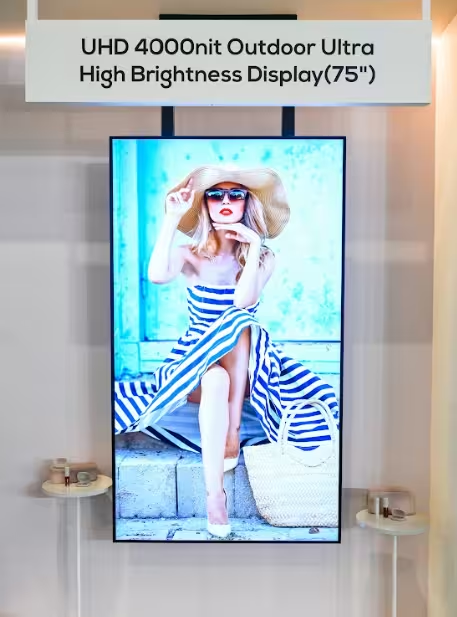
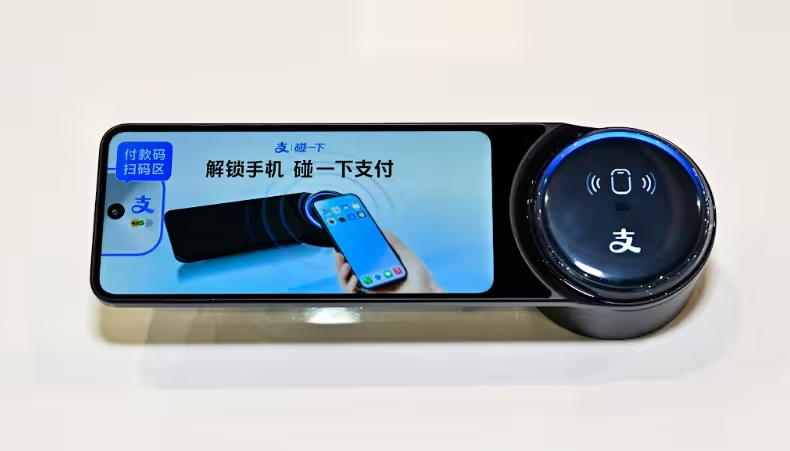
Retail and payments also got attention. The new Alipay Smart Handheld POS is an all-in-one touch terminal that handles NFC and QR workflows, plus multiple connectivity modes for popping into pop-up stores or tight checkout lanes. For outdoor visibility, TCL CSOT brought ultra-bright displays hitting about 4000 nits so messages stay readable under direct sun without losing color fidelity.
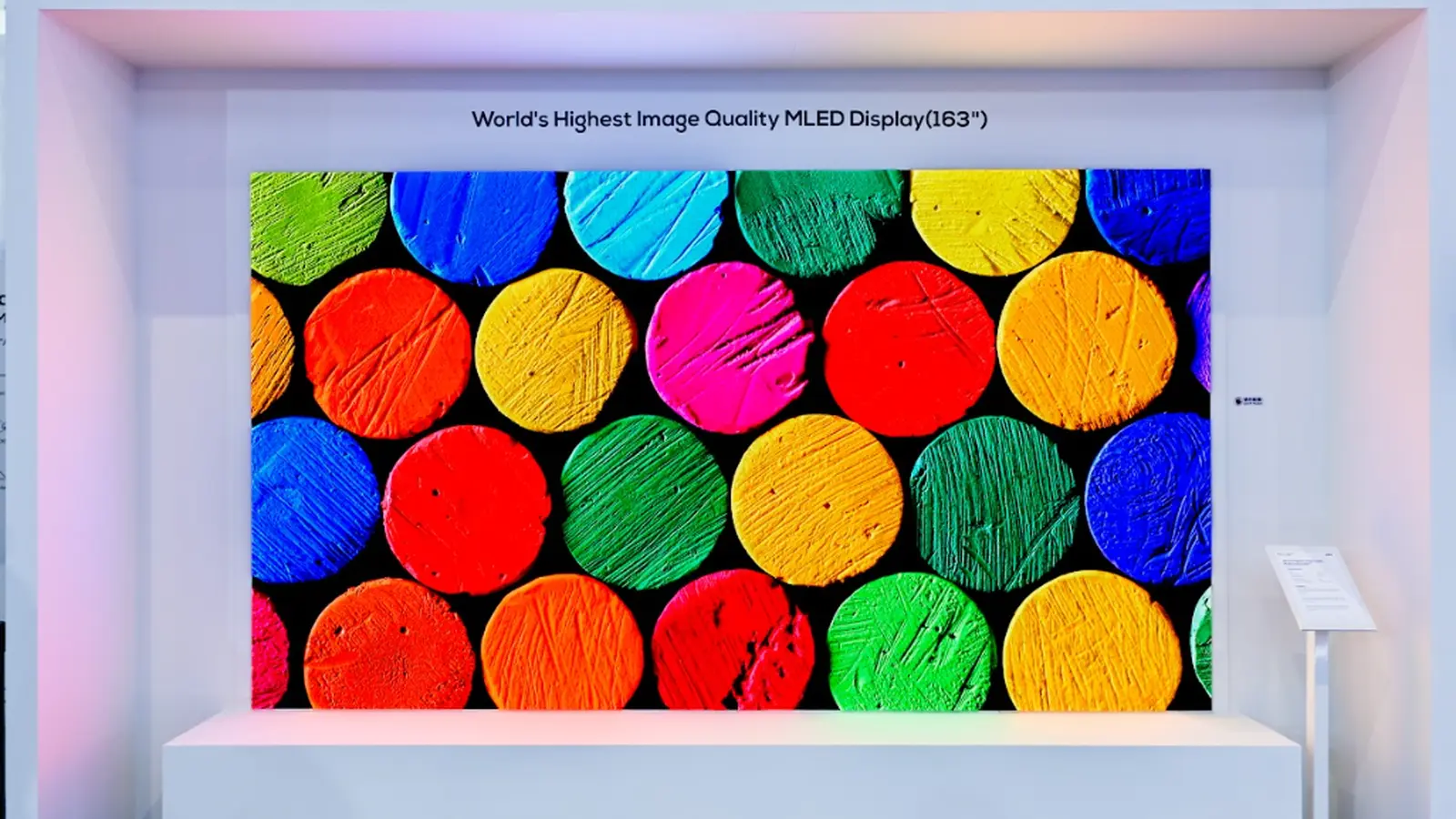
And then there's scale: a 163-inch MicroLED panel meant for live events and exhibitions. Not a prototype tucked away, but a showpiece demonstrating how modular pixel architectures can deliver cinema-level contrast and sustained brightness across enormous canvases. When organizers want presence, this is the kind of screen that commands it.
If there's a single takeaway, it's that commercial displays are mutating into more considerate technologies — less wasteful, more ergonomic, and built to fit specific workflows. Expect to see classrooms, storefronts, and event stages adopt these pieces of that thinking very quickly.




Leave a Comment
Comments
No comments yet. Be the first.