
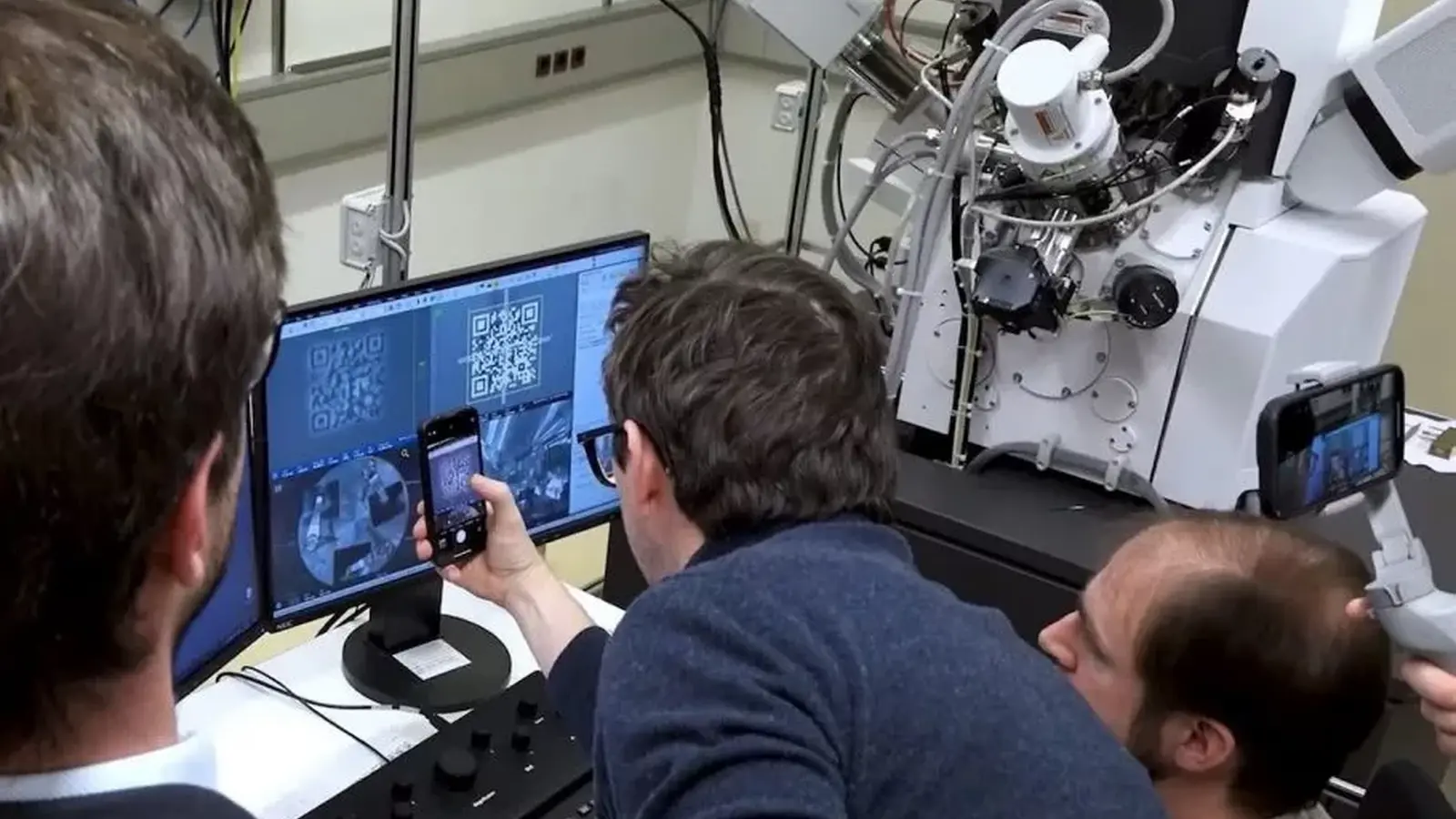
They carved a QR code smaller than a single bacterium and got a Guinness certificate for it. Tiny, precise, and intentionally durable — that's the headline from researchers at TU Wien who borrowed a trick from ancient stonemasons: if you want something to last, cut it into something that won't rot.
The new QR occupies just 1.98 square micrometres, about 37 percent smaller than the previous smallest code. Each pixel measures roughly 49 nanometres. Those dimensions are so small that visible light simply can't resolve the pattern; ordinary optical microscopes are blind to it. To read the message, scientists turn to high-resolution electron microscopy.
Try to spot it with a light microscope and you'll fail spectacularly. The team jokes that trying to read this QR with an optical scope is like trying to feel Braille with an elephant's foot — amusing image, effective point.
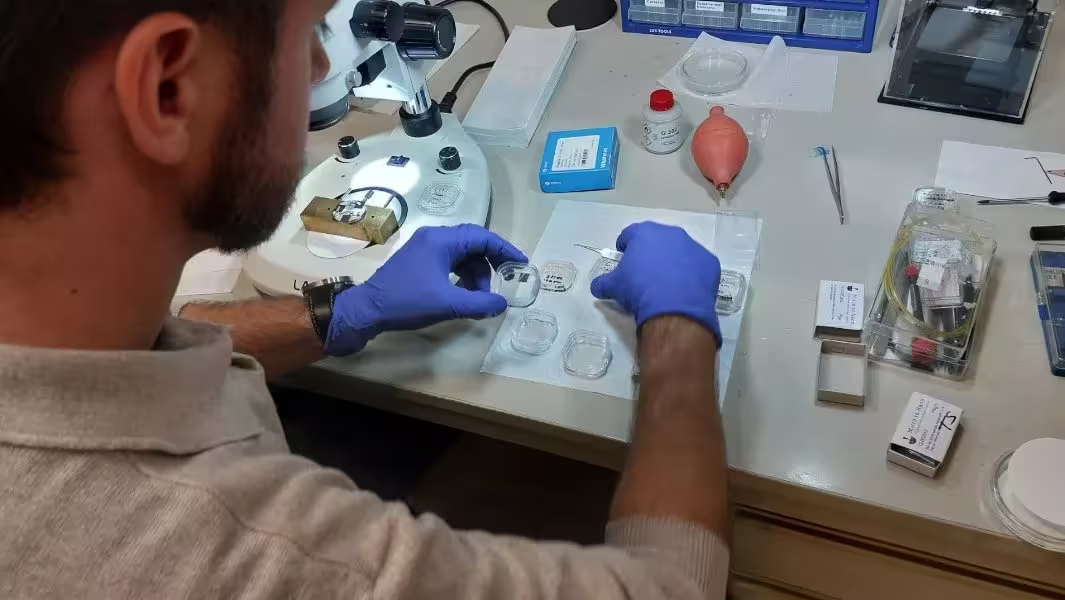
Beyond the stunt is a clear design philosophy. Alexander Kirnbauer and colleagues argue that modern digital media are fragile: hard drives and optical discs suffer bit rot and have limited lifespans. Civilizations of old etched knowledge into stone and clay so it survived millennia. By writing data into chemically inert ceramics, the Austrian group aims for an archival medium that needs no energy to maintain and resists decay.
The density is striking. On their calculations, the method could store more than 2 terabytes on a single A4 sheet. The ambition goes even further: the TU Wien team and the startup Cerabyte are pursuing petabyte-scale densities. Western Digital has noticed — and backed the startup — which hints this could move from laboratory curiosity toward real archival use.
Technical hurdles remain. Writing speed is currently slow, which keeps the work within research labs. The next push is to accelerate the inscription process so manufacturers can consider industrial applications. If they succeed, permanence and blistering density could combine into a new class of archival storage.
This is more than a novelty record — it's a glimpse of storage built to outlast the devices that created it.
Short, sharp, and permanent. The question now is whether the tiny ceramic tags will scale fast enough to matter.


Leave a Comment
Comments
No comments yet. Be the first.