
2 Minutes
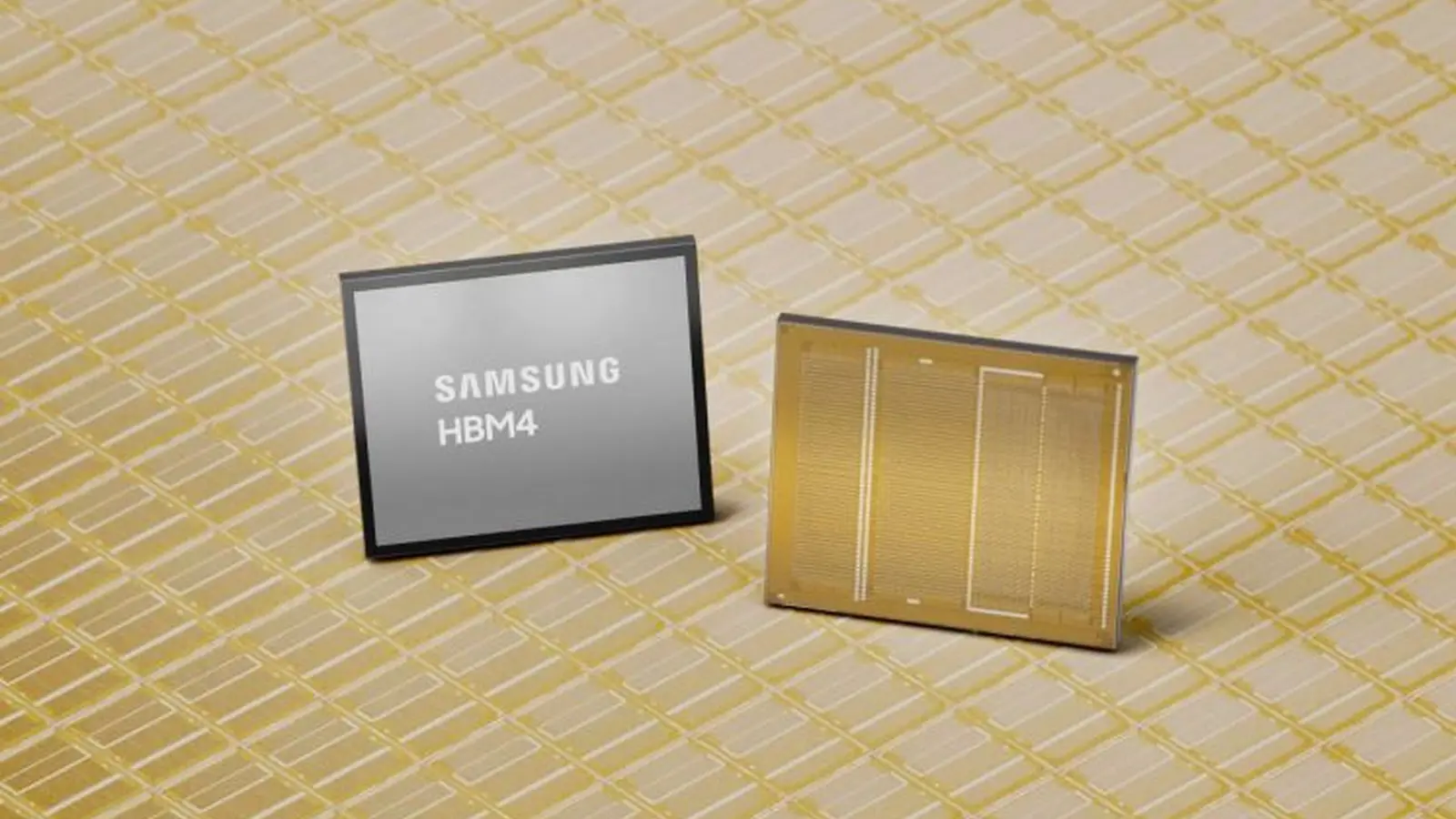
Samsung pulled ahead quietly but decisively: the company has started shipping samples of its seventh-generation high-bandwidth memory, HBM4E, to major customers — months after it began supplying HBM4 to leading AI hardware makers.
Speed gains are tangible. The new HBM4E uses a 12-layer stack that delivers roughly 20% higher performance and about 16% better power efficiency versus HBM4. Per-pin signaling is rated at 14Gbps with headroom to push toward 16Gbps, translating to an aggregate bandwidth in the neighborhood of 3.6TB/s.
There’s engineering behind those numbers. Samsung married its sixth-generation 10nm-class DRAM process (1c) with a 4nm logic base die from Samsung Foundry. The result: higher yields and smarter thermal behavior. Samsung says thermal resistance has improved by more than 14%, a small-seeming metric that really matters when memory sits next to blistering accelerators.
Capacity options start with a 48GB, 12-layer package — about 30% denser than the typical HBM4 stack. Roadmaps include an 8-layer 32GB part and a 16-layer 64GB module later on, giving system designers more choices for power, density, and cost trade-offs.

Why should engineers care? Because every percentage in speed or wattage compounds across big models and large clusters. Faster per-pin rates and improved thermal tolerance ease integration headaches for GPU and accelerator makers trying to squeeze more training throughput into finite racks and budgets.
Samsung’s memory team frames HBM4E as a follow-up to its HBM4 momentum and a corrective to earlier hiccups in the HBM3E rollout. The company says customer feedback on HBM4 has been strong and that preemptive factory investments are paying off as it scales supply for the AI market.
Samples mean one thing: validation cycles have begun. The market will watch which accelerators adopt HBM4E and how quickly the higher speeds and larger stacks show up in real-world training and inference workloads. Adoption will be the real measure of whether HBM4E reshapes memory expectations for the next wave of AI hardware.

Leave a Comment
Comments
No comments yet. Be the first.