
4 Minutes
Leaks don't always change the game. Sometimes they just loudly announce that a new player is ready to throw its hat into the ring. A set of internal slides published by VideoCardz, attributed to NVIDIA documents, does exactly that—laying out the most detailed look yet at the company's upcoming Arm-based N1 family for desktops and laptops.
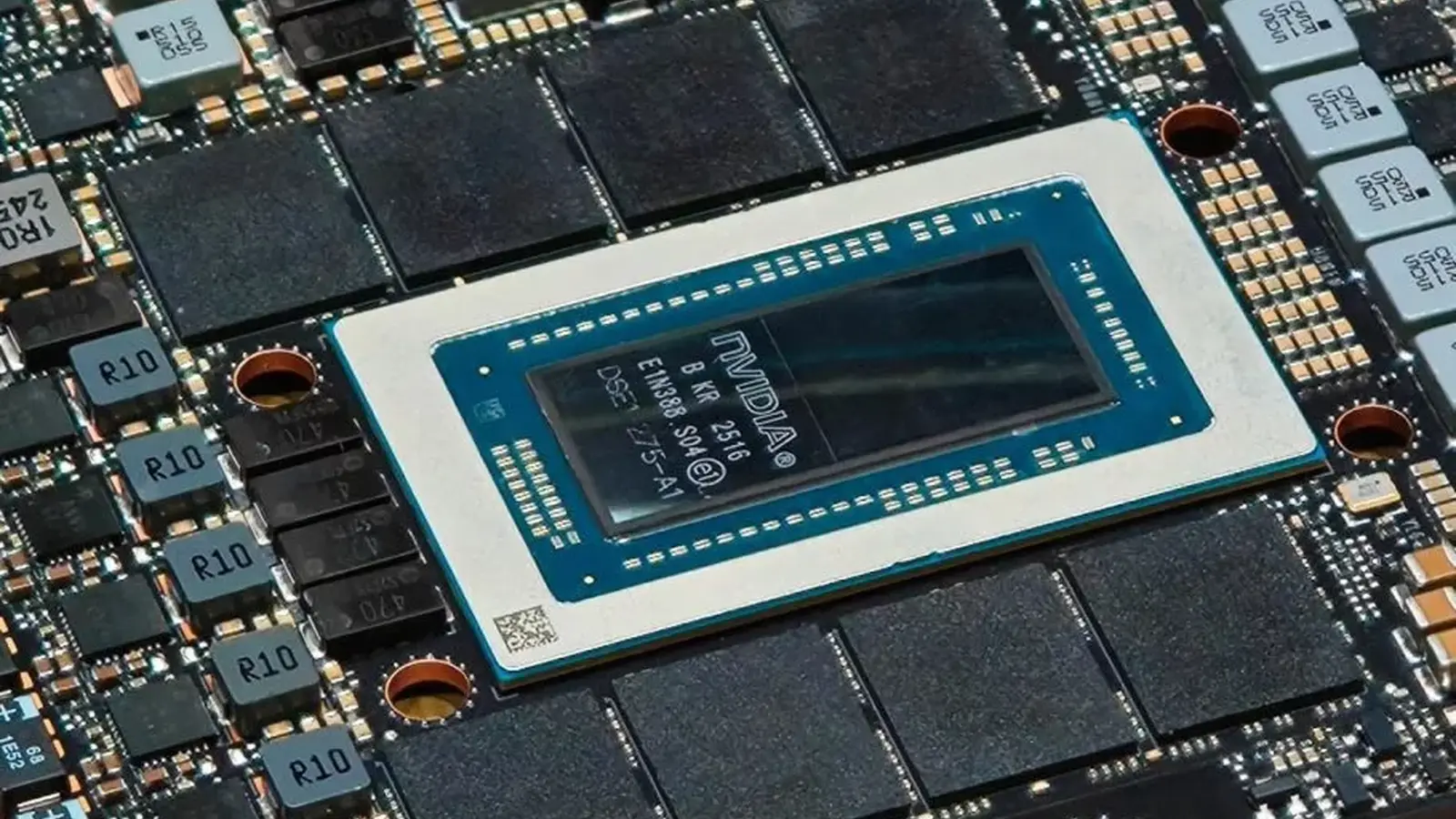
Think big. Think small. NVIDIA appears to be planning a quartet of chips that span from power-hungry flagship silicon to lean, battery-friendly designs for thin-and-light systems. The headline act is N1X, a chip that borrows its CPU topology from NVIDIA's GB10 design used in the DGX Spark AI workstation. That means a 20-core central configuration split evenly between ten high-performance Cortex-X925 cores and ten efficiency-focused Cortex-A725 cores. Graphics are handled on-chip by a Blackwell 2.0 GPU with 6,144 CUDA cores—ambitious for a single-package solution aimed at consumer hardware.
There’s also a slightly trimmed N1X variant: 18 CPU cores arranged 9+9, paired with a 5,120-CUDA-core GPU. Both N1X SKUs are sized to run in the 45–80W envelope. That wattage doesn't just cover the CPU; it represents the combined power budget for the entire chip complex, CPU and GPU together—an important distinction when comparing to legacy laptop CPUs.

The standard N1 family targets thinner, more affordable machines. Two configurations are described. The higher-end N1 mixes eight Cortex-X925 cores with four Cortex-A725 cores alongside a GPU delivering 2,560 CUDA cores. The lighter N1 option offers ten CPU cores—seven big and three little—paired with a 2,048-CUDA-core GPU. These models sit in a much lower 18–45W power band, where battery life and thermals matter as much as peak throughput.

Memory and storage support split the lines further. N1X reportedly supports up to 128 GB of LPDDR5X memory across a 16-channel interface. The standard N1 tops out at 64 GB on an eight-channel design. Storage counts differ too: N1X implementations could accept up to three M.2 SSDs, while N1 systems appear limited to two. Those platform choices hint at how NVIDIA imagines these chips being used—N1X in high-end mobile workstations or compact desktops, N1 in mainstream laptops and ultraportables.
- N1X flagship: 20 cores (10× Cortex-X925 + 10× Cortex-A725), Blackwell 2.0 GPU with 6,144 CUDA cores, 45–80W, up to 128 GB LPDDR5X, up to 3× M.2 SSDs.
- N1X (trim): 18 cores (9+9), 5,120 CUDA-core GPU, 45–80W.
- N1 (high): 12 cores (8× X925 + 4× A725), 2,560 CUDA-core GPU, 18–45W, up to 64 GB LPDDR5X, up to 2× M.2 SSDs.
- N1 (lean): 10 cores (7 big + 3 little), 2,048 CUDA-core GPU, 18–45W.
One slide in the leak includes a 2024 date, suggesting NVIDIA has been incubating this roadmap for at least two years. Roadmaps are living documents, however. Not every SKU on an internal plan makes it to store shelves. Some designs are experiments. Others are placeholders. Still, the level of detail in these documents implies this project wasn't an afterthought.
Why does this matter? Because NVIDIA's move signals a more serious push into Windows-on-Arm territory. For years, Arm-based laptops have promised long battery life and low thermals, but they often lagged behind x86 rivals in raw performance or ecosystem support. These N1 chips marry a sizable on-chip GPU with a heterogeneous CPU layout and robust memory support. That combination could finally narrow the gap between Arm silicon's efficiency and the kind of compute users expect from modern laptops and compact desktops.
Will these chips displace mainstream x86 parts? Not overnight. Will they shift design priorities for OEMs thinking about thermals, battery life, and integrated GPU horsepower? Quite possibly. Whether every model in these leaked slides sees production remains an open question—but one thing is clear: NVIDIA isn't tiptoeing into PC silicon. It's testing the water with a full lineup.

Keep an eye on the official reveal. Details will change. Expect marketing spins and performance claims. And then, finally, the real-world laptops and desktops will tell us whether the N1 family is a revolution in waiting or a tactical step in a longer plan.

Leave a Comment
Comments (2)
Feels kinda overhyped, but if they nail battery life and app support, it could win some ppl...
Wait 6,144 CUDA cores at 45-80W? If thats real then Nvidia just turned laptop GPUs up a notch... but drivers?