
3 Minutes
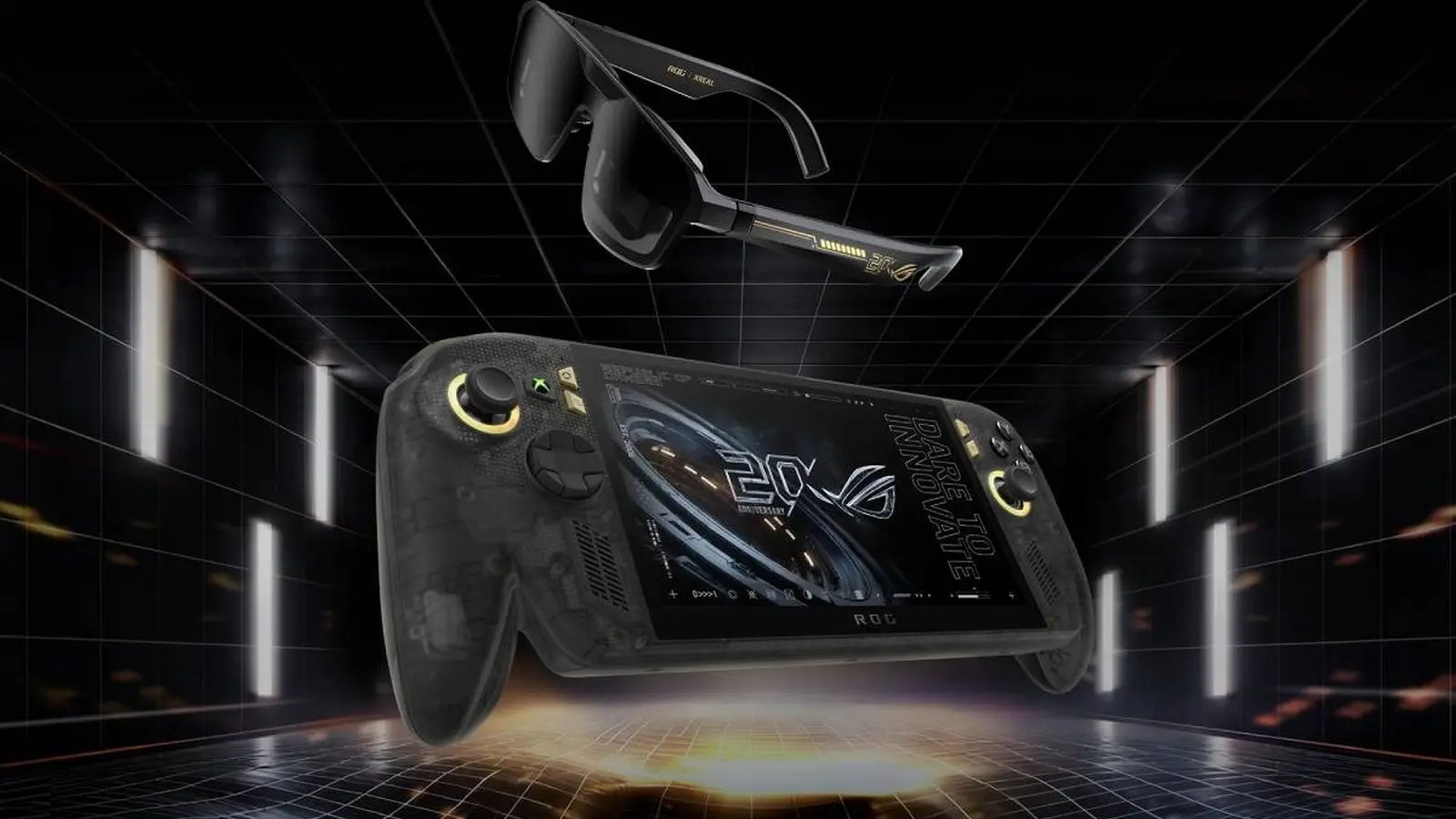
A pocket gaming powerhouse just sharpened its stare—and then handed you sunglasses. Odd move. The ROG Xbox Ally X20 trades the original unit's small LCD for a larger, far brighter 7.4-inch OLED, but Asus has packaged that improvement exclusively in a bundle with high-end ROG Xreal R1 Edition 20 glasses. Expect excitement. Expect sticker shock.
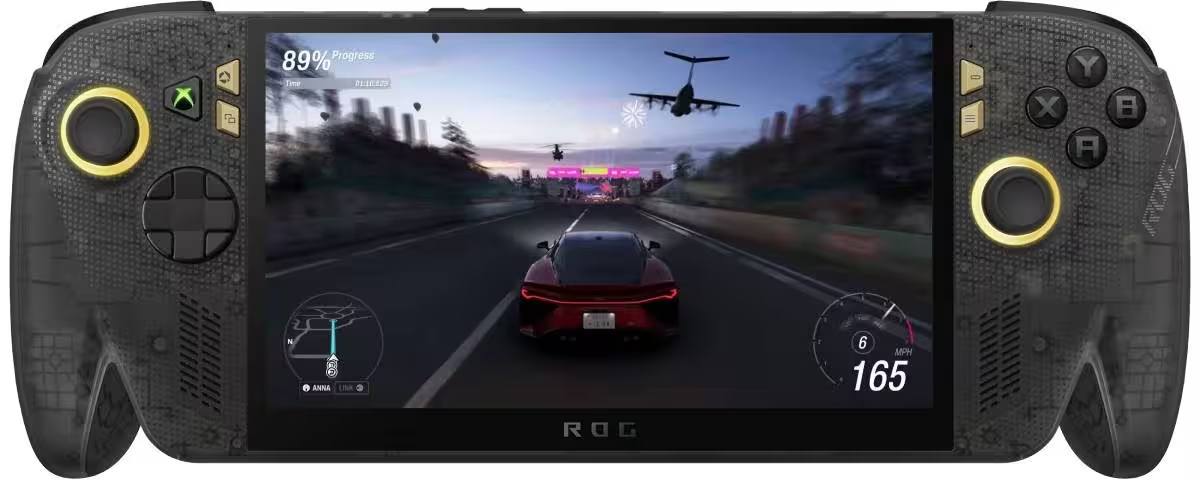
Think of the screen as the headline act: 7.4 inches, 1920 x 1080 resolution, and a variable refresh window that spans 30Hz to 120Hz. Brightness jumps to a quoted 1,400 nits from the previous 500. It adds VESA DisplayHDR TrueBlack 1000 and Dolby Vision support, and keeps Gorilla Glass Victus with GG DXC anti-glare for scratch and reflection resistance. In short: this is the kind of display that makes handheld gaming feel premium.

Now the glasses. The ROG Xreal R1 Edition 20 in the bundle create a virtual 171-inch screen with a 57° field of view, driven by micro-OLED panels at 1,920 x 1,080 and a blistering 240Hz refresh. They even include an electrochromic lens with three dimming levels to tame ambient light. Connection is simple: single USB-C to the Ally or other sources via the ROG Control Dock, which adds two HDMI 2.0 ports and a DisplayPort 1.4. The caveat? Those glasses retail near $850 on their own—almost as much as the handheld itself—so the inevitable price of the bundle will be steep.
Under the hood the X20 is refreshingly familiar. It still runs an AMD Z2 Extreme APU—eight cores, 16 threads, bursts up to 5.0GHz, 16 graphics cores and a configurable TDP between 15 and 35W—paired with 24GB of LPDDR5X and a 1TB PCIe 4.0 NVMe M.2 SSD. Performance hasn't changed. What has changed are the controls: Asus swapped Hall effect sticks for TMR sensors to fight stick drift, reworked the ABXY buttons so they sit flush when pressed, and made the D-pad rotatable between 4-way and 8-way operation. Little touches like these matter in daily play.
Ports and wireless are generous. The Ally X20 offers one USB-C 3.2 Gen 2 with DisplayPort, a USB-C 4.0 port supporting Thunderbolt 4 and DisplayPort 2.1 with FreeSync, and a 3.5mm Hi-Res audio jack. Tri-band Wi‑Fi 6E and Bluetooth 5.4 handle connectivity, while a microSD Express slot and user-replaceable M.2 give you flexibility for storage expansion. Stereo speakers support Dolby Atmos for handheld audio that punches above its size.
There are, naturally, compromises. The X20 is chunkier and heavier: 300 x 121 x 27.5–51.3 mm and 756 g, up from the original model’s 290 x 121 x 27.5–50.9 mm and 715 g. The battery remains the same 80Wh cell with 68W fast charging over USB-C, so you get the larger screen without more battery capacity—meaning power management and thermals will be critical in real-world gaming sessions.
- Display: 7.4" OLED, 1920 x 1080, 30–120Hz VRR, 1,400 nits, Dolby Vision
- Processor: AMD Z2 Extreme APU, 8 cores / 16 threads, up to 5.0GHz
- Memory & Storage: 24GB LPDDR5X, 1TB PCIe 4.0 NVMe (M.2 2280)
- Controls: TMR joysticks, reworked ABXY, rotatable D-pad (4/8-way)
- Connectivity: USB-C 3.2 Gen2 (DP), USB-C 4.0 (TB4, DP2.1), 3.5mm, Wi‑Fi 6E, BT 5.4, microSD Express
- Battery & Size: 80Wh, 68W fast charge, 300 x 121 x 27.5–51.3 mm, 756 g

So what are you really buying? A sleeker screen and much sturdier sticks, or a combined hardware statement that nudges you toward a niche accessory? That question will decide whether the X20 bundle appeals as a genuine upgrade or an awkward price hike masked as a special edition. Either way, Asus has given handheld fans something worth arguing about.


Leave a Comment
Comments
No comments yet. Be the first.