
3 Minutes
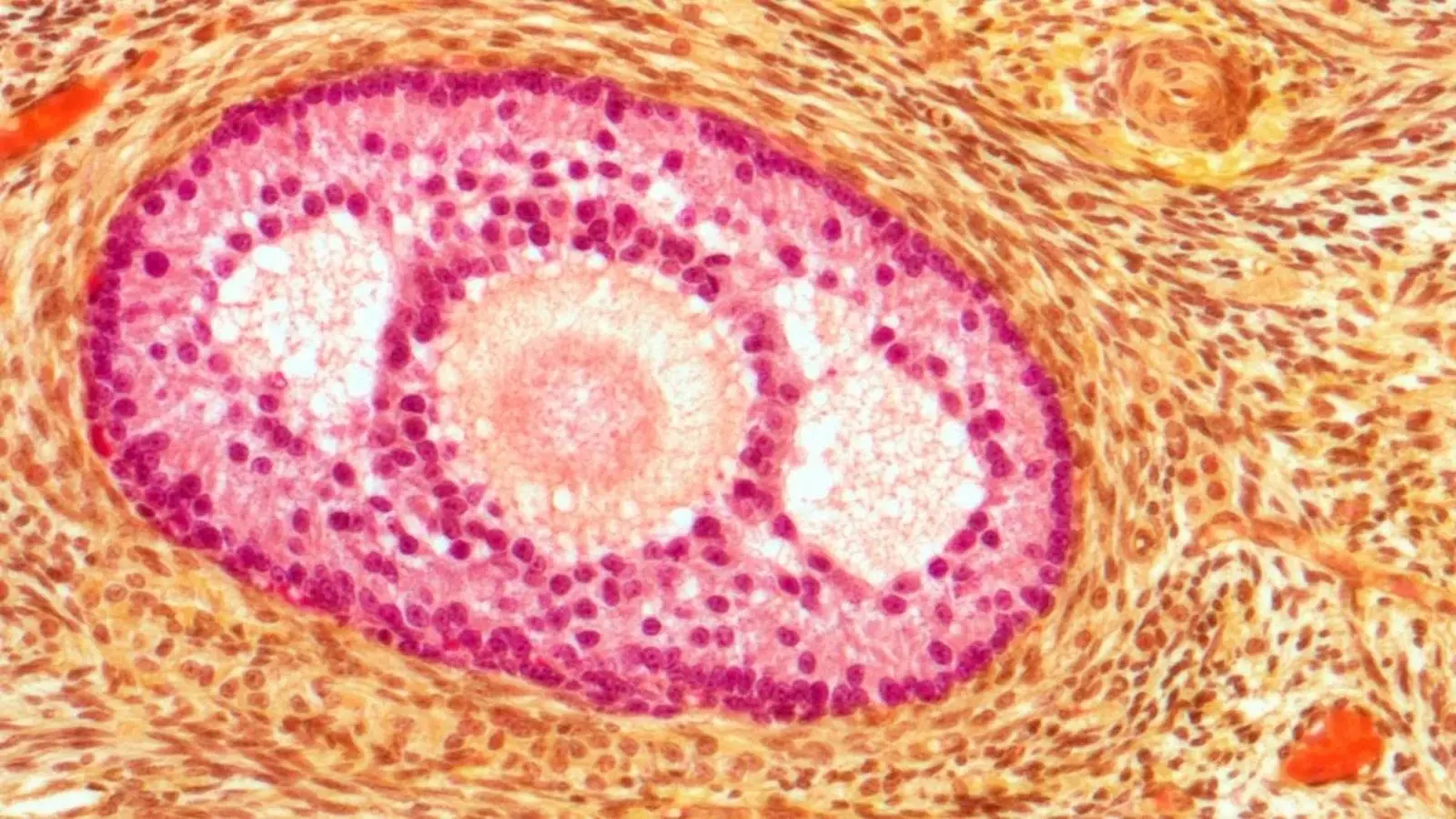
Imagine an egg suspended in a soft, protein-rich jelly. That gelatinous scaffold, the extracellular matrix, does more than hold cells in place; it transmits chemical and mechanical cues that tell follicles when to sleep and when to grow. As ovaries age, that jelly firms up. The change is small at first, then cumulative. Cells feel it. Follicles suffer.
Primordial follicles are tiny, isolated chambers that shelter immature eggs for years. They have no blood supply and little contact with neighboring cells, so the surrounding matrix is their lifeline. Soft where growth is allowed, tight where preservation is required. Aging, chronic inflammation, and oxidative stress tip this balance: collagen piles up, scar tissue forms, and the matrix stiffens. The result is a tissue less forgiving to a developing egg.
Researchers in China followed that trail of stiffness to a single signaling culprit: interleukin 11, or IL-11. By combing through human ovarian samples and running molecular scans, they found IL-11 levels rise with age, and not just in mice but in rats and humans too. The signal appears in ovaries affected by chemotherapy, endometriosis, and polycystic ovarian conditions, suggesting a common pathway driving fibrotic remodeling across different forms of ovarian stress.
How did they test the idea? With genetics and a treatment-style approach. In mice, the team knocked out the gene responsible for IL-11 signaling and, in parallel experiments, silenced the protein using RNA-loaded nanoparticles designed to reduce IL-11 production. The outcome was striking: ovaries stayed more pliable, collagen accumulation eased, and fertility measures improved. Female mice produced larger litters per pregnancy compared with untreated peers.

Ovarian matrix stiffness increases in aging and pathological ovarian dysfunction.
Blocking IL-11 signaling kept the ovarian matrix softer and improved ovarian function in aging and disease models.
Those are promising results, but translating mouse data to human medicine is always complex. Still, the work dovetails with an encouraging reality—anti-IL-11 therapies are already being explored in clinical trials for other conditions. That means a safety and pharmacology roadmap may already be taking shape, shortening the runway should human fertility applications be pursued.
Beyond potential treatments, the study reframes how we think about reproductive aging. It suggests menopause and declining egg quality are not merely products of time or exhausted follicles, but also of a changing physical microenvironment. If tissue mechanics can be nudged back toward a younger state, the clock on reproductive decline might be slowed—or at least softened.
Caveats remain. Long-term effects of dampening IL-11 in humans are unknown. The ovarian matrix plays multiple roles, and altering its properties could have downstream consequences for hormone production, tissue repair, or tumor surveillance. Any future trials will need to weigh benefits for fertility against systemic effects.
For millions facing infertility or the specter of premature ovarian insufficiency after chemotherapy, this research is a cautious beacon. It opens a path not just to preserving eggs, but to treating the tissue environment that determines whether those eggs thrive. The next steps will be clinical validation and careful assessment of risks. Until then, scientists will watch the ovarian matrix with fresh interest, asking a simple, practical question: can we keep the jelly soft enough for more eggs to make it through?


Leave a Comment
Comments
No comments yet. Be the first.