
3 Minutes
A refrigerator-sized instrument floating above Earth has nudged atoms into behaving in a way we rarely observe on the ground. Strange. Beautiful. Useful.
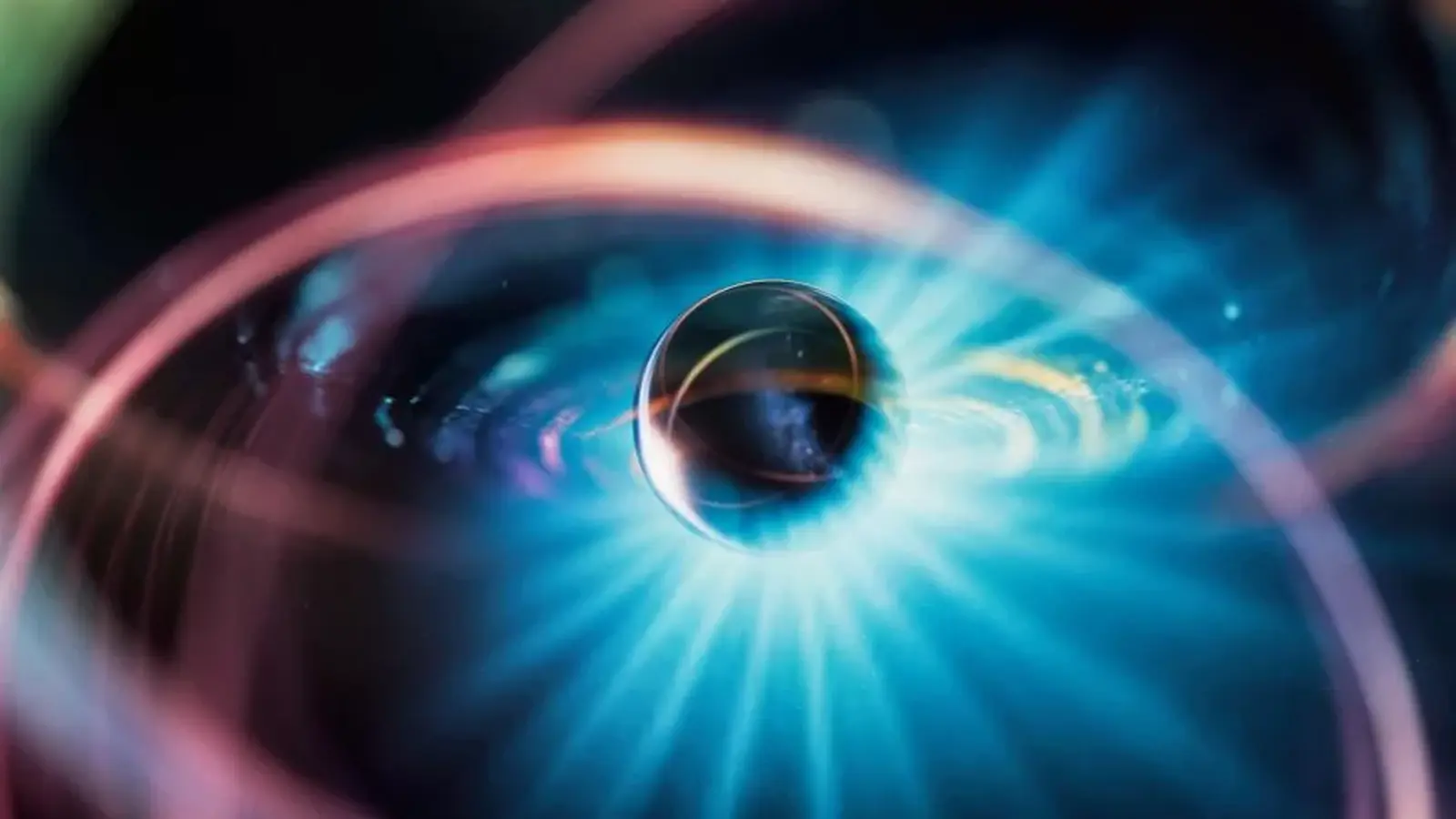
Onboard the International Space Station, NASA’s cold-atom lab uses laser light and magnetism to cool clouds of rubidium and potassium until they lose their individual identities. At temperatures a whisper above absolute zero, thousands of atoms collapse into a single quantum entity known as a Bose–Einstein condensate. Imagine individual musicians suddenly fusing into one enormous, slow-moving choir—one waveform of matter rather than billions of separate players.
Getting there on Earth is a constant fight against heat and gravity. Thermal jostling scrambles fragile quantum states in milliseconds. Gravity pulls condensates apart. In orbit, microgravity buys scientists time: quantum waves can expand larger and persist longer, giving researchers the luxury to probe subtle effects that would be blurred out in a terrestrial lab.
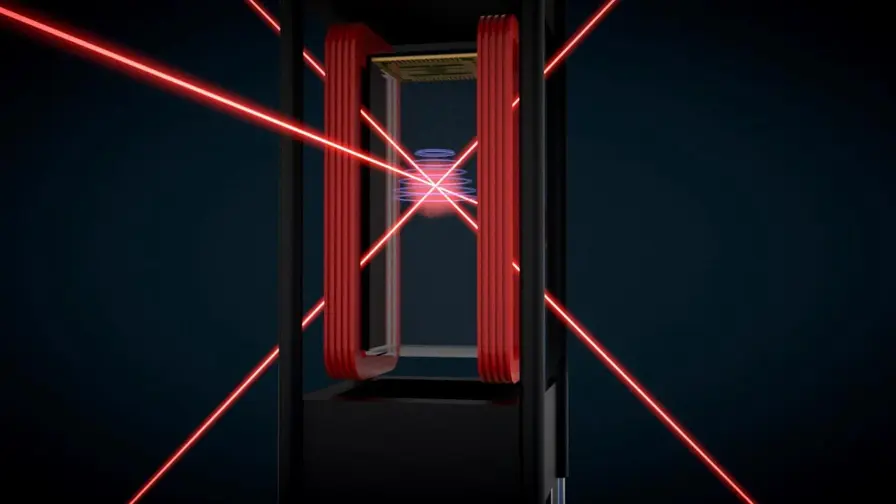
The experiment begins humbly. A thin ribbon of rubidium or potassium metal is heated to roughly 400 °C to produce a vapor. Carefully tuned lasers then siphon kinetic energy from the atoms, slowing them to a crawl. When the lasers finish their work, a magnetic trap keeps the ultra-cold cloud suspended and quiet. In this hushed environment, atoms behave less like billiard balls and more like ripples in a pond—only these ripples obey the rules of quantum mechanics.

In April 2026 the lab received its fourth major upgrade since 2018. Astronaut Jessica Meir installed the new hardware: a redesigned magnetic trap that can reshape atomic clouds on demand, enhanced atom sources, and measurement systems with far greater precision. Those improvements mean larger condensates, cleaner signals, and experiment runs that can test physics at scales and durations previously out of reach.
Why does any of this matter outside a physics seminar? Because mastering matter at these extremes unlocks practical tools. Precise atomic sensors born from BEC research could let explorers navigate without GPS on the Moon or other worlds. They could also map tiny variations in Earth’s gravity field with unprecedented resolution—data that would refine everything from sea-level models to subterranean resource studies.
This isn’t just a demonstration of cool physics; it’s the foundation of future navigation, sensing, and measurement technologies beyond our planet.
There’s also a rarer payoff: insight. Observing quantum matter under microgravity reveals behaviors that hint at deeper principles of nature. Each experiment peels back a layer of mystery. Each run teaches us how to engineer, measure, and ultimately harness quantum phenomena in environments where gravity no longer dominates the story.
Follow the next experiments closely. The quiet that lives in those ultra-cold clouds may whisper the next big step for spaceflight, navigation, and our understanding of the quantum world.

Leave a Comment
Comments
No comments yet. Be the first.