
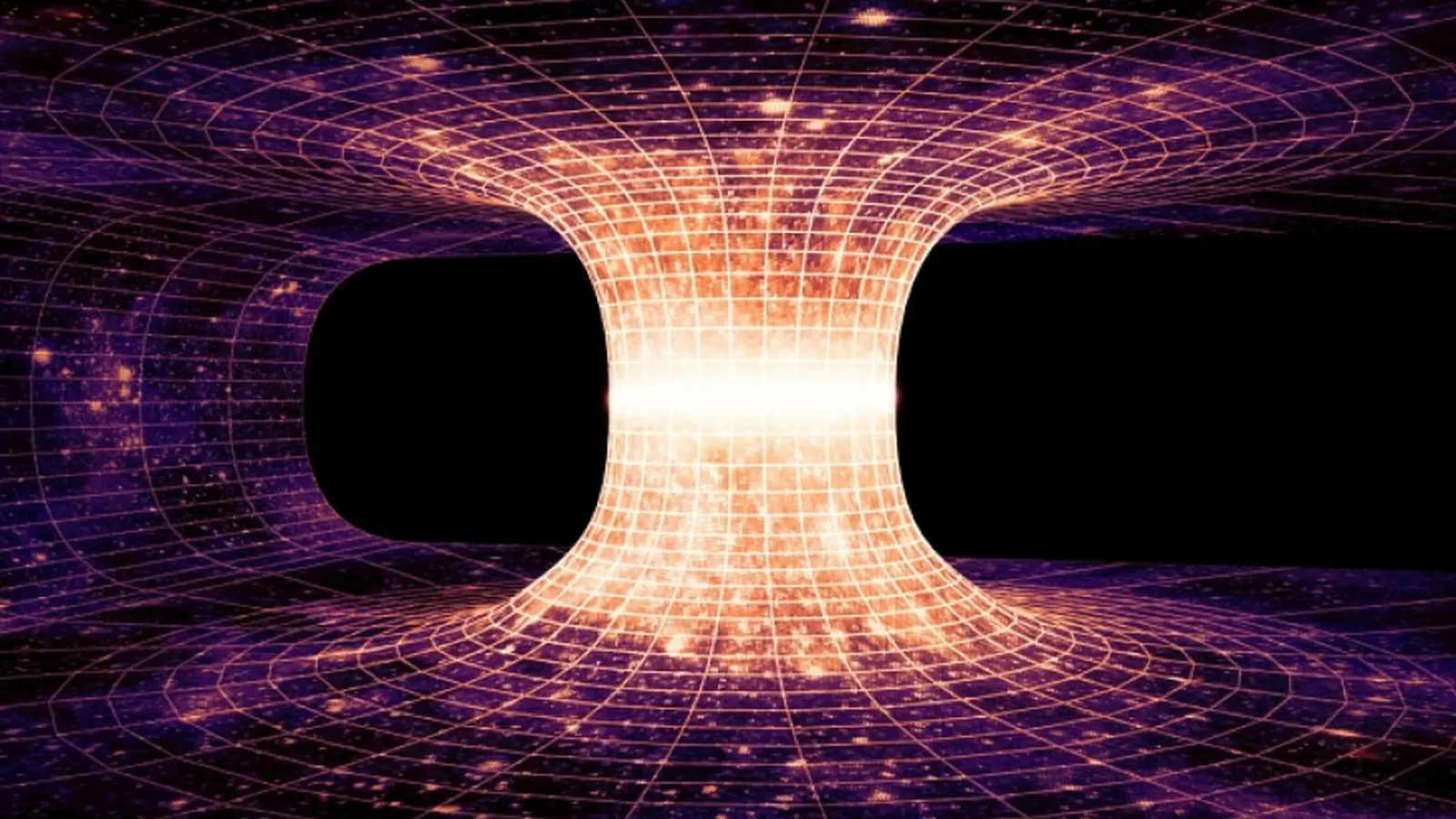
Imagine a cosmic zipper: seams of space-time that suddenly snap and reweave, freeing up energy in the process. That image is the closest everyday metaphor researchers have for a newly proposed way gravity might hand energy to matter—an idea the authors dub "gravitational reconnection."
The notion grew from a curious mathematical twist. Luca Comisso of Columbia University and Felipe A. Asenjo of Universidad Adolfo Ibáñez reworked Einstein’s field equations and found patterns that resemble the equations describing plasmas—hot, electrically charged gases that light up stars and sculpt the solar system. In plasmas, magnetic field lines can stretch, break and reconnect in violent episodes called magnetic reconnection. Those events power solar flares and accelerate particles to dizzying speeds. Could gravity do something similar?
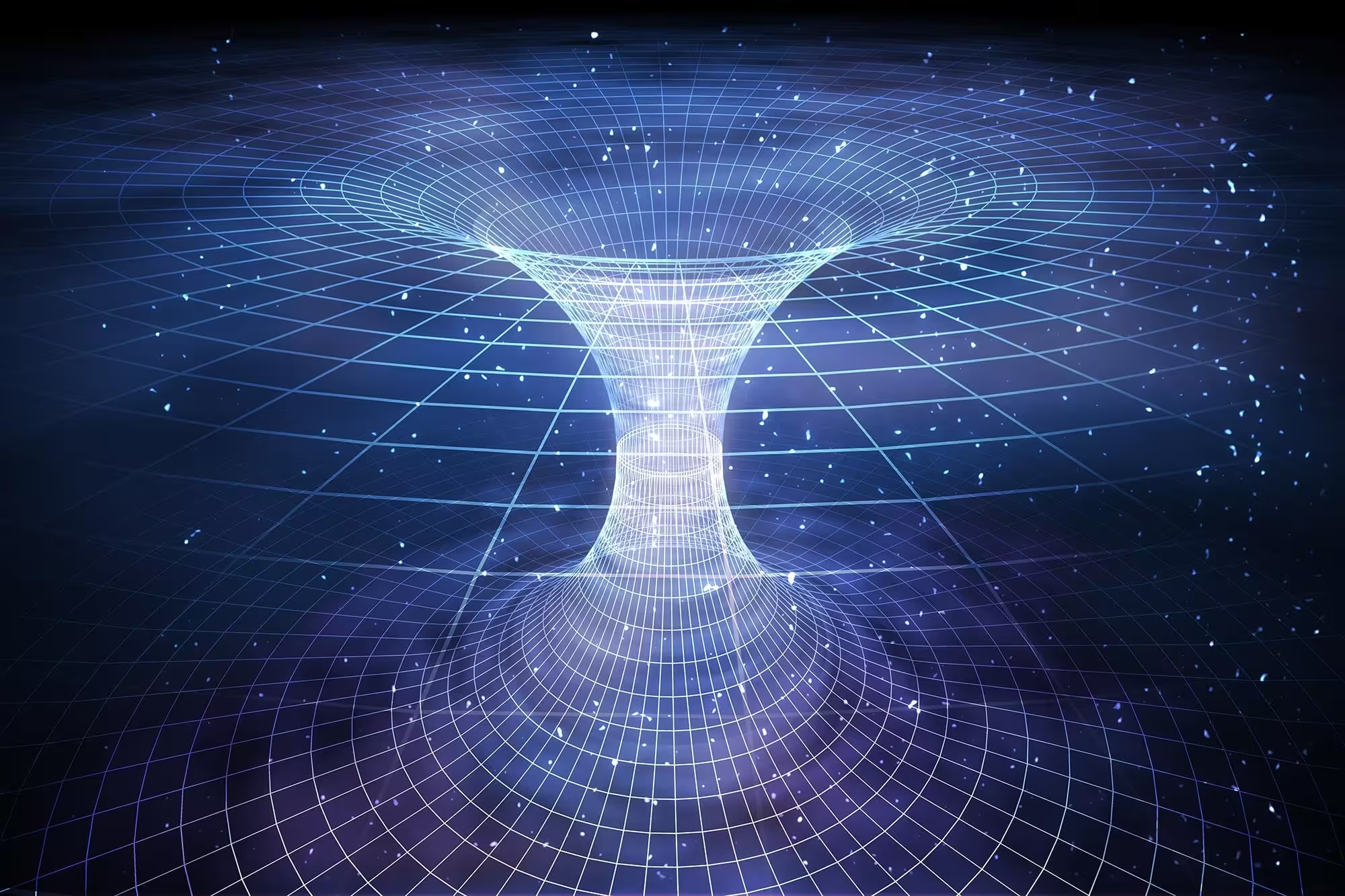
“Magnetic reconnection is when these field lines, in some specific configuration, break and reattach in a different configuration,” Comisso has explained in past interviews. When that rearrangement happens, stored magnetic energy pours into particles. Comisso and Asenjo argue that, in the four-dimensional geometry of space-time, gravitational fields don’t form one-dimensional lines but two-dimensional sheets. If those sheets change how they connect, the mathematics says energy can flow from the gravitational field into matter.
The analogy is useful but imperfect. Space-time isn't a fabric you can touch. The sheets they describe are mathematical structures—planes formed when you extend the idea of a line by one dimension. Yet the equations reveal real constraints: hidden relationships that dictate how these sheets can link and evolve. These are not obvious when Einstein’s equations are written in conventional variables, but they jump out after a careful change of mathematical perspective.
Asenjo emphasizes that these are constraints on allowed behavior, not a menu of phenomena you will always see. “Einstein’s equations contain constraints on how space-time can evolve that are not immediately apparent,” he says. Recasting the equations illuminates those constraints and opens a path to study what reconnection might do in extreme environments.

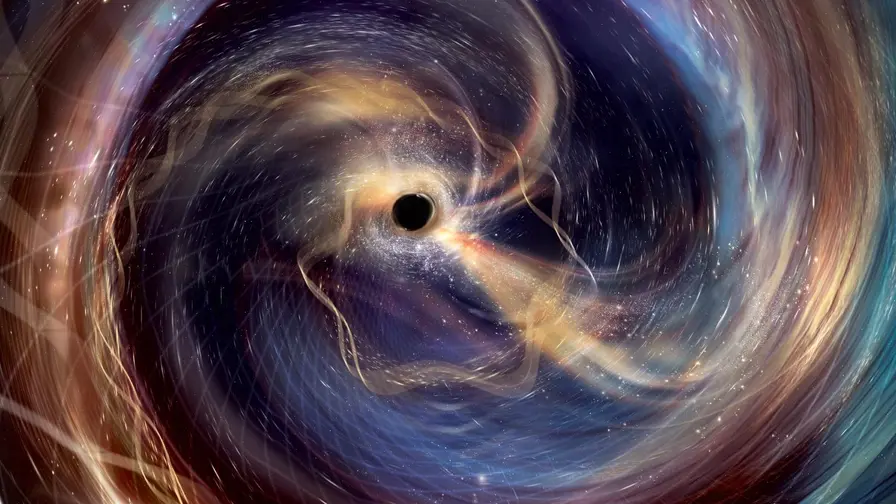
Why does any of this matter? Think of merging black holes. When two black holes swirl together, space-time itself is violently distorted. Numerical relativity—large-scale computer simulations—remains the main way physicists predict the gravitational waves produced by such cataclysms. But if there are built-in rules about how gravitational structures must reconnect or reconfigure, those rules could narrow what simulations need to chase, revealing patterns without calculating every microscopic twist.
In short: the math hints that gravity might store and then suddenly release energy by reorganizing the geometry of space-time itself.
The study appears in Physical Review D and builds on earlier work with Maricarmen A. Winkler that identified similar hidden constraints. The authors are careful to stress the theoretical status of the idea. Gravitational reconnection is a mathematical possibility at this stage. The big questions remain: does it actually happen in astrophysical settings, how much energy can it transfer, and could it leave telltale imprints on the gravitational waves we detect?
Observationally, the door is ajar. Gravitational-wave observatories such as LIGO and Virgo are already listening to collisions of black holes and neutron stars. If reconnection has distinctive signatures—an unexpected burst within a waveform, or a pattern in how energy is redistributed during a merger—future data might carry its fingerprints. But distinguishing such effects will demand clever models and careful crosschecks.
Theoretical follow-ups will probe where the hidden constraints are strongest and when reconnection is likely to flip on. Will it be confined to the most violent corners of the universe, or could subtler versions occur around dense stars or in the early cosmos? For now, physicists have opened a new window into Einstein’s century-old equations—a window that reframes gravity not just as curvature, but as a potential actor in energetic transfers once thought exclusive to electromagnetic plasmas.
That idea alone is a reminder: even the equations we think we understand can surprise us when viewed from a new angle. What comes next will test whether nature, like the math, is willing to unzip the fabric of space-time.

Leave a Comment
Comments
No comments yet. Be the first.