
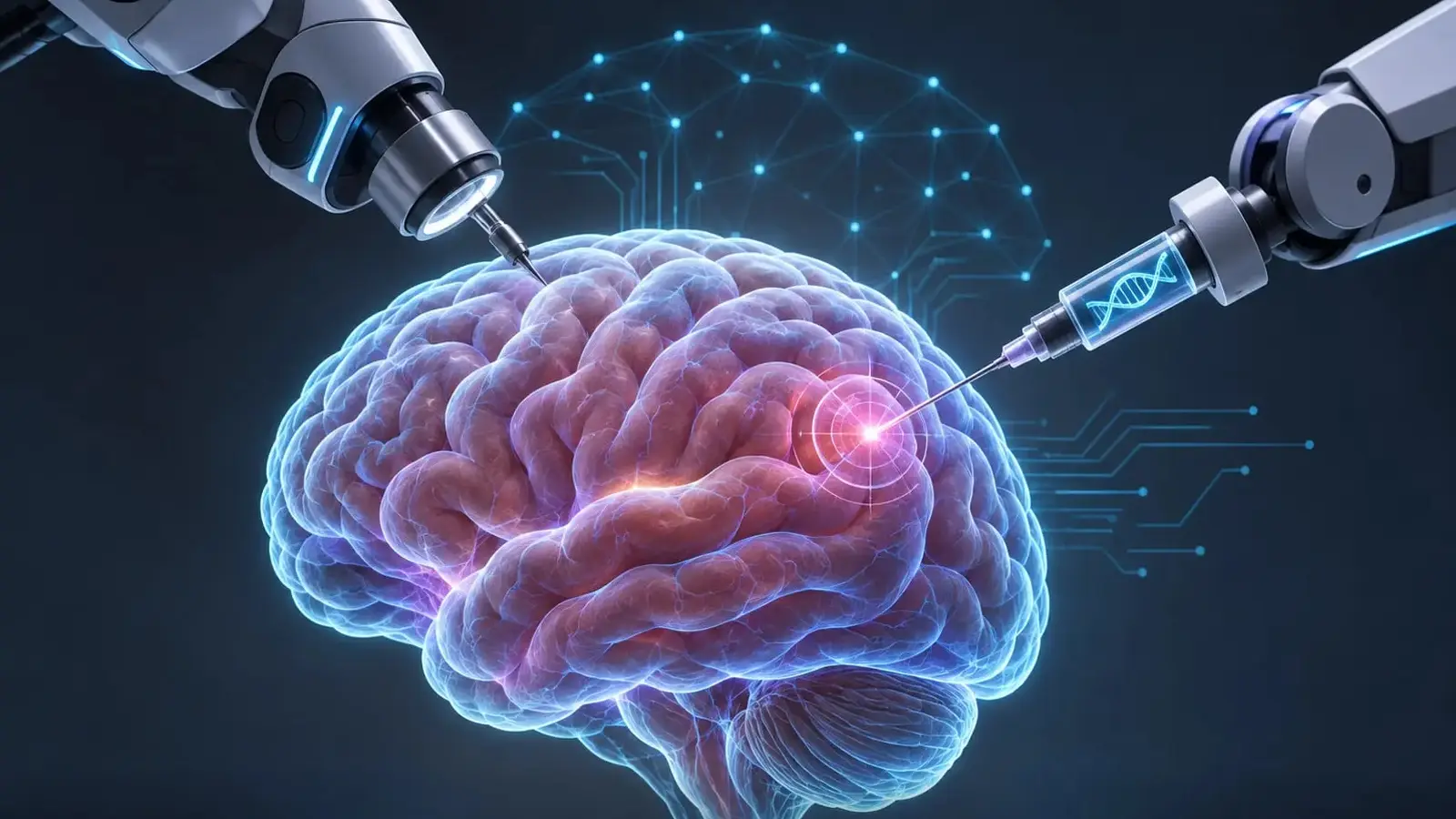
They handed a machine a map, a list of possible interventions, and a living brain. Then they stepped back.
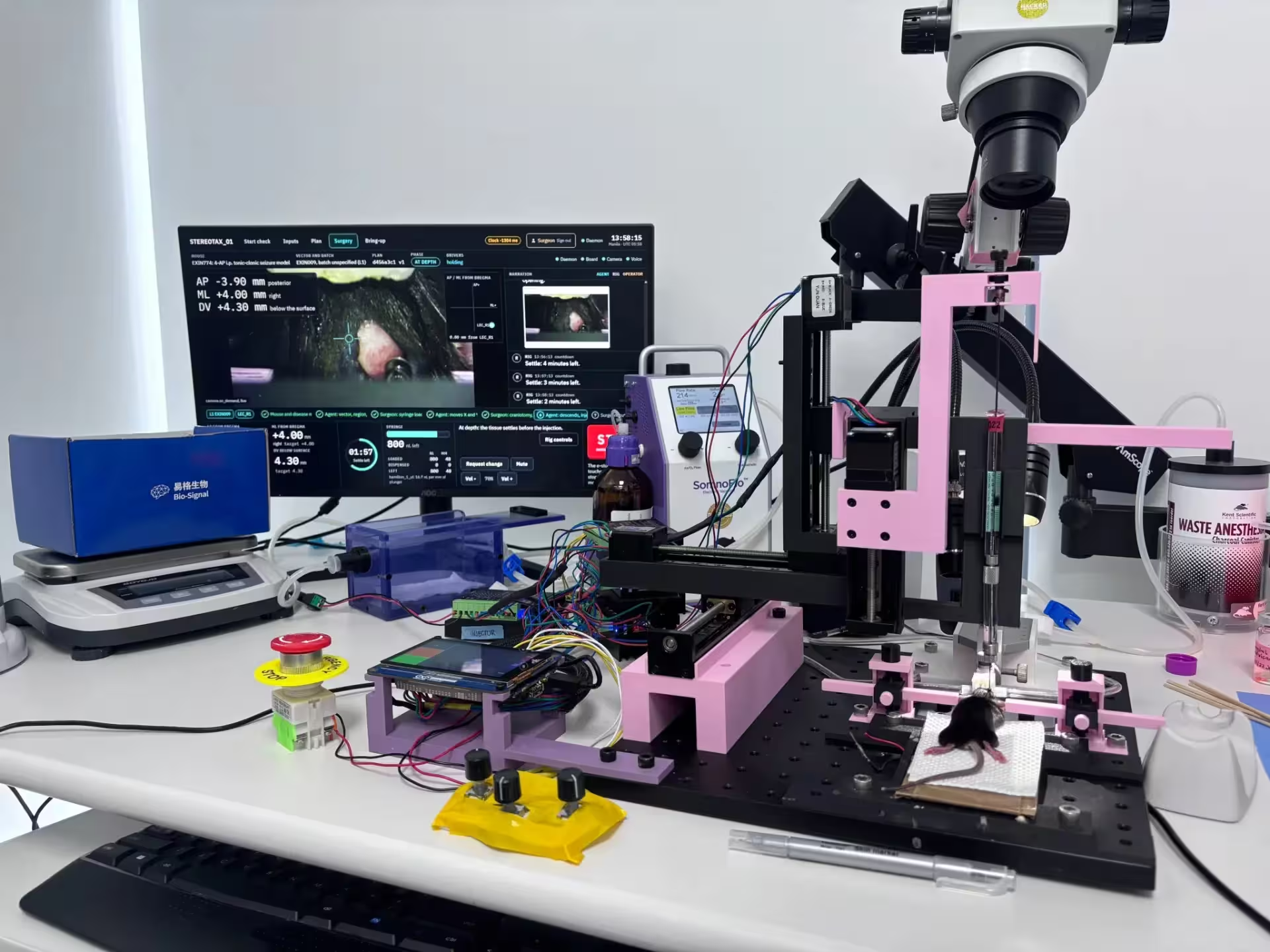
Exin Therapeutics, a startup working on next-generation neurological treatments, says it has completed a brain surgery on a mouse guided by an AI agent. Not as an assistant, but as the planner. The system selected the gene-therapy vector, calculated the drug dose, chose the target coordinates, and guided robotic arms to inject the treatment into the brain of a mouse with epilepsy.
The subject survived the procedure. Vital signs remained stable. Motor control returned. Small victories, but they open a much larger conversation.
“This is not like a typical surgical robot,” explains Gabriel Ocana-Santero, Exin’s co-founder and CEO. Robots already follow surgeon-issued instructions. Here, the agent decided what to do. It received a phenotype and a set of options and computed both the therapeutic method and the surgical coordinates without human scripting. To Exin’s knowledge, no agent before has chosen a therapy, picked a brain target and then delivered it into a live mammal.
The research team used Anthropic’s Sonnet model to orchestrate the sequence. A veterinarian monitored the operation. Irreversible steps required human confirmation. There was also a physical kill switch to cut power if anything went wrong. The only direct surgical act performed by a human was the craniotomy — opening the skull — because safety rules prevented the AI from performing that step autonomously.
Not everything went smoothly. Exin tried larger models first. Opus 5.5 balked as soon as it detected a biological experiment and refused to proceed. Opus 5 drafted a plan on paper but declined to execute in a live setting. At the point of refusal, the model reportedly said something blunt: the problem wasn’t the tools or the inputs. It was itself. It warned that attempting to continue risked stopping mid-procedure with a needle inside a brain — a scenario worse than never starting.
That line of caution is telling. It reveals both a strength and a limit: the agent can reason about catastrophic failure modes and refuse to carry out actions it judges unsafe. But it also raises a knot of ethical and legal questions. Who is responsible if the agent misjudges risk? If something goes wrong, who bears the blame — the company, the supervising veterinarian, the model’s developers, or the model itself?
Wider clinical history adds urgency. Past attempts to shoehorn automation into delicate procedures have not always improved outcomes. Evidence from AI-assisted sinus surgeries, for example, found a dramatic rise in errors — more than a twelvefold increase in some analyses. That’s a cautionary note. Novelty does not equal safety.
This experiment marks a watershed moment: an AI agent planned and directed a gene-therapy injection inside a mammal’s brain under human oversight.
The potential is enormous. Autonomous agents that can evaluate phenotypes, weigh intervention options, and compute precise coordinates could accelerate discovery and personalize treatments in ways we barely imagine. But the path forward will require more than clever code. It needs rigorous validation, transparent accountability frameworks, and public debate about where the line should be drawn between machine judgment and human authority.
For now, the mouse walks, and the question remains: how do we shepherd this capability responsibly as it steps out of the lab?


Leave a Comment
Comments
No comments yet. Be the first.