

3 Minutes
Imagine treating tender, bleeding gums with a snack. It sounds unlikely, but a new Japanese trial suggests that twice-daily gummy chews containing heat‑killed bacteria can nudge inflamed gums toward health in as little as six weeks.
The study, led by researchers at the Institute of Science Tokyo and published in The Journal of Periodontology, followed 116 adults with mild gingivitis. Roughly half of the participants chewed probiotic-style gummies fortified with inactivated Lactiplantibacillus pentosus twice a day; the remainder received identical-looking placebo chews. No changes to daily tooth-brushing routines were required, a design choice meant to test the treatment under realistic, everyday conditions.
The outcome measure was Bleeding on Probing (BOP), a standard clinical indicator of gum inflammation and early periodontal trouble. The results were modest, but meaningful: the postbiotic gummy group saw average BOP fall from 17.6% to 12.3% over six weeks, while the placebo group dropped from 18.9% to 16.6%.
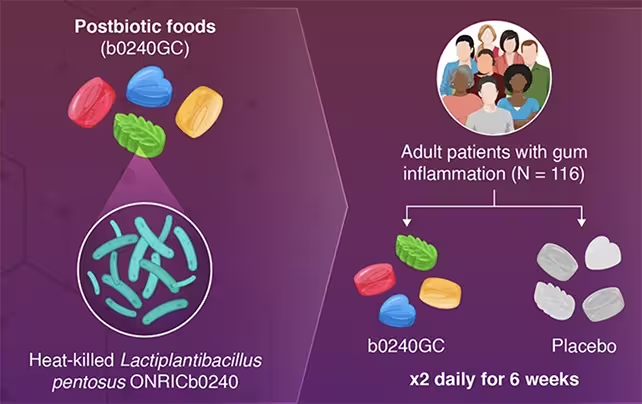
Participants eating the postbiotic gummies twice daily experienced a measurable reduction in gum bleeding compared with placebo.
Why use heat‑killed bacteria instead of live probiotics? The team argues that so‑called postbiotics are more stable during manufacturing and storage, yet can still influence the oral ecosystem or dampen inflammation. Inactivated microbes may not colonize the mouth, but they can interact with immune receptors or alter signaling in ways that favor a healthier balance of microbes — returning the microbiome toward eubiosis rather than attempting wholesale eradication of microbes.
There’s also a practical angle: chewing a gummy increases saliva flow and ensures the active ingredients linger longer on oral tissues. That physical effect may partly explain why even the placebo group saw some improvement. Real life matters; people forget instructions, skip flossing, and miss appointments. A convenient, tasty delivery format could boost adherence where other interventions fail.
The study’s strengths include its real‑world design and clear clinical endpoint. But it’s not a miracle cure. The difference between groups was modest, and researchers caution that longer trials are needed to see whether benefits persist and to understand the biology behind the effect. How do heat‑killed Lactiplantibacillus molecules modulate inflammation in human gums? Which components matter — cell walls, metabolites, or fragments of bacterial DNA?
Those questions matter because periodontal disease is not trivial. Projections suggest that up to 1.5 billion people could be at risk of severe gum disease by 2050. Simple, scalable tools that support gum health — especially in populations with limited access to dental care — could make a real public‑health difference.
For now, the takeaways are practical and cautious. Postbiotic gummies appear to offer a safe, manufacturable way to reduce gum bleeding slightly in people with mild gingivitis, and they work without asking participants to change their oral hygiene habits. The research team plans deeper mechanistic studies and longer trials to map out effectiveness over months or years, and to determine whether this snackable approach can complement — not replace — brushing, flossing, and professional care.
Whether you’re skeptical or curious, the study nudges open a new door in oral care: what if tiny, inactivated microbes packaged into a chewable treat could become part of routine gum‑health maintenance? Try to picture your medicine cabinet with a jar of gummies, not just floss — and then imagine what the next round of trials might reveal.


Leave a Comment
Comments
No comments yet. Be the first.