
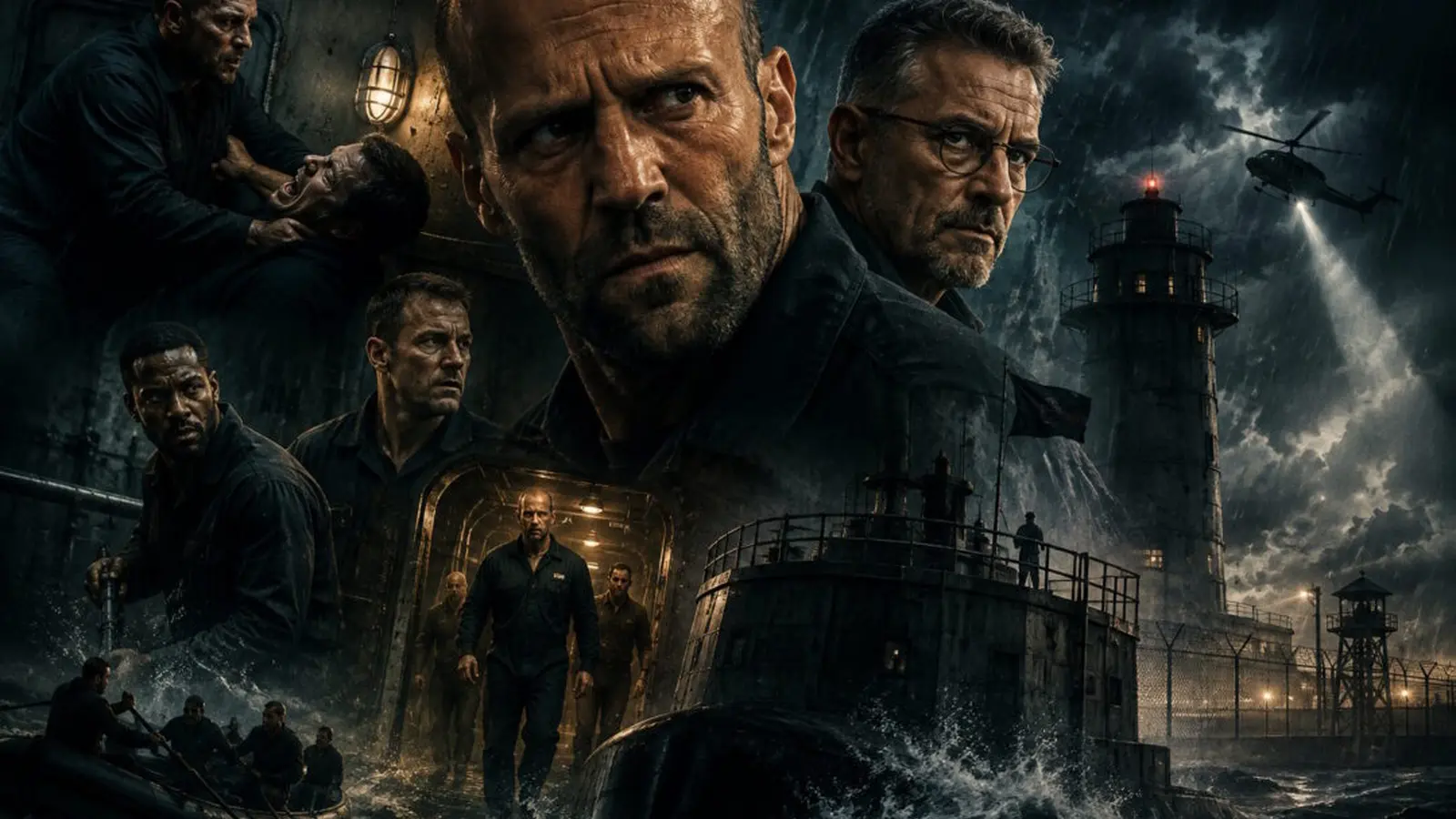
Something about Mutiny feels like a small revolt against the flabby, politically-tinged action films that have cluttered screens lately. No manifesto. No sermon. Just stripped-down momentum and a lead who knows how to move without shouting for attention.
The premise is tidy: Cole Reed, a security contractor, becomes the prime suspect in the murder of a billionaire friend and is forced to chase down the real killer amid an unfolding international conspiracy. It’s familiar territory for Jason Statham, sure, but the screenplay — by Lindsey Mitchell and J.P. Davis — gives that terrain enough texture to avoid feeling like pure checklist action. Davis, with his proven knack for compact, character-driven plotting, keeps the thrills contiguous with human stakes. Little details matter: grief isn’t announced with exposition dumps; it arrives in a bitter smile or a single clipped line. That restraint makes Reed feel like a person, not a template.

Jean-François Richet directs with purpose. He doesn’t pad out the story with slow, politicized asides the way some contemporary action directors have. Instead he favors pace and clarity. Mutiny can be predictable at moments. Yet predictability here doesn’t equal boredom. The film maintains propulsion, avoids unnecessary romantic or erotic detours, and trusts its craft to carry the audience forward. At times logic falters — plot conveniences appear — but the movie rarely loses its way.
Jason Statham is, tonally, several rungs above his recent misfire. He’s physically assured and conversationally tight. His face rarely betrays dramatic fireworks, and yes, the expression palette is narrow. Still, he communicates more with posture and timing than many action stars manage with a dozen monologues. Annabelle Wallis provides a distinct counterpoint; she isn’t repeating past roles, yet her reactions sometimes land as oddly rote. Roland Møller aims for charisma as Captain Madsen but often reads neutral where tension is required. Adrian Lester and Jason Wong fill supporting beats without stealing them. Outside of Reed, few characters fully transform from archetype into person; they mostly function as compelling types within the machine of the plot.

Cinematography and editing are among Mutiny’s strongest cards. Brendan Galvin, who has navigated genre work before, composes frames that feel considered — the camera chooses when to stay, when to pan, when to let chaos rule. Those choices amplify emotion and information without calling attention to themselves. David Rosenbloom’s editing is likewise savvy: cuts drive momentum and clarify spatial dynamics. There are moments where transitions could be tightened (a few L-cuts might have deepened emotional continuity), but the overall rhythm rarely misfires. Dissolves and fades are used with purpose, not as lazy smoothing tools.


The film’s practical SFX and its VFX both deserve applause. Shipboard sequences, in particular, benefit from layered, believable effects: water, exterior vistas, muzzle flashes — all rendered with a confidence that keeps disbelief at bay. When the visual effects work, they do more than dazzle; they enhance character beats and heighten tension. Marcus Trumpp’s score blends electronic textures with orchestral swells, borrowing a certain sonic DNA listeners will recognize while carving out its own phrases. It’s muscular, atmospheric, and often decisive, helping the movie feel contemporary without becoming a rip-off of bigger-name composers.

Not everything lands. Makeup and prosthetic choices slide from competent to careless in moments where drama depends on disguise or resemblance. A scene that expects us to accept a mistaken identity collapses because the makeup doesn’t sell the conceit. That failure feels small on paper but jarring in practice — and it’s the kind of slip that pulls you out of an otherwise immersive scene.

Mutiny doesn’t restore the genre single-handedly. It won’t reset the bar for every studio tentpole. What it does is remind viewers that steady direction, a compact script, smart camera work, and an actor who understands physical economy can combine to make an enjoyable, modern action film. It’s leaner and, in many ways, more honest than other recent entrants that drown in political signaling or hollow spectacle. If you came expecting a reinvented wheel, you might leave satisfied rather than astonished. If you came craving one solid, well-made action picture this season, you’ll likely get your money’s worth.
Author's score: 7.5/10.


Leave a Comment
Comments
No comments yet. Be the first.