
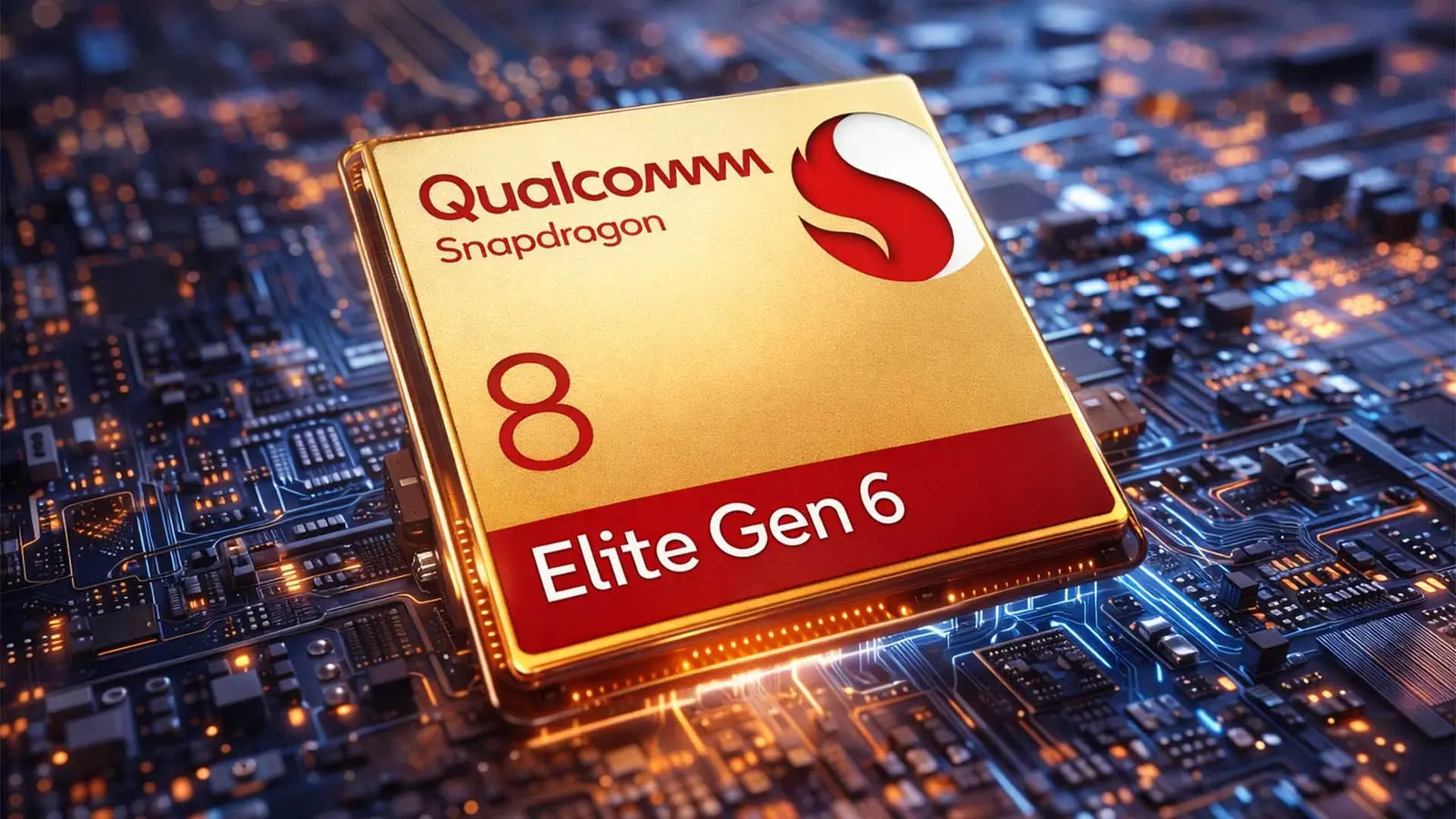
What if your phone could push richer graphics while drinking far less battery? Qualcomm is betting it can, and the new Adreno GPU in the Snapdragon 8 Elite Gen 6 is the proof of concept.
At the heart of the upgrade are three dedicated Adreno Matrix cores. These aren’t just extra shaders; they’re specialized blocks built to handle on-device AI workloads with lower latency and smarter power distribution. It’s the same matrix-first thinking Qualcomm introduced to its CPU designs, now translated to graphics. The result is a GPU that treats AI and raster workloads as partners instead of competitors.
Adreno Neural Fusion, driven by those Matrix cores, promises fewer flickers and ghosting artifacts, sharper details and steadier frame output while cutting certain power draw by up to 40%.

For players and visual creators the payoff is tangible: faster frame generation, cleaner upscaling and better image stabilization during variable workloads. Qualcomm has already lined up support from Unreal Engine and Unity, which should shorten the gap between silicon capability and the titles that actually use it.
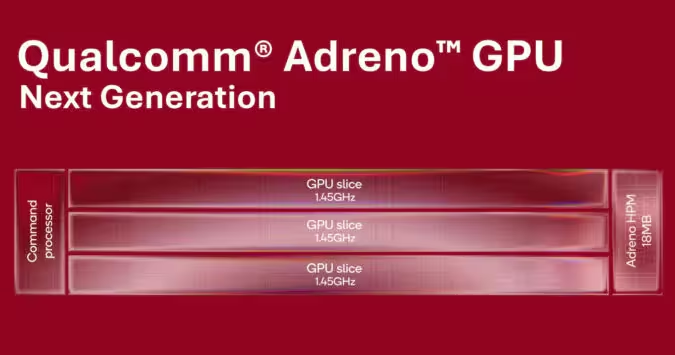
Architecturally, the GPU now uses a three-slice design that separates shader clusters and related hardware into distinct sections. That partitioning lets the system route power and performance only where it’s needed, instead of running everything at full tilt. Clock speed climbs to 1.45 GHz from 1.2 GHz in the previous Gen 5 part, and the platform keeps 18 MB of high-performance Adreno memory. Qualcomm also claims about a 12% gain in energy efficiency for the GPU overall.
Other platform pieces matter too. The Snapdragon package includes the Qualcomm X105 modem and FastConnect 8800 for connectivity, while the CPU side centers on Oryon cores capable of touching 5.0 GHz — a first for smartphone silicon — paired with FlexCache to move instruction data more efficiently. Those elements together paint a chip designed to balance raw speed with smarter, AI-centric hardware assists.
All of this sounds promising on paper. But real-world impact will boil down to how handset makers tune drivers and how game and app developers adopt the new APIs. Phone OEMs that lean into Neural Fusion and Matrix acceleration could deliver next-gen visuals without sacrificing battery life; those that don’t will leave potential on the table.
Either way, Snapdragon 8 Elite Gen 6 is a clear signal: mobile GPUs are no longer just about brute-force rendering. They’re becoming hybrid engines where AI co-pilots the graphics pipeline, and that shift may change what we expect from mobile gaming and imaging in the months ahead.

Leave a Comment
Comments
No comments yet. Be the first.