
Samsung has started mass production of the Exynos 2700 chipset, Korean publication The Elec reports. The company set its production target "more than 10% higher" than the Exynos 2600 target to accommodate the new Galaxy S27 Pro.
Production target and chipmaking node
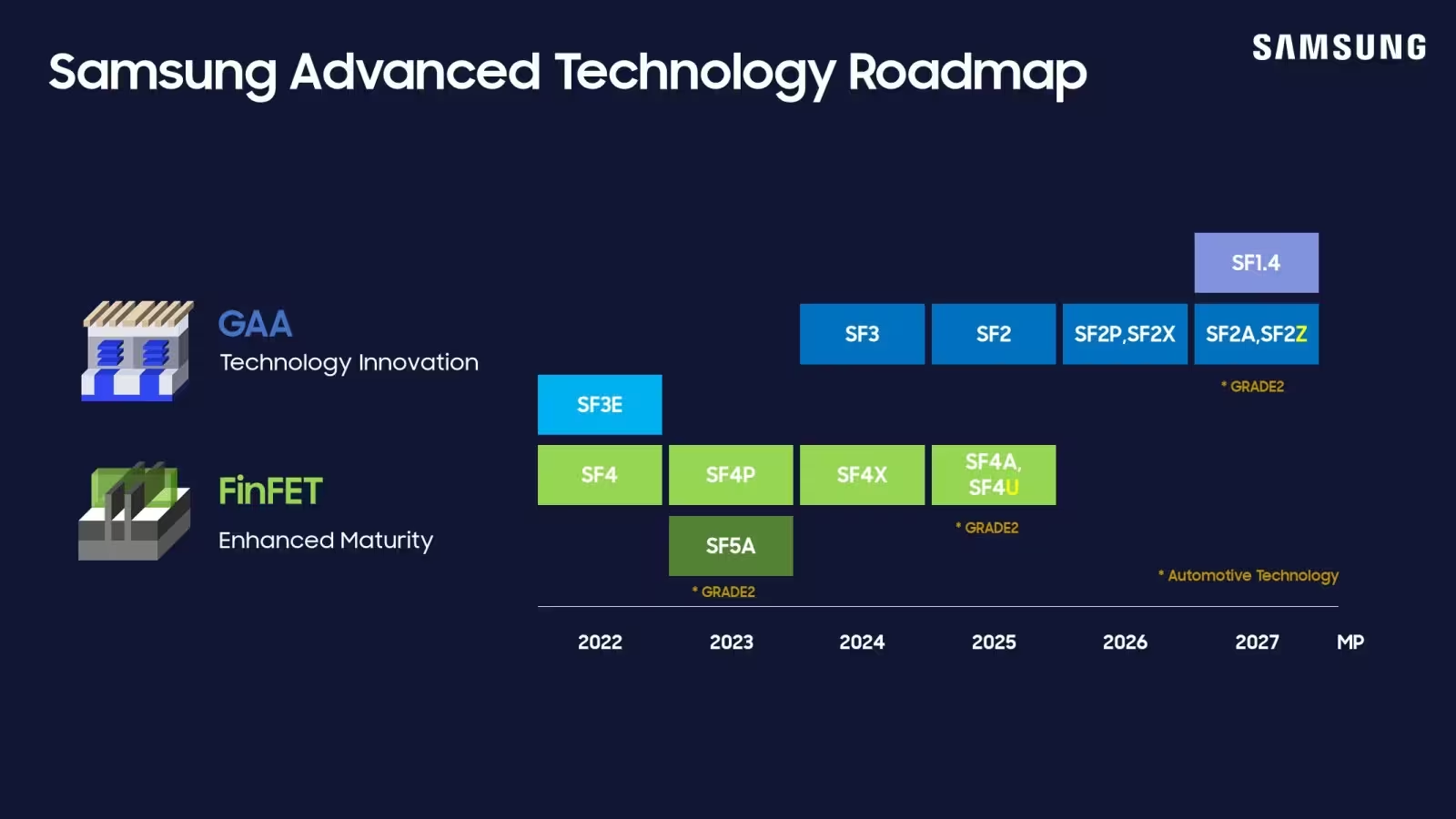
Samsung System LSI, the unit that designs Exynos chips, will have the Exynos 2700 fabricated on Samsung's SF2P second generation 2nm Gate-All-Around node. Compared with the first-generation SF2 node used for the Exynos 2600, Samsung says SF2P delivers improved efficiency and density:
- 12% performance improvement
- 25% reduction in power usage
- 8% decrease in chip area
The Exynos 2700 is also expected to include architectural upgrades, with the chipset likely using Arm C2 CPU cores while the Exynos 2600 used C1 cores.

Which Galaxy S27 models will use Exynos 2700
According to the report, the Galaxy S27 Pro, along with the standard and Plus models, will use the Exynos 2700 in Korea and Europe. Samsung plans to deploy Qualcomm Snapdragon 8 Elite Gen 6 chips for those same models in the US and China.
Galaxy S27 Ultra decision and performance data
The Galaxy S27 Ultra remains undecided. Samsung System LSI is pushing for the Exynos 2700 to be adopted on the Ultra-class model, which would support the division's revenue and signal the chip's suitability for a top-tier flagship. Samsung MX, the division responsible for building the phones, holds the final decision and is weighing benchmark and thermal performance, Qualcomm chip pricing, and Exynos 2700 production capacity.
Internal testing previously indicated the Exynos 2700 outperforms the Snapdragon 8 Elite Extreme Gen 6 on the multi-core Geekbench test by 9.5%, while the Snapdragon retains an advantage in single-core performance, the report said.
It reportedly takes three to four months from the start of chipset mass production to have the final device ready. That timeline aligns with a potential February or March launch window for the Galaxy S27 series.

Leave a Comment
Comments
No comments yet. Be the first.