

Large ETH Transfers to Kraken Spark Sell-Off Concerns
Two wallets historically linked to the Ethereum Foundation recently moved a combined 4,393 ETH — roughly $11.13 million at the time — into the Kraken exchange on October 12. The on-chain activity, traced and publicized by blockchain analyst EmberCN, reignited questions across the crypto community about whether the transfers signify a forthcoming sell-off from a foundation-related source as ETH trades near $2,555.
What on-chain analysis shows
EmberCN reported that the two addresses involved are connected through a decade-old transaction originating from an Ethereum Foundation wallet. Approximately ten years ago, the tracked recipient received 59,751 ETH from that foundation-linked address. Over the intervening years the recipient reportedly moved 49,751 ETH into Kraken in gradual transfers, implying a long-running pattern of exchange inflows tied to that historical allocation.
The most recent movement, 4,393 ETH to Kraken, is the latest flagged transfer in that chain of transactions. The analyst’s thread included the original trace and on-chain evidence as part of the public disclosure.
While on-chain analytics can show custody changes and exchange deposits, they cannot by themselves prove subsequent selling activity. The blockchain record confirms that funds moved into Kraken’s custody, but Kraken has not publicly stated whether the deposit resulted in fiat conversion, internal trading, or merely custodial storage.

Why the historical link matters — and why it doesn’t prove ownership
Tracing wallets back to a foundation-related transfer provides context about a wallet’s provenance, but it does not necessarily demonstrate continuous ownership or control. Wallets change hands; private keys may be transferred, sold, or consolidated into custodial arrangements. The historical connection shows where those funds originated, but not who controlled the wallet at the time of the October 12 transfer.
EmberCN also estimated that the historical transfers into Kraken averaged an ETH price of around $658 when those deposits occurred. That average reflects the approximate market value at the times of those earlier moves, not independently verified sale proceeds or accounting of proceeds retained off-exchange.
Does a Kraken deposit equal a sell-off?
A deposit to a centralized exchange commonly precedes a sale, but it is not definitive proof. Deposits can be used for many purposes: OTC settlement, collateral for lending, internal exchange accounting, or pre-funded balances for future operations. Absent confirmation from Kraken or a disclosed over-the-counter agreement, treating the deposit as an incontrovertible foundation sale would be premature.
.avif "Ethereum Foundation Denies $12.8M ETH Sale Linked to Old ICO Wallets")
Previous foundation disclosures and past behavior do show that the Ethereum Foundation does occasionally liquidate ETH to fund operations, grants, and research. However, the combination of a historical link and an exchange deposit is a signal for market-watchers to monitor order books and on-chain flows, not an automatic sell confirmation.
Historical treasury activity and established policy
The Ethereum Foundation has an established treasury policy that governs how it manages reserves, spending and liquidity. In June 2025 the organization published a formal framework describing periodic ETH sales, staking initiatives and the process for converting assets into fiat to support ongoing operations.
The policy sets an operational spending target — originally an annual operating expenditure equivalent to a portion of treasury assets — and a reserve buffer expected to cover multiple years of expenses. It also prescribes that ETH sales may occur through fiat off-ramps, on-chain markets, or OTC arrangements, and that decisions should be periodically reviewed as financial needs and market conditions evolve.
Past sales and notable transactions
The foundation has engaged in several documented sales in recent years as part of treasury management. In April 2026, the foundation disclosed a plan to sell 5,000 ETH using CoWSwap with a time-weighted average price (TWAP) strategy to mitigate market impact. Spreading an order over time reduces the immediate price pressure of a single large block sale.
In May 2026 the foundation reportedly completed an OTC transaction selling 10,000 ETH to an institutional buyer named BitMine at an average price of $2,292 per token — following earlier deals with the same buyer. Collectively, the foundation recorded multiple transactions totaling as much as 25,000 ETH across various counterparties and mechanisms. Those recorded deals were publicly announced or documented, distinguishing them from the wallet movements identified by EmberCN, which have not been tied to any official sale announcement.
Market snapshot at the time of transfers
On October 12 CoinGecko showed ETH trading near $2,554.59, recovering roughly 2.05% over the previous 24 hours while remaining down about 6.85% for the prior seven days. Trading volume was around $8.88 billion and reported market capitalization about $312 billion. The seven-day trading range extended from roughly $2,409 to $2,733, underscoring recent volatility around those price levels.
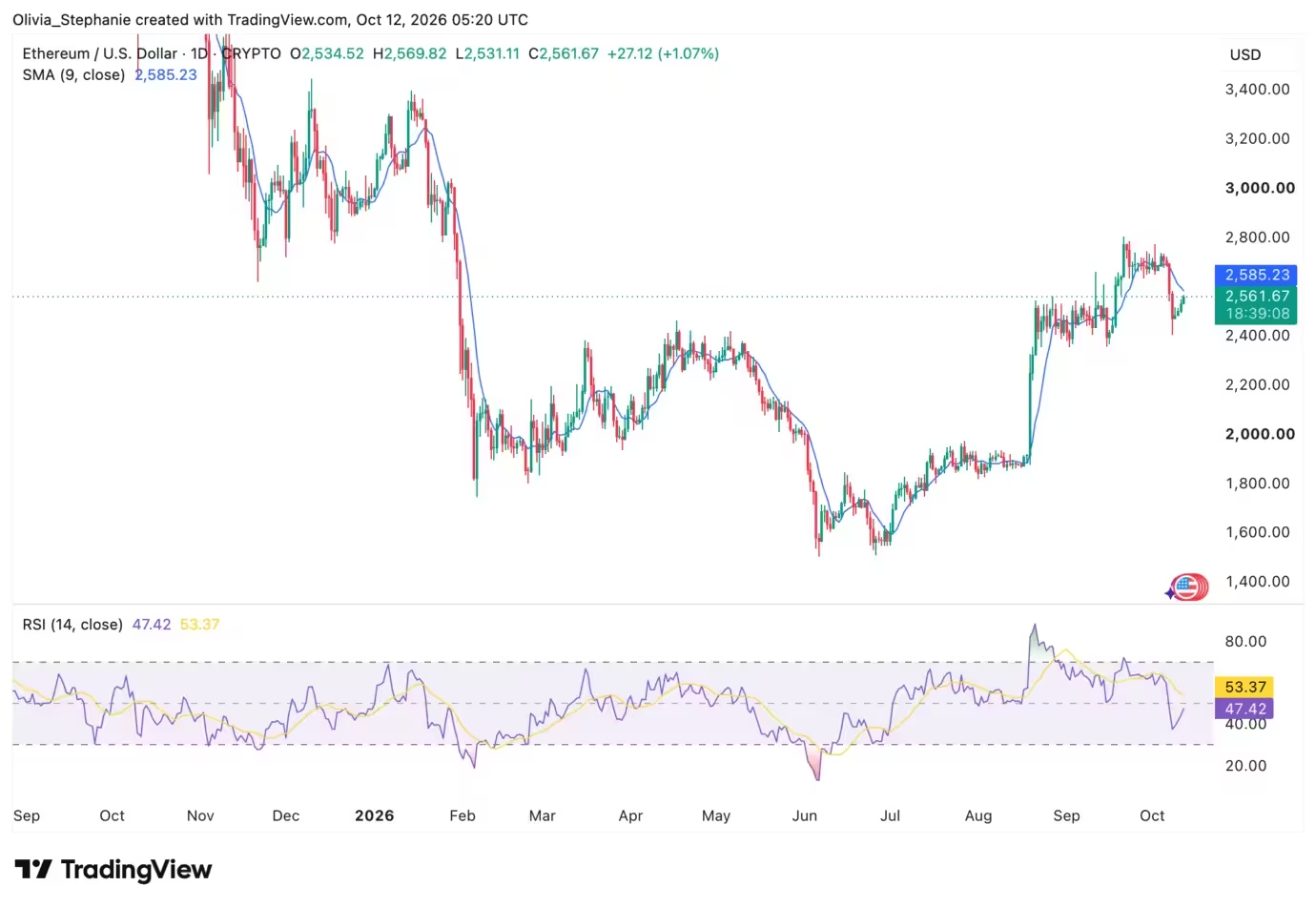
Ethereum(ETH) price chart

Technical indicators offered a mixed picture: ETH traded below its nine-day simple moving average of approximately $2,585.41 and the 14-day relative strength index (RSI) sat at roughly 47.59 — under the neutral 50 threshold, signaling softer near-term momentum but not overtly oversold conditions (oversold typically is under 30). These metrics, combined with the deposit, prompted traders to watch intraday order books and exchange sell pressure for signs of realized selling activity.
Nevertheless, the daily gain on October 12 occurred alongside the Kraken deposit and does not demonstrate causality. Exchange inflows do not always produce immediate sell pressure, especially when funds are deployed for institutional settlement, staking, or custodial rebalancing.
Staking strategy and other treasury levers
Beyond occasional ETH sales, the Ethereum Foundation has increasingly used staking and validator operations as part of its treasury strategy. In February 2026 the foundation announced a staking program target of roughly 70,000 ETH, with staking rewards cycled back into the treasury to provide sustainable funding while supporting network security.
The initiative started with an initial deposit of 2,016 ETH and utilized open-source validator-management tools such as Dirk and Vouch. These tools are designed to distribute signing infrastructure across locations and client stacks, lowering concentration risk and supporting client diversity for the Ethereum network.
By early April that staking target was reportedly met after a substantial single-session deposit of 45,000 ETH, bringing the aggregate staked amount close to the stated 70,000 ETH goal — a holding that was valued at roughly $143 million at the prices reported at that time.
The foundation also interacted with liquid staking and unstaking flows. On-chain tracking in late April identified an unstaking request for about 17,035 ETH and subsequent withdrawals, though the foundation did not publicly disclose the purpose of each transaction. The treasury policy anticipates such operations by combining staking, selective unstaking and occasional asset sales based on rolling reserve calculations and liquidity targets.
How traders and watchers should interpret the transfer
- Treat the Kraken deposit as a meaningful on-chain signal that warrants monitoring, not as definitive proof of a sale.
- Watch Kraken order books, OTC venues and aggregated exchange sell-side flows for realized selling pressure tied to those deposit sizes.
- Consider the broader treasury context: the foundation has sold ETH in managed ways before, but it also uses staking and reserve buffers, which can reduce the need for immediate liquidations.
- Monitor subsequent on-chain activity for withdrawals, fiat conversions, or traces of OTC counterparties that could clarify intent.
What’s next: indicators to follow
Key indicators to monitor in the hours and days after such a deposit include:
- Exchange order book depth and sudden price slippage near market orders that would indicate a large sell execution.
- Quick on-chain follow-ups such as transfers from Kraken to fiat off-ramps, or on-chain swaps that imply conversion.
- Public statements from the Ethereum Foundation or Kraken if the deposit was part of an announced program or custodial transfer.
- Further address clustering by on-chain analytics that might link the recipient to known custodial services or institutional wallets.
Conclusion: a signal, not a confirmed sell-off
The 4,393 ETH transfer to Kraken, traced back to wallets historically tied to the Ethereum Foundation, is a notable on-chain event that merits attention. However, the blockchain record alone does not confirm a sale or a strategic decision by the foundation. Past foundation policy and documented sales show that periodic liquidations are part of an established treasury toolkit, but any single deposit must be assessed against subsequent exchange activity and public disclosures.

Market participants should treat this movement as a risk factor for potential near-term selling pressure while avoiding premature conclusions. Continued monitoring of exchange flows, order book behavior, and official communications will be crucial to determine whether the Kraken inflow translates into realized sell orders or simply reflects custodial or operational transfers within the broader Ethereum ecosystem.

Leave a Comment
Comments
No comments yet. Be the first.