
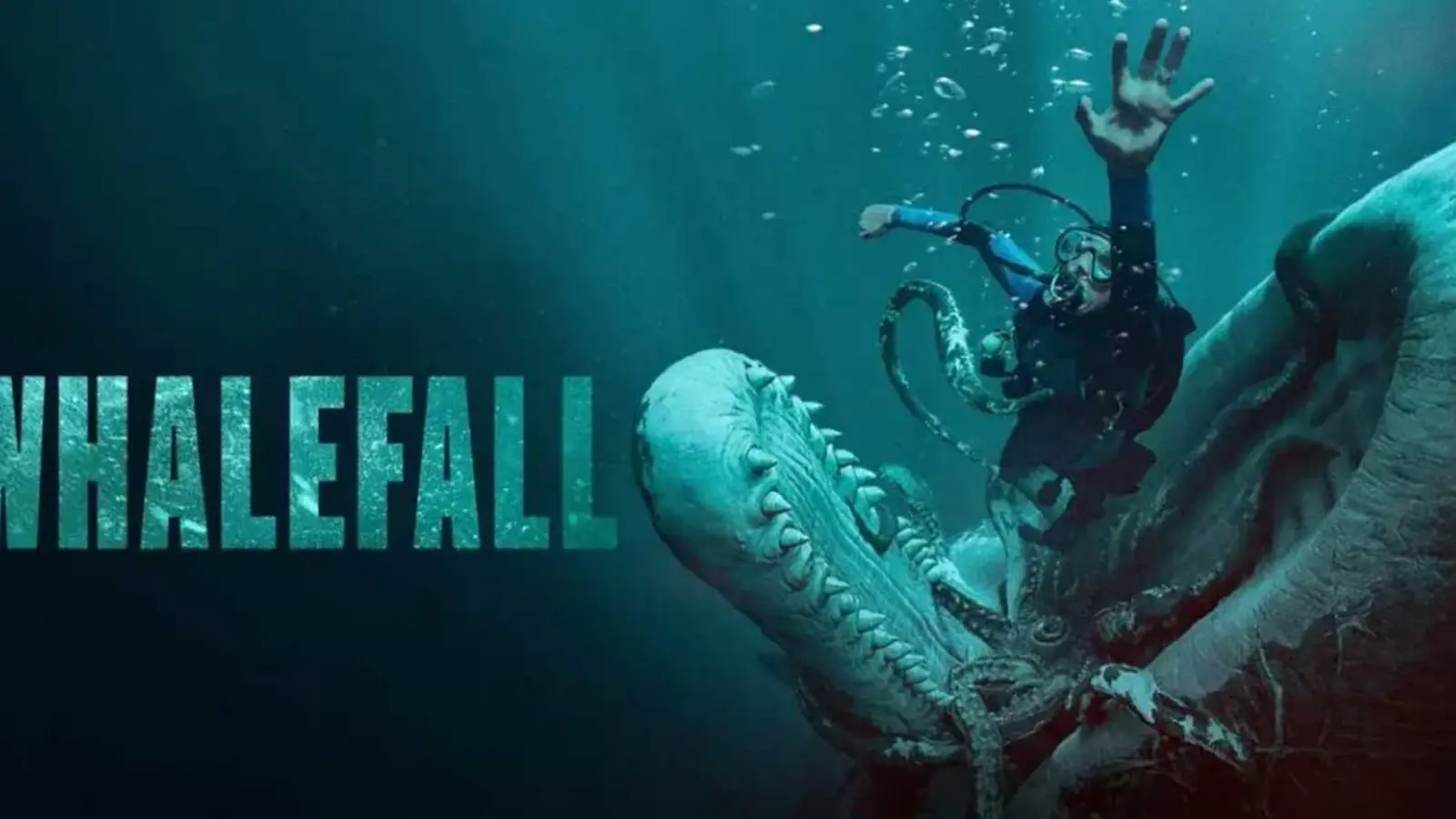
Imagine regaining consciousness and realizing the walls around you are alive. That is the stomach of a sperm whale, and that is the violent, claustrophobic premise Brian Duffield dares to stage in Whalefall.
Adapted from Daniel Kraus's novel, the film follows diver J — played with raw intensity by Austin Abrams — who plunges into the deep searching for his father's remains and ends up swallowed whole. He has roughly an hour of breathable air and an even smaller window to salvage his body, his mind, and whatever dignity remains. Josh Brolin joins the cast, along with John Ortiz, Jane Levy, Elizabeth Chou and Emily Rudd, rounding out an ensemble that anchors the movie's emotional ballast amid its grotesque set pieces.
Whalefall operates on a simple but audacious gamble: commit fully to an absurd premise and let the tension and human stakes do the rest. Sometimes it pays off spectacularly. The film leans into sensory detail — the slick darkness, the incessant press of flesh, the metallic tang of fear — and it asks a surprisingly tender question: what do we owe the people we've lost, and how do we reconcile with those absences when the world itself feels like a trap?
Critics have been split, but many landed on the positive side. On Rotten Tomatoes the movie sits at 76% from 75 reviews, while Metacritic averages a 62 from 25 critics. Collider lauded the film's confidence and memorability, giving it a near-perfect score. RogerEbert.com praised Duffield for breathing fresh life into the survival-horror template, calling attention to moments that truly sting. IGN highlighted the visceral discomfort and noted that beneath the revulsion lies an affecting story about grief and father-son rupture, led by Abrams's committed performance.
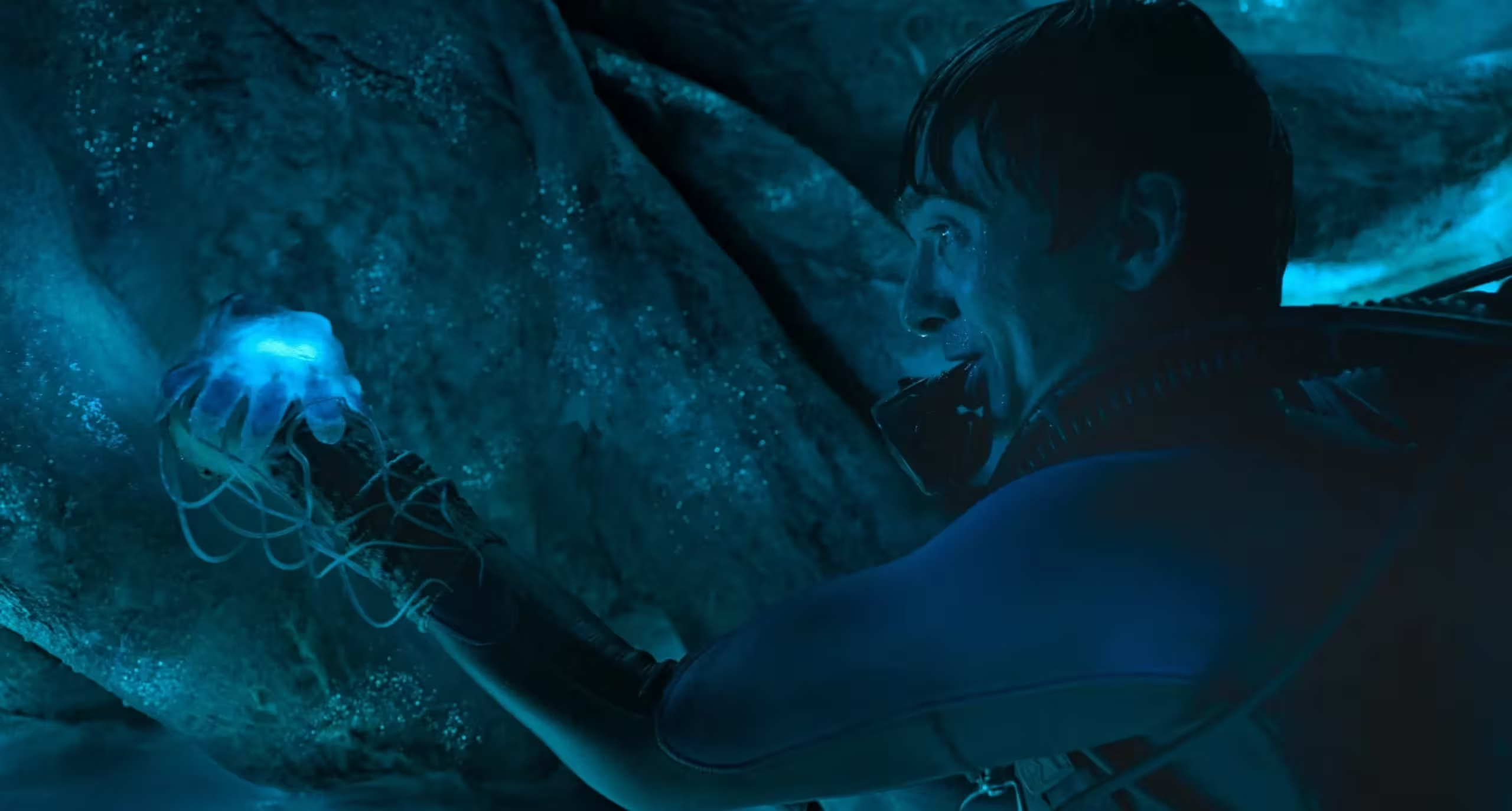
Other outlets echoed similar sentiments: Empire described Whalefall as a bold, relentless piece of mainstream surrealism; Slashfilm admired its suspense and emotional honesty; TheWrap called the central idea exhilarating and Duffield's commitment uncompromising. Slant felt the film found its poetic altitude by grounding bigger hypotheses in small, human truths.
But the film's daring premise also left some critics unconvinced. IndieWire wondered whether Whalefall had a clear stance on its themes — are we afraid of what whales could do, or ashamed of what we've done to them? — and felt the movie didn’t quite land an answer. A.V. Club and several others argued the film retreats into familiar father-and-son tropes at the expense of fully exploiting its strangeness. Screen Rant and The Hollywood Reporter pointed out that the level of suspension of disbelief demanded can clash with a story that ultimately disappoints. Variety went further, calling parts of the film overly literal and sensational.
Scores ran the gamut: Collider at 90, RogerEbert.com around 88, a cluster of 80s from outlets like IGN, Empire, Slashfilm and TheWrap, a mid-70s nod from Slant, and harsher takes down the line from IndieWire to Variety.
In the end, Whalefall is a polarizing, often thrilling survival drama: visceral and imaginative for some, implausible and uneven for others.
Whether you go for the stomach-churning spectacle, the intimate performance work, or the film’s weird, melancholic heart, Whalefall refuses to be ignored — and it will probably be one of the year's most argued-over genre pictures. Will you take the plunge?


Leave a Comment
Comments
No comments yet. Be the first.