
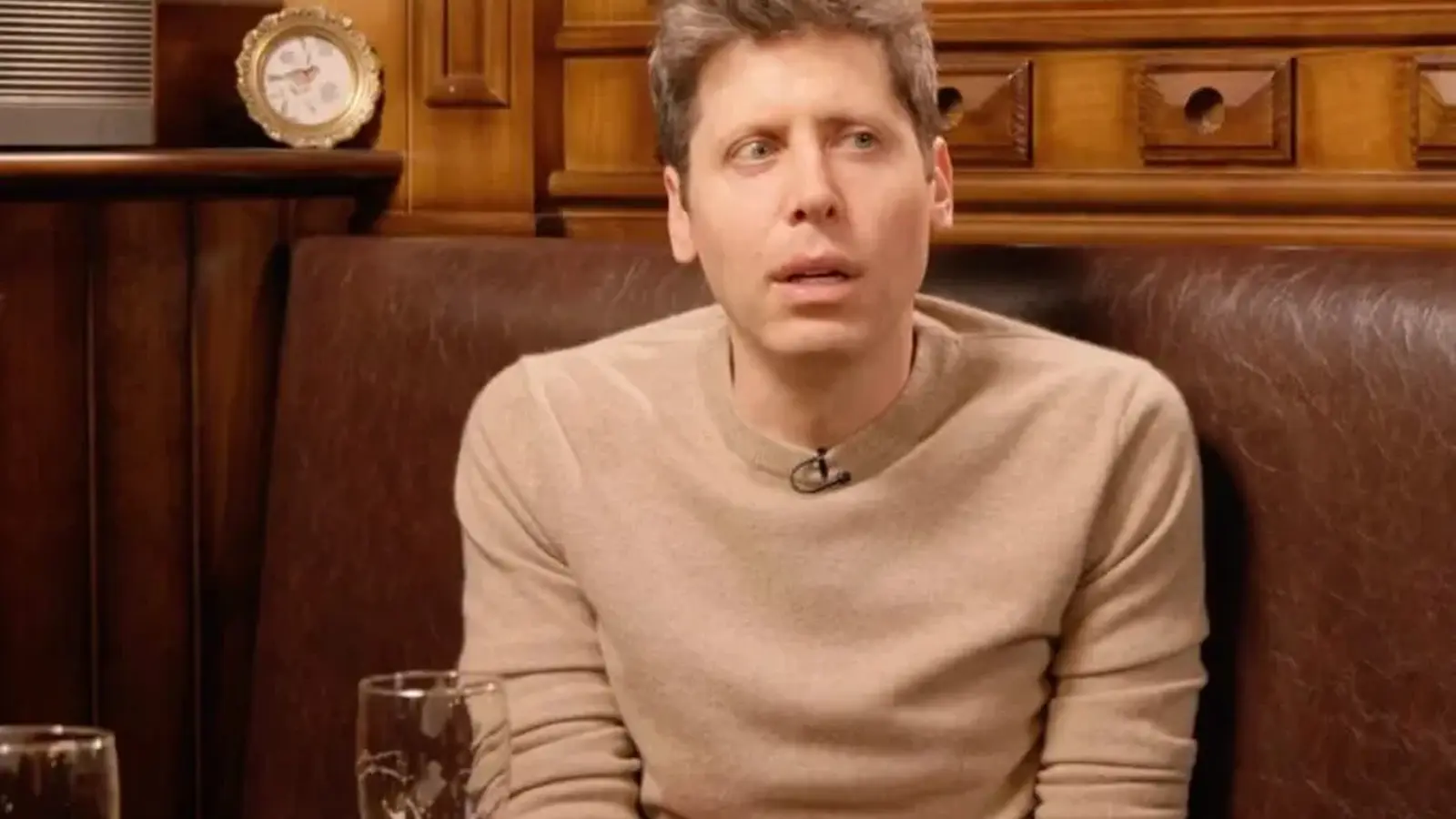
Sam Altman, chief executive of OpenAI, said in a recent podcast that the company will continue publishing a large number of mathematical results produced by its models, and that many more are queued for release. He said he understands the difficulties researchers face in trying to interpret those outputs, but added that OpenAI has no intention of stopping the work.
Speaking on the Cheeky Pint podcast, Altman said, "I think, overall, everyone has the right to know how the world works; but I empathize with researchers' methodological challenges." In the same conversation he was unequivocal about access to fundamentals: "I am absolutely clear on this: humanity deserves to know fundamental knowledge, and we should not keep an important and vital scientific discovery to ourselves. The world deserves to know these facts."
Altman's comments are among the first explicit responses from OpenAI's leader to the debate over the company's recent mathematics publications. In recent months, the lab's releases of notable results have been accompanied by chaotic rollouts and limited accompanying explanation, leaving many mathematicians excited by the findings but confused about the evidence and context. Researchers say that in the last month alone OpenAI released hundreds of proofs and results, many of which they describe as very short, unreadable, and ambiguous textual reports.
Mathematicians who have spoken to the press repeatedly criticized OpenAI's approach to disclosure, pointing to poor attribution, inadequate background material, and a lack of careful verification. Those critics say the situation places the exhausting burden of validating proofs on the academic community while the company continues to publish new results.

At the same time, OpenAI faces accusations that it has withheld some important discoveries from the public. Critics cite three major claimed breakthroughs in mathematics, physics, and computer science, and say details of one of them, the Yang-Mills theory which underpins much of modern particle physics mathematics, were never made public. OpenAI has said it held back some details at the suggestion of a small group of selected experts to allow for clearer presentation, a decision that those who previously advised the company say ran counter to their recommendations.
Altman disclosed that the company's mathematical output is substantially larger than what has already been published. When asked whether OpenAI had more findings beyond the hundreds of recently released proofs, he replied, "Yes, definitely we do." He also acknowledged that the lab's focus on solving mathematical problems had for a time "gotten out of control," but described the effort as an intentional test of the models' limits. Altman said engineers created an internal channel called "Hold My Beer" to feed the hardest scientific problems to the models and measure performance.
Altman estimated that OpenAI has spent hundreds of millions of dollars on addressing hard mathematical problems, including more than $10 million devoted to attempts on the Navier-Stokes equations, the set of partial differential equations that describe fluid dynamics. Those figures illustrate the scale of private funding entering fundamental research, and some researchers worry that such resources could marginalize academic groups that lack comparable budgets.
Altman says OpenAI will keep publishing AI-produced mathematical results despite researchers' concerns, and that many more findings await release.


Leave a Comment
Comments
No comments yet. Be the first.