
Glamsterdam’s timeline under pressure
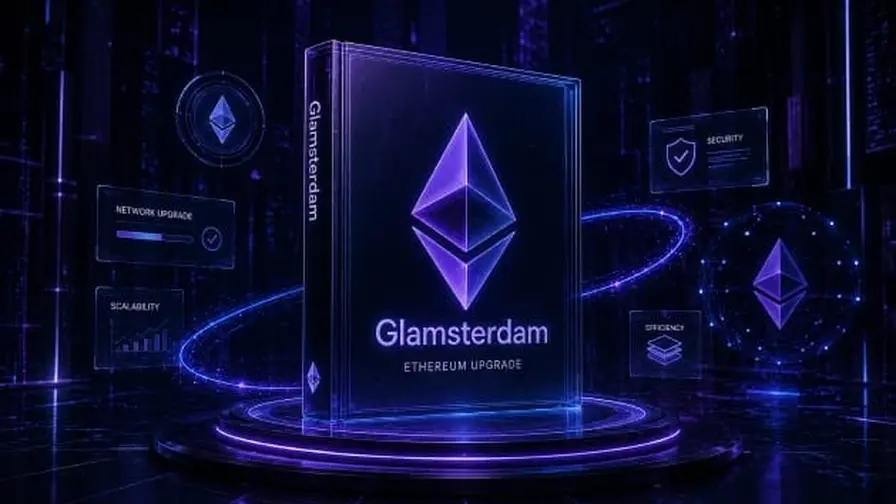
Ethereum’s next planned upgrade, dubbed Glamsterdam, faces a growing risk of delay — potentially pushing mainnet activation as late as May 2027. Originally targeted for a December launch, the upgrade’s rollout timeline has been revised multiple times after compatibility concerns surfaced during audits and testnet rehearsals. The Ethereum Foundation, independent security firms and client teams are racing to determine whether the current specifications can be preserved or must be revised, a decision that will shape the upgrade schedule.
Why launch timing is slipping
Developers now regard mid-January 2027 as the earliest realistic activation if the upgrade keeps its present specifications. That estimate comes after investigations uncovered a wide range of compatibility issues affecting wallets, exchanges, bridges, staking protocols and governance apps. Team leads cautioned that adopting modified specifications later in the process — rather than sticking with the existing rules — could push the mainnet rollout into April or May 2027 because client teams would need extra development and testing time.
Key meetings and stakeholder outreach
At the Nov. 19 All Core Developers meeting, the Ethereum Foundation reported coordinated outreach by its staff and third-party auditors. Foundation developer Rahul Kothari said the Foundation, ChainSecurity and Dedaub had contacted at least 50 companies to highlight potential impacts. ChainSecurity’s public review, completed Nov. 18, cataloged about 200 compatibility findings across the ecosystem.
Security assessment: what ChainSecurity found
ChainSecurity’s audit classified issues by severity: three high-severity, 30 medium-severity and 167 low-severity items. While no critical-severity bugs were reported, the implications span interrupted services, locked funds and incorrect accounting or reward calculations. Most issues can be fixed via configuration changes, but 24 findings will require smart contract upgrades or migrations, which increase risk and coordination burden for projects that cannot quickly change deployed contracts.

Which systems are affected
The compatibility concerns touch major components of the Ethereum ecosystem: custodial and non-custodial wallets, centralized exchanges, cross-chain bridges, staking providers and governance tooling. Many of those systems were designed around historical gas costs and operational assumptions that may shift under Glamsterdam’s proposed gas-accounting changes.
Technical driver: EIP-8037 and EIP-8038
The heart of the controversy lies in two Ethereum Improvement Proposals that alter how the network charges for operations interacting with its permanent state database. EIP-8037 increases the gas cost of creating new state — notably contract deployment and storage writes — while EIP-8038 revises costs for accessing and modifying existing state. The authors argue these adjustments reflect the growing size and maintenance cost of Ethereum’s state since the Berlin upgrade in 2021.
Gas cost changes in practice
Under the current EIP-8037 draft, the base state-related charge for contract creation would rise dramatically from 32,000 gas units to 183,600 gas units, plus separate execution charges. For contracts and applications that assume historic gas pricing, such jumps can invalidate critical invariants and cause execution failures or unexpected behavior.
Client teams and consensus on specifications
Most execution client teams favored proceeding with the existing Glamsterdam spec to avoid additional delays. Geth, Nethermind, Reth and ethrex publicly supported retaining the current rules; Erigon preferred changes; Besu expressed concerns but indicated it could follow the existing approach. Ethereum researcher Toni Wahrstätter urged caution, warning that even seemingly small spec changes can break new invariants in ways not yet anticipated.
Hoodi testnet rehearsals and the rehearsal schedule
Developers previously postponed Glamsterdam’s activation on the Hoodi testnet after audits highlighted problems with mainnet contracts. A scheduled October Hoodi activation — and a plan to raise Hoodi’s block gas limit to 200 million — was canceled. The team now tentatively proposed a Hoodi activation during the week of Dec. 14, with Dec. 16–17 discussed as possible rehearsal dates. Teams that want specification changes have been asked to present concrete alternatives ahead of the Nov. 26 consensus-layer developer meeting, where the community will decide whether to proceed with the December rehearsal.
Potential paths and their implications
There are three broad launch scenarios under discussion: retain the current spec and target a January mainnet activation (now seen as optimistic), delay the decision until January and accept a late-February or early-March rollout if the existing rules remain, or adopt revised specifications and accept an April–May mainnet activation to allow client teams time for implementation and testing. Each path has trade-offs between speed, safety and compatibility.
Beyond Glamsterdam: Hegotá and quantum resilience
Developers also discussed narrowing the scope of the following hard fork, Hegotá, to prioritize quantum-resistant cryptography. Ethereum co-founder Vitalik Buterin has signaled support for leanPCS as an approach to add post-quantum verification without immediately changing the execution architecture. But draft proposals such as EIP-8151, which would prevent legacy keys from authorizing certain operations after migration, already raise compatibility flags: preliminary reviews suggest a large number of existing contracts might be affected.
What projects and users should watch
For exchanges, wallets, bridge operators and dApp teams, the immediate action is to audit code paths that assume current gas costs or storage behavior. Security firms recommend preparing contingency plans for smart contract migrations where required, and to participate in testnet rehearsals. End users should follow official updates from the Ethereum Foundation and their providers for any downtime, required upgrades or temporary service limitations.
Conclusion: cautious pace to protect the ecosystem
Glamsterdam represents a significant step in Ethereum’s long-term scalability and sustainability plan, but the upgrade’s complexity and the breadth of affected infrastructure mean the community is choosing caution over haste. Whether the upgrade activates in January or slips to May 2027 depends on whether proposed gas-accounting rules are retained or reworked, and on how quickly the ecosystem can remediate the 200 reported compatibility findings. Developers, auditors and client teams remain active, and upcoming meetings and testnet rehearsals will determine the next concrete milestones for the Ethereum roadmap.


Leave a Comment
Comments
No comments yet. Be the first.