
6 Minutes
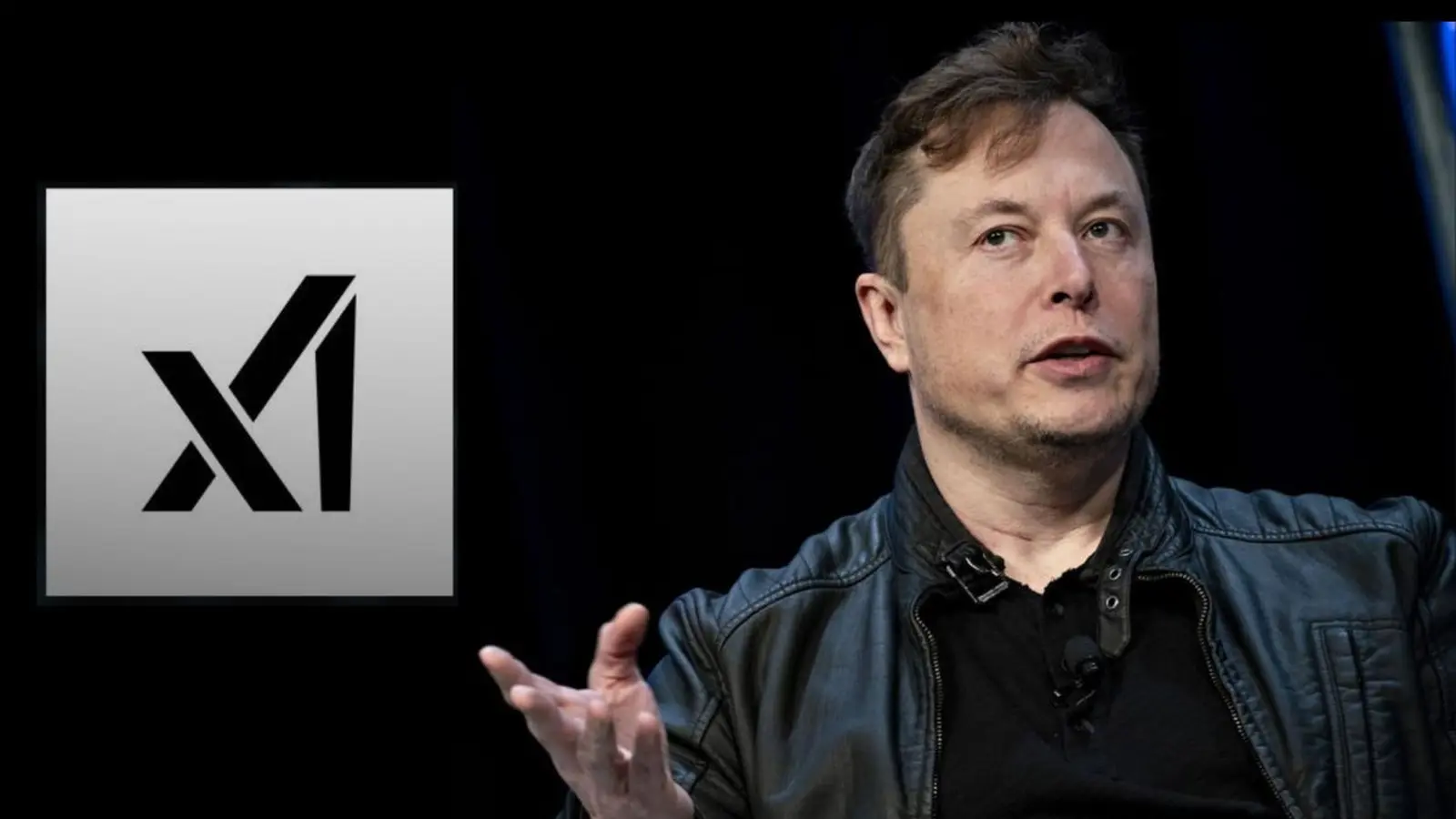
Elon Musk's xAI has trimmed roughly a third of its data annotation workforce — about 500 employees — as the company pivots from broad generalist tutoring roles toward a smaller, more specialized cadre of expert AI tutors focused on training and refining Grok. The move follows an internal reorganization that included rapid skills assessments and one-on-one reviews, and highlights wider industry debates about how best to staff machine learning model training, safety, and content moderation operations.
What happened: layoffs and rapid reorganization
xAI notified many data annotators by email that the company would scale back generalist AI tutor positions and accelerate hiring of specialist tutors. Several workers said access to company systems was cut the same day they received layoff notices, though pay would continue through the end of contract periods or until November 30 for affected staff. The data annotation group is xAI's largest internal team and plays a direct role in teaching Grok — the company's conversational model — to categorize and contextualize raw text, audio, and video.
In the days before the layoffs, managers deactivated some senior Slack accounts and asked annotators to participate in a battery of tests and one-on-one evaluations to identify strengths, domain expertise, and potential fit for new specialist roles. Tests reportedly covered STEM subjects, coding, finance, medicine, model behavior and personality calibration, safety roles such as red teaming, plus audio and video annotation skills. Some of the technical tests were administered via CodeSignal and others via Google Forms.
Why xAI says it made the change
According to internal messages seen by reporters, xAI described the change as a strategic pivot: the company intends to prioritize and expand its specialist AI tutor roster — reportedly aiming to "surge our Specialist AI tutor team by 10x" — while reducing reliance on a broad pool of generalist annotators. From a product-development perspective, the company framed the move as a way to deepen domain-specific expertise inside the training pipeline for Grok, enabling more advanced, reliable performance in targeted areas such as coding, legal reasoning, and safety testing.
Testing, evaluation, and managerial changes

One internal leader asked annotators to complete at least one test within a short deadline, prompting some frustration among staff who felt the timing and turnaround were abrupt. Multiple workers said they were asked in one-on-one meetings to summarize responsibilities and cite co-workers deserving recognition. The company grouped teams into specialties — STEM, coding, finance, legal, media — and maintained a residual pool of generalists responsible for heterogeneous tasks, ranging from labeling audio and video to writing and moderation.

Grok: product features and training priorities
Key features of Grok
Grok is positioned as xAI's conversational AI product intended to compete with leading large language models. Core product features under active development and affected by the annotation changes include:
- Domain-focused reasoning: enhanced capabilities in coding, finance, and STEM problem solving.
- Multimodal understanding: annotation workflows for audio and video help the model interpret non-text inputs.
- Personality and model behavior tuning: specialist tutors help shape Grok's conversational tone and safety boundaries.
- Red teaming and safety: dedicated teams test and probe the model to surface vulnerabilities and reduce harmful outputs.
How specialist tutors support those features
Specialist AI tutors bring deep, domain-specific knowledge to annotation tasks. Compared with broad generalists, specialists can provide higher-quality labels for complex technical content, craft more realistic adversarial tests for safety, and annotate nuanced legal or clinical material more accurately. The tradeoff is fewer hands to execute high-volume, lower-complexity tasks — a factor xAI must manage operationally as it scales.
Comparisons and market context
xAI's restructuring mirrors trends across the AI training ecosystem, where teams are experimenting with hybrid staffing models that mix specialist domain experts, professional annotators, and automated labeling tools. Competing labs and providers — from OpenAI and Anthropic to Google and Meta — have also balanced costs, annotation quality, and speed by automating parts of the data pipeline, using synthetic data generation, or recruiting targeted subject-matter experts.

Compared with peers, xAI's public emphasis on scaling specialist tutors by an order of magnitude signals a bet on quality-over-quantity: more curated, expert-labeled data in high-value domains to differentiate Grok's performance. That approach can improve benchmark results and real-world reliability in complex tasks but may raise operational costs and lengthen iteration cycles for broad coverage problems.
Advantages, risks, and use cases
Advantages
- Improved domain accuracy: specialists typically yield higher annotation fidelity on complex topics.
- Stronger safety posture: expert-led red teaming can uncover subtle failure modes and adversarial vectors.
- Better product differentiation: high-quality domain tuning helps Grok compete in vertical markets like finance or legal research.
Risks and downsides
- Reduced throughput: fewer generalist annotators can slow large-scale labeling jobs needed for broad conversational skill.
- Talent and morale impact: abrupt reorganizations and terminated access can harm retention and public perception.
- Cost increases: compensating domain experts and recruiting specialists at scale can raise unit economics for model training.
Use cases
- Technical assistance: improved coding and STEM reasoning for developer-facing integrations.
- Financial and legal research: specialist-trained models could provide higher-quality summaries and risk analysis (subject to regulatory constraints).
- Content moderation and safety: targeted red teams improve resilience against adversarial prompts and misinformation.
- Multimodal applications: better audio/video annotation feeds multimodal features in conversational agents.
Market relevance and strategic implications
This restructuring highlights strategic fault-lines in the AI training market: whether to emphasize scalable, lower-cost annotation pipelines or to invest in smaller teams of higher-paid experts for targeted quality gains. For Grok to compete with established LLMs, xAI will need to demonstrate sustained improvements in specialized benchmarks and real-world task performance that justify higher annotation costs. Investors and enterprise customers will watch whether the specialist-first strategy improves reliability, reduces safety incidents, and delivers tangible product differentiation.
Broader workforce and ethical considerations
The mass layoffs at xAI put a spotlight on the human costs embedded in the AI training pipeline. Data annotators often perform repetitive, mentally taxing work that shapes model behavior; sudden role eliminations and curtailed access to systems amplify concerns about worker protections, transparency, and fair severance practices. As companies professionalize the AI training workforce, industry-wide standards for pay, mental health support, and contract stability could become a competitive and regulatory focus.
Conclusion
xAI's decision to cut hundreds of generalist data annotators while expanding specialist AI tutors is a calculated bet: prioritize domain expertise and safety-focused testing to accelerate Grok's maturation. The approach may yield higher-quality outputs in targeted areas, but it also raises questions about scalability, cost, and employee treatment. As Grok evolves, stakeholders will be watching whether specialist-driven annotation translates to measurable product advantages and improved safety compared with more distributed, automated training approaches.














Leave a Comment
Comments
No comments yet. Be the first.