
5 Minutes
Big shift in OpenAI-Microsoft revenue arrangement
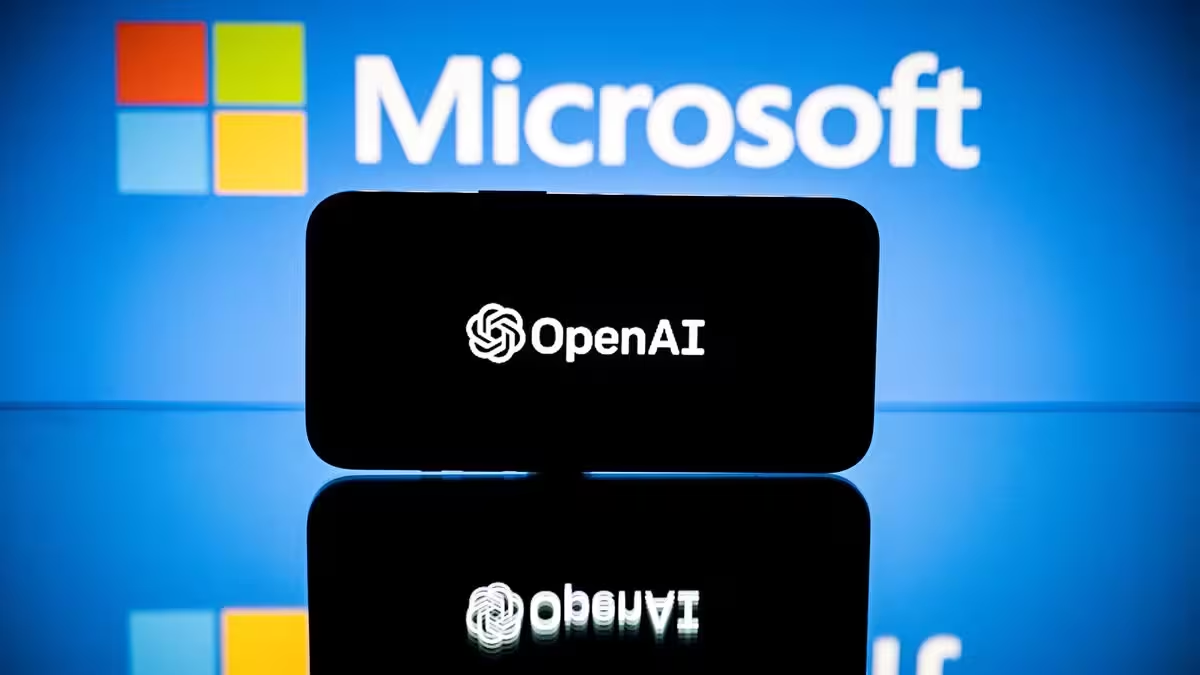
According to a report published by The Information, OpenAI expects that by the end of this decade it will be sharing roughly 8% of its revenue with commercial partners — chiefly Microsoft — down from the roughly 20% split in place today. That reduction, the story notes, could translate to more than $50 billion in additional revenue retained by OpenAI, although the report did not clarify whether that figure is cumulative or annual.
What this means for the partnership
The two companies have signaled they are renegotiating terms as OpenAI moves to restructure parts of its organization and pursue a for-profit setup. Microsoft and OpenAI recently said they had struck a non-binding deal to redefine their relationship, opening the door for structural changes at OpenAI. Both firms have declined to provide detailed comments to the press.
Server rental and cloud-compute negotiations
Beyond revenue sharing, the talks reportedly include how much OpenAI would pay Microsoft to rent servers and cloud compute. As large language models and foundational AI systems require enormous compute capacity, the economics of cloud rental rates could materially affect margins, product pricing and speed of model development. Cloud infrastructure costs are a major component of AI R&D budgets, and any long-term pricing agreement with Microsoft Azure will shape OpenAI's cost structure and competitiveness.
Nonprofit arm and valuation context
Under current terms, OpenAI's nonprofit entity is slated to receive a stake valued at more than $100 billion — approximately 20% of the $500 billion valuation OpenAI is reportedly seeking in private fundraising. That allocation would make OpenAI's nonprofit arm one of the most well-funded nonprofit operations globally, according to a memo cited from Bret Taylor, chair of the nonprofit board. The allocation and restructuring plans have attracted regulatory attention, and Microsoft recently removed its OpenAI board observer seat amid that scrutiny.
Product features and integration implications
OpenAI's product portfolio includes API access to large language models, developer tools, and consumer-facing products like ChatGPT. Deep integration with Microsoft brings benefits such as Azure-hosted APIs, enterprise-grade security, and Microsoft tooling (e.g., Azure AI Services, developer SDKs, and Office integrations). If revenue-share and compute-rental terms become more favorable to OpenAI, the company could accelerate model improvements, expand enterprise features, and invest more heavily in safety, fine-tuning, and multimodal capabilities.

Key product and platform areas potentially impacted
- API pricing and tiers for developers and enterprises
- Enterprise-ready features: data residency, compliance, and SLAs
- Model innovation: larger models, fine-tuning, and multimodal models (text, vision, audio)
- Integration with Microsoft productivity and cloud services
Comparisons and industry context
Revenue-sharing deals are common across tech partnerships, but the scales here are substantial. Compared with typical platform fees or cloud reseller arrangements, a 20% split on a multibillion-dollar valuation is highly material. Moving to an 8% share would align OpenAI more closely with a model that retains a greater portion of revenues for reinvestment, while still preserving incentives for a strategic cloud partner like Microsoft. Competitors such as Google Cloud, Amazon Web Services, and challengers like Anthropic are watching these terms closely; the outcome may influence how other AI companies structure their cloud and commercial alliances.
Advantages and strategic rationale
For OpenAI: reduced revenue-sharing obligations increase capital available for R&D, talent, and infrastructure. More retained revenue can accelerate model training cycles and expand product portfolios. For Microsoft: keeping OpenAI as a preferred partner ensures continued Azure usage and strengthens Microsoft's AI stack, which it can integrate into enterprise offerings and productivity tools.
Use cases and market relevance
The commercial implications extend across many use cases. Enterprises adopting AI for knowledge management, customer service automation, code generation, and analytics could see faster feature development and potentially more competitive pricing. For developers and startups, lower platform fees or improved API terms may reduce barriers to adoption. From a market perspective, the negotiations reflect how strategic cloud partnerships and compute economics drive the AI industry — and how governance structures (for-profit vs. nonprofit) affect capital flows and regulatory scrutiny.
Risks and regulatory considerations
Shifts in ownership, funding, and board representation have already triggered scrutiny. Regulators may examine whether changes in governance and commercial terms influence competition, data governance, or access to cutting-edge models. The precise structure of any revenue-sharing or server rental deal could draw attention from competition authorities, especially given the market power of cloud providers and the strategic importance of foundational AI systems.
Outlook: what to watch next
Key milestones to monitor include whether the 8% projection is confirmed as cumulative or annual, the finalized server-rental pricing with Microsoft Azure, and any formal restructuring documents that define the nonprofit arm's rights and financial allocation. The balance OpenAI strikes between retaining revenue and maintaining a deep Microsoft partnership will be a bellwether for future commercial arrangements in the AI ecosystem.

For enterprises, developers, and policymakers, the unfolding terms will shape product roadmaps, cloud economics, and competitive dynamics across AI services. As compute costs and monetization models evolve, the industry is likely to see new commercial templates for AI partnerships and cloud provisioning.

Leave a Comment
Comments
No comments yet. Be the first.