
3 Minutes
Nothing plots a post-smartphone play
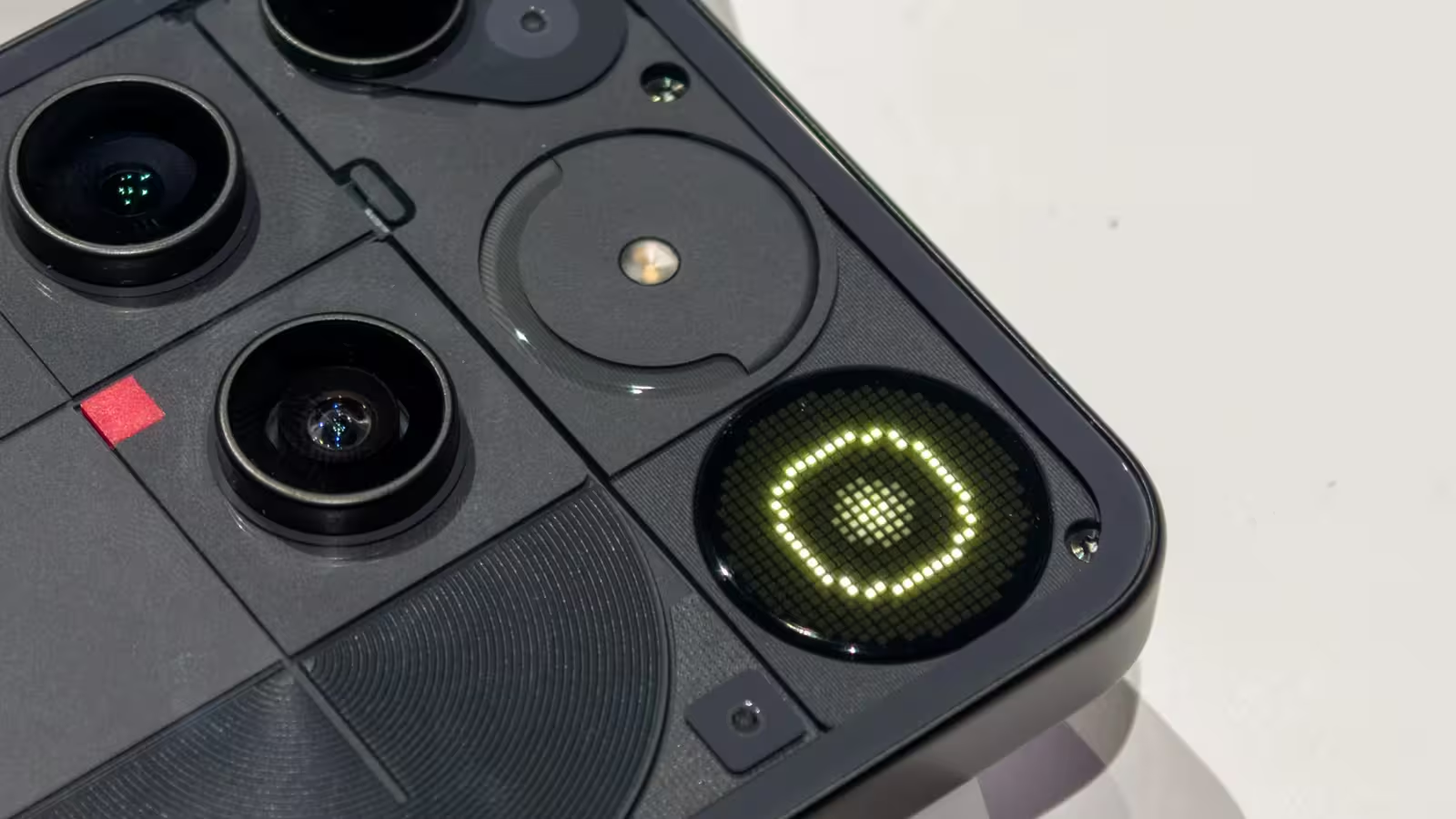
As smartphone upgrades feel incremental and consumers ask what's next, Nothing is positioning itself for a shift beyond mobile screens. Fresh from a $200 million Series C that pushed its valuation to about $1.3 billion, the company is publicly outlining ambitions to explore new hardware categories, notably augmented reality and AI-driven wearables such as smart glasses and AI pins.
From funding to roadmap
Co-founder and CEO Carl Pei framed the move as more than a product bet: it is a strategic response to stagnation in phone innovation. Pei argues that while AI and software have surged, hardware has lagged, creating an opportunity to reimagine both form and interface. Rather than one operating system that fits everyone, he envisions multiple, adaptive systems tailored to individual needs and contexts — an idea that underpins the push into AR, spatial computing, and AI wearables.
Why augmented reality and smart glasses now?
AR and extended reality devices promise faster, more ambient access to information than a pocketable smartphone. Wearables that monitor how we interact with the physical world can feed richer data to AI, enabling hyper-personalized assistance across navigation, productivity, health, and entertainment. For brands like Nothing, this is attractive for both technological and market reasons:
- Lower latency access to contextual data compared with pulling out a phone
- Tighter integration between sensors, AI, and daily tasks
- New hardware categories that could reset pricing and margins
Industry players are already moving. Apple entered the XR conversation with Vision Pro, which showed the technical possibilities but at a premium price. Meta and partners have focused on more affordable approaches, exemplified by iterations of Ray-Ban smart glasses. Samsung, meanwhile, appears ready to reveal Project Moohan XR, leveraging Google’s Android XR platform. These launches could catalyze broader adoption and give newcomers like Nothing a clearer path to market.
Where Nothing fits in the competitive landscape
Nothing hopes to ride this wave, offering distinctive design and a user-focused ecosystem that blends hardware with software. The company believes its aesthetic language and community-driven marketing offer an advantage over incumbents. But several factors will determine if it can turn vision into volume:
- Pricing strategy: high enough to sustain R&D, low enough to encourage adoption
- Software ecosystem: apps, developer support, and OS flexibility for diverse interfaces
- Supply chain and partnerships: to scale components like optical modules and sensors
Even with a compelling concept, converting interest into mainstream sales is not trivial. Early wearables often face skepticism over usefulness, battery life, privacy, and price. Nothing will need to address those head on while differentiating itself from more established rivals in AR and smart glasses.
Outlook: incremental revolution
The shift away from a single smartphone model to a broader set of devices will likely be gradual. Expect hybrid adoption, with AR glasses and AI wearables augmenting phones rather than replacing them overnight. If Nothing can combine thoughtful hardware, adaptive software, and a competitive price point, it could become one of the smaller number of brands shaping the next consumer-computing era.
Key takeaways:
- Nothing has capital and intent to pursue smart glasses and AR devices.
- Market momentum from Meta, Samsung, Google, and Apple will influence timing and price pressure.
- Success hinges on ecosystem, usability, and an accessible pricing model.




Leave a Comment
Comments
No comments yet. Be the first.