
2 Minutes
OpenAI introduces GPT-5-Codex for software teams
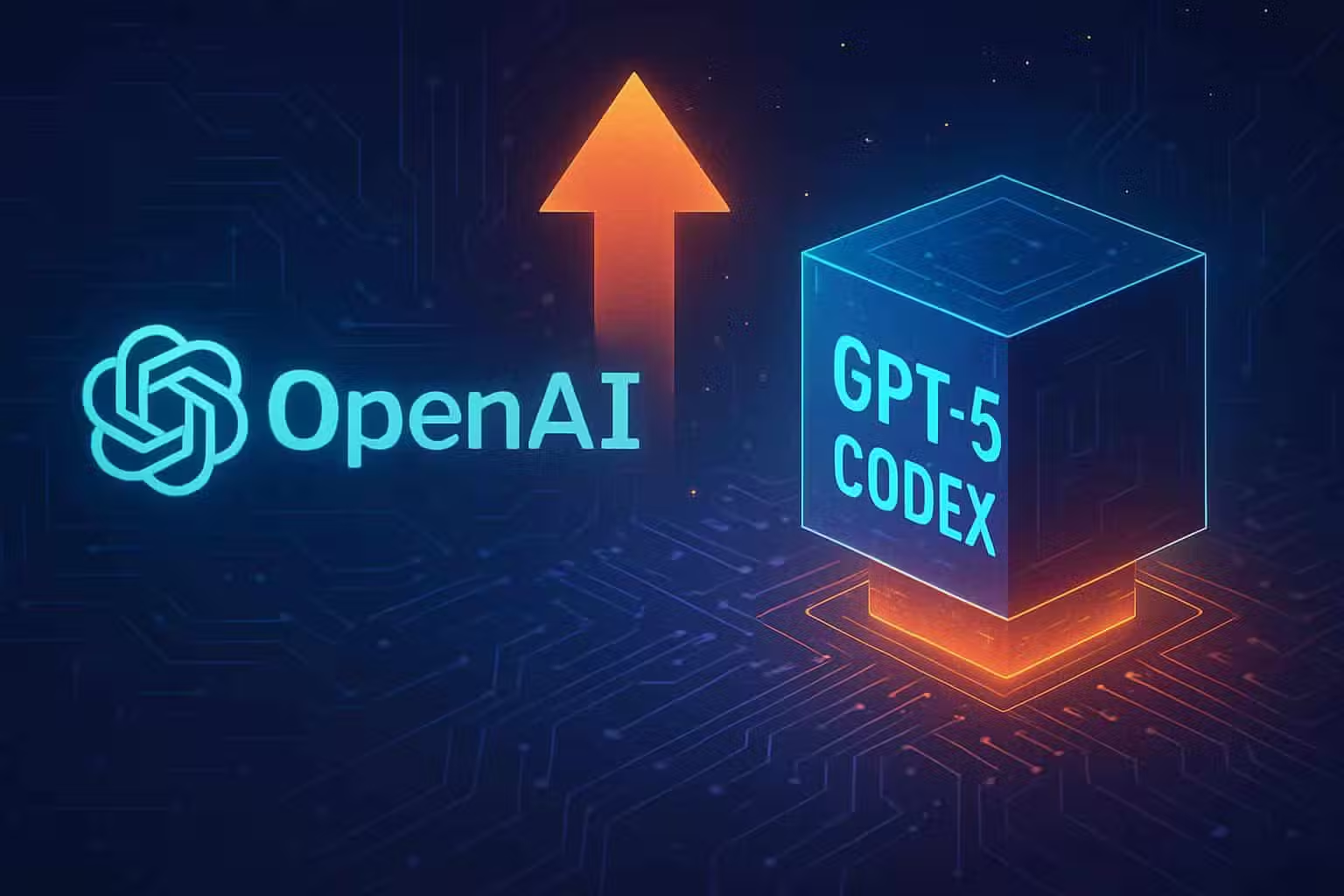
OpenAI has released GPT-5-Codex, a new generative AI assistant tailored for software engineers and development teams. Positioned as the next step beyond earlier Codex offerings, this version emphasizes deeper IDE and terminal integration, measurable speed gains, and reinforced safety controls to reduce risks of misuse.
What it does and where it fits
GPT-5-Codex expands on prior Codex tools such as Codex CLI and the cloud-based Codex service, but broadens functionality to cover a wider range of developer workflows. Key capabilities include automated code review, continuous vulnerability and bug flagging, documentation generation, and scaffolding for web projects. The goal is to reduce friction in everyday engineering tasks while helping teams move from prototype to production faster.
Cross-platform integration
Integration sits at the core of the product strategy. GPT-5-Codex plugs into terminals, VS Code and other popular IDEs, GitHub, major cloud platforms, and even the ChatGPT mobile app. OpenAI offers access to subscribers across ChatGPT Plus, Pro, Business, Edu, and Enterprise tiers, indicating an intent to serve both individual developers and larger organizations.
Performance and sandboxing
OpenAI reports substantial performance improvements in cloud-based workflows, citing completion-time reductions of up to 90% for new tasks and follow-ups in some scenarios. All model activity runs in a sandboxed execution environment by default, with network access and external tools disabled to limit unintended behavior. Developers can opt in to enable web search, external tool access, or broader autonomy when a task requires it.
Safety, high-risk domains, and guardrails
The company rates GPT-5-Codex as having high capability in sensitive areas such as biology and chemistry, where misuse could cause harm. To mitigate these risks, OpenAI has introduced enhanced safeguards designed to detect attempts to bypass constraints or repurpose the system for harmful applications. These protections include contextual detection, command-authority checks, and default restrictions on external connectivity.
Practical benefits and early use cases
For developers, the promise of GPT-5-Codex is practical: fewer bottlenecks in code reviews, faster iteration cycles, and improved developer productivity across debugging, documentation, and prototyping. Early adopters can expect:
- Faster code completion and follow-up interactions
- Automated review comments and vulnerability reminders
- Cross-platform assistance in VS Code, terminals, and cloud IDEs
A measured rollout and emphasis on guardrails underscore a broader challenge in advanced AI tools: balancing innovation and responsibility.
GPT-5-Codex may reshape how teams collaborate with AI assistants, setting new expectations for reliability, integration, and safety in developer-facing AI tools.














Leave a Comment
Comments
No comments yet. Be the first.