
3 Minutes
Sony's refreshed PlayStation 5 Pro CFI-7121 that recently reached Europe brings subtle but welcome hardware tweaks: modest power savings, reduced noise and a few internal component swaps. A fresh teardown by Austin Evans breaks down exactly what's changed and why it matters.
Small upgrades, measurable gains
On paper the differences between the original PS5 Pro launch unit and the CFI-7121 are modest. In real-world testing, however, they add up. Austin Evans ran Astro's Playroom and demanding Gran Turismo 7 replays (with full ray tracing) and found the new CFI-7121 to be roughly 2–3% more power efficient. That slight improvement translates into cooler operation and marginally longer sustained performance under heavy GPU load.
Quieter operation: a subtle but noticeable change
Noise is one of the clearest wins for the new model. The teardown testing recorded about a 2 dB reduction versus the launch PS5 Pro — around 20% quieter overall. Part of that comes from a changed fan design and a different acoustic profile: the new fan produces a slightly lower-pitched tone that many users perceive as less intrusive during long sessions.
What they swapped inside
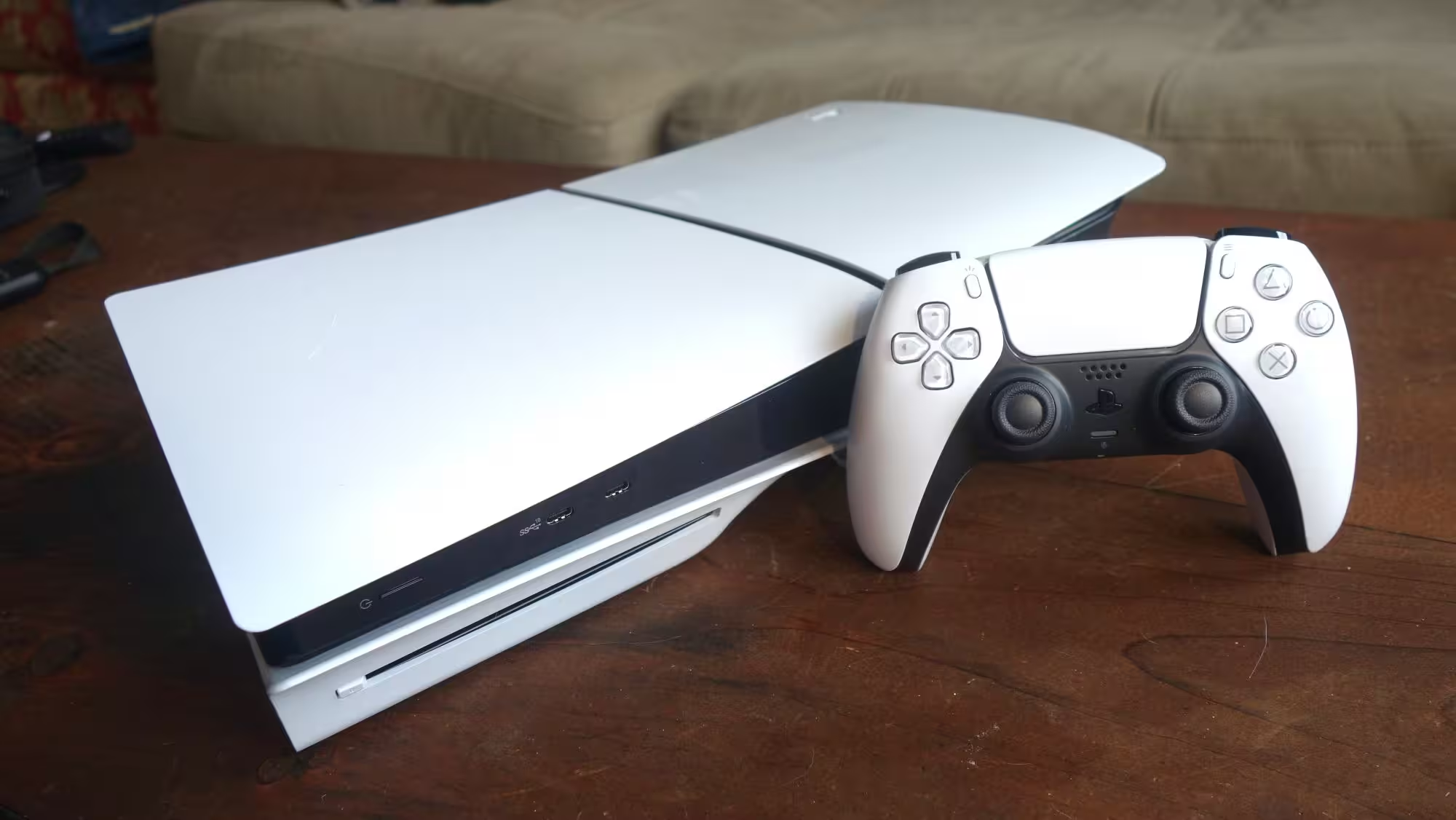
- A different fan (sourced from another manufacturer) and a plastic fan guard replacing the previous metal grid.
- A lighter rear heatsink and some motherboard changes — notably the removal of a few VMM components.
- A lighter, possibly more efficient power supply that helps drive the small power-savings improvements.
- Overall weight reduction: the CFI-7121 tips the scales at about 3,016 g compared to 3,103 g for the original Pro.
These hardware swaps are pragmatic moves: lower cost, slightly better thermal behavior and a lighter chassis without changing the console’s core performance profile.
DualSense V3 revision: minimal edits, practical outcome
The DualSense V3 bundled with the new units shows very limited changes. Internally, some components are now sourced from different manufacturers, but functionally the controller remains the same. The most notable removal is the back microphone — a small cost-saving measure that doesn’t affect haptics, adaptive triggers, or overall gameplay experience.
Earlier rumors hinted at larger controller revisions, so the minimal nature of this update will be a relief for players who feared feature cuts. And for those watching prices, preserving core functionality while trimming a minor part helps keep manufacturing costs lower amid rising hardware prices industry-wide.
Why these changes matter (and why they’re unsurprising)
Think of the CFI-7121 as a smarter, slightly leaner iteration rather than a full redesign. A few percent improvement in power efficiency and a quieter fan are the kinds of refinements companies roll out once a product matures. They won’t upend performance benchmarks, but they improve everyday comfort — cooler consoles, quieter living rooms, and a lighter box to ship.
If you’re debating whether to upgrade, remember: gaming speed and ray-tracing capability remain the same. The gains are about thermal management, acoustics and production optimization — small but appreciated refinements for long-term owners and new buyers alike.
For a full visual breakdown of the fan, heatsink and other component changes, check out Austin Evans’ complete teardown video linked in coverage from retailers and tech outlets.









Leave a Comment
Comments
No comments yet. Be the first.