

4 Minutes
Ethereum momentum eases as BitMine remains the primary institutional buyer
Institutional demand for Ethereum (ETH) has cooled in recent weeks, according to a new analysis from Matrixport. On-chain flows and ETF activity indicate that capital rotating into ETH has diminished since the summer, leaving BitMine as the most persistent institutional purchaser. With ETH trading below key resistance levels and technical indicators flashing oversold conditions, the market looks poised for further consolidation — and possible short-term volatility — ahead of the network’s Fusaka upgrade scheduled for December 3, 2025.
What Matrixport found: ETFs and waning institutional flows
Matrixport’s report traces a sharp shift in institutional appetite for ETH-backed exchange-traded funds (ETFs). July and August recorded robust net inflows — as high as $5.2 billion and $3.4 billion respectively — but those inflows tapered sharply by September to roughly $300 million. October saw a modest recovery to about $600 million in inflows, yet Matrixport characterizes the month as showing "virtually no follow-through" after the earlier surge.
ETF outflows persist across crypto
On-chain and market-data trackers corroborate the downward trend. SoSo Value reported that nine major ETH ETFs registered a combined daily net outflow of $98.2 million on October 31. This outflow pattern is not unique to Ethereum: Bitcoin ETFs also experienced sizable redemptions, totaling $191.6 million in outflows during the week referenced by the report. The broad-based ETF pullback points to a period of weaker institutional conviction across both leading digital assets.
BitMine’s outsized buying amid softer demand
Matrixport singled out BitMine as the "only consistent buyer" of ETH in the last month. Over a 30-day window, the Tom Lee-led Ethereum treasury firm accumulated roughly 662,169 ETH, bringing its holdings to about 3.1 million ETH — nearly 3% of total supply. The largest single transaction in that period reportedly occurred on October 27, when BitMine purchased 77,055 ETH (roughly $285 million at prevailing market prices).
How long can one buyer sustain institutional support?
Matrixport analysts caution that BitMine’s buying behavior may not be a durable substitute for broad-based institutional demand. They note the firm’s NAV is only marginally above issuance levels, implying BitMine still has room to dilute holdings and extract incremental capital — a dynamic that analysts argue is likely limited in time. If BitMine scales back purchases, the report warns, ETH could face increased downside pressure given the recent reduction in other institutional inflows.

Technical picture: bearish bias but oversold signals
Price action has reflected the weaker demand backdrop. Ethereum is trading around $3,714 and sits below its 30-day moving average of $3,847. Since mid-October, ETH has formed a sequence of lower highs and lower lows, underscoring continued seller control and the moving average acting as dynamic resistance.
Key indicators and levels to watch
The Relative Strength Index (RSI) currently reads near 26.45, signaling oversold territory and suggesting that short-term selling may be overextended. That opens the possibility of a temporary bounce or sideways consolidation if buyers step in around proven support. Immediate support is clustered between $3,700 and $3,680; a decisive break below that band could expose the $3,500 psychological level. Conversely, a successful reclaim of the 30-day moving average near $3,850 could set the stage for a short-lived reversal toward the $3,950–$4,000 zone.
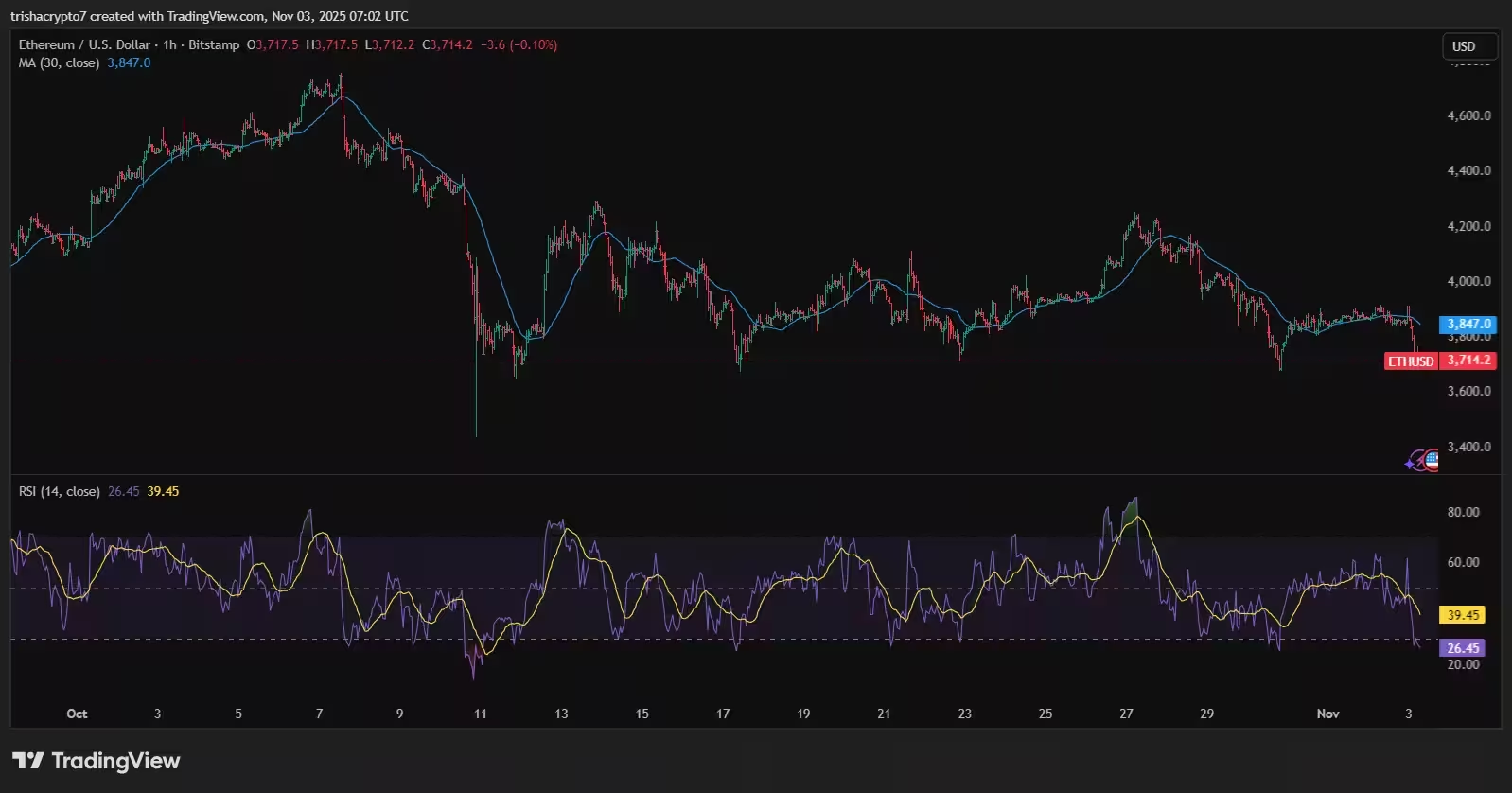
Ethereum price has plummeted further down to the $3,700 range
Fusaka upgrade: catalyst or merely noise?
The Fusaka upgrade, slated for December 3, 2025, introduces potential technical and narrative catalysts that could renew buying interest in ETH if the upgrade delivers expected improvements. However, Matrixport stresses that upgrades do not guarantee immediate price appreciation — especially when macro and institutional flows remain subdued. Market participants will likely watch on-chain activity, validator behavior, and post-upgrade liquidity conditions closely to gauge whether interest translates into renewed ETF demand or direct on-chain buying.
Outlook: consolidation with asymmetric risks
Given the current mix of weaker ETF inflows, the outsized role of a single institutional buyer, and bearish technicals, the near-term outlook for Ethereum favors consolidation and the possibility of a deeper correction. That said, oversold indicators increase the chance of short-term rebounds as speculative and value hunters attempt to pick entries. Traders and institutional desks should monitor ETF flow data, BitMine’s disclosed activity, and fundamentals tied to the Fusaka upgrade to better assess directional risk.

In short, Ethereum’s path over the next several weeks will likely hinge on whether broader institutional demand returns and whether BitMine’s buying trend continues. Until larger inflows re-emerge, ETH remains vulnerable to further downside below key support, while any meaningful recovery will depend on reclaiming the $3,850–$4,000 resistance region.

Leave a Comment
Comments (2)
So ETF outflows for both BTC and ETH — is this just seasonal profit taking or a real loss of conviction? and will Fusaka on Dec 3, actually move ETF flows or nah
Whoa, BitMine holding ~3% of supply? that's wild. kinda scary one buyer props the market, what if they stop or dilute... Fusaka might help but rn feels fragile