
3 Minutes
TCL CSOT used its 2025 Global Display Tech-Ecosystem Conference in Suzhou to spotlight a push toward printed OLED manufacturing and a slate of record-breaking panels across OLED, Micro LED and MLED categories. The company teased prototypes and mass-production lines that aim to reshape how displays are made and where they can be used — from XR headsets to foldable phones and massive public installations.
Printed OLED: precision inkjet printing takes center stage
At the heart of the announcements was the world’s first 5.65‑inch Real Stripe RGB OLED phone panel produced with printed OLED technology. The display registers 390 PPI, yet thanks to its Real Stripe pixel arrangement it achieves perceived clarity comparable to 490 PPI. TCL framed this as proof that high-precision inkjet (IJP) printing can deliver both density and efficiency for next‑generation screens.
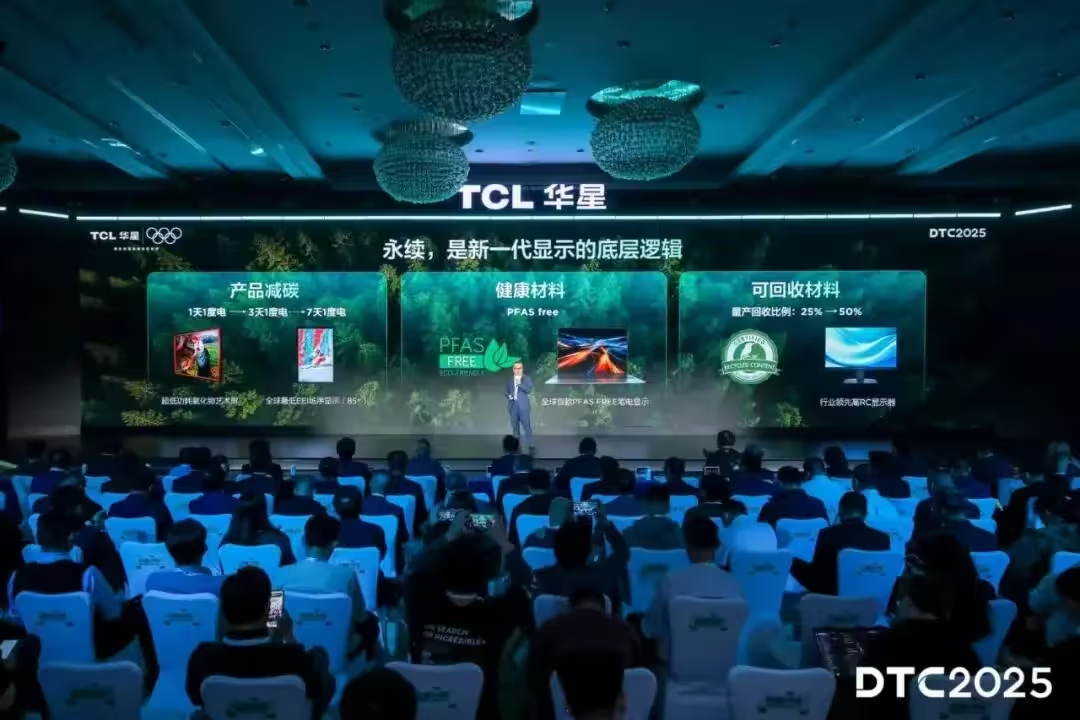
Beyond prototypes, TCL highlighted production progress: its t12 G5.5 printed OLED line reportedly saves 300–400 million kilowatt-hours per year by cutting vacuum processing steps. The company is also developing the t8 G8.6 line — which it calls the world’s first mass-production printed OLED facility at that scale.
Small pixels, huge numbers: XR and wearable breakthroughs
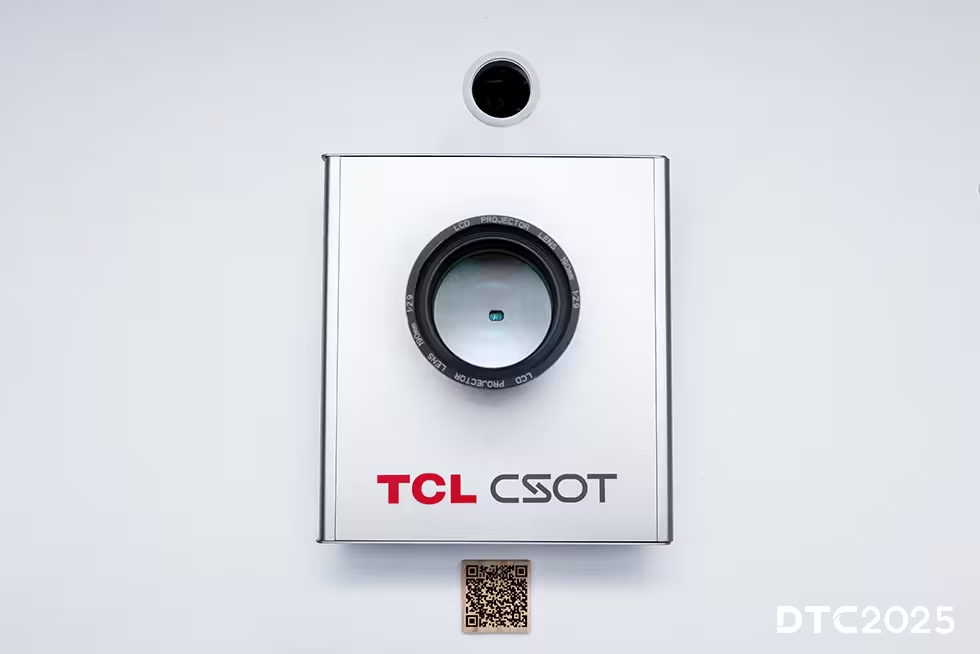
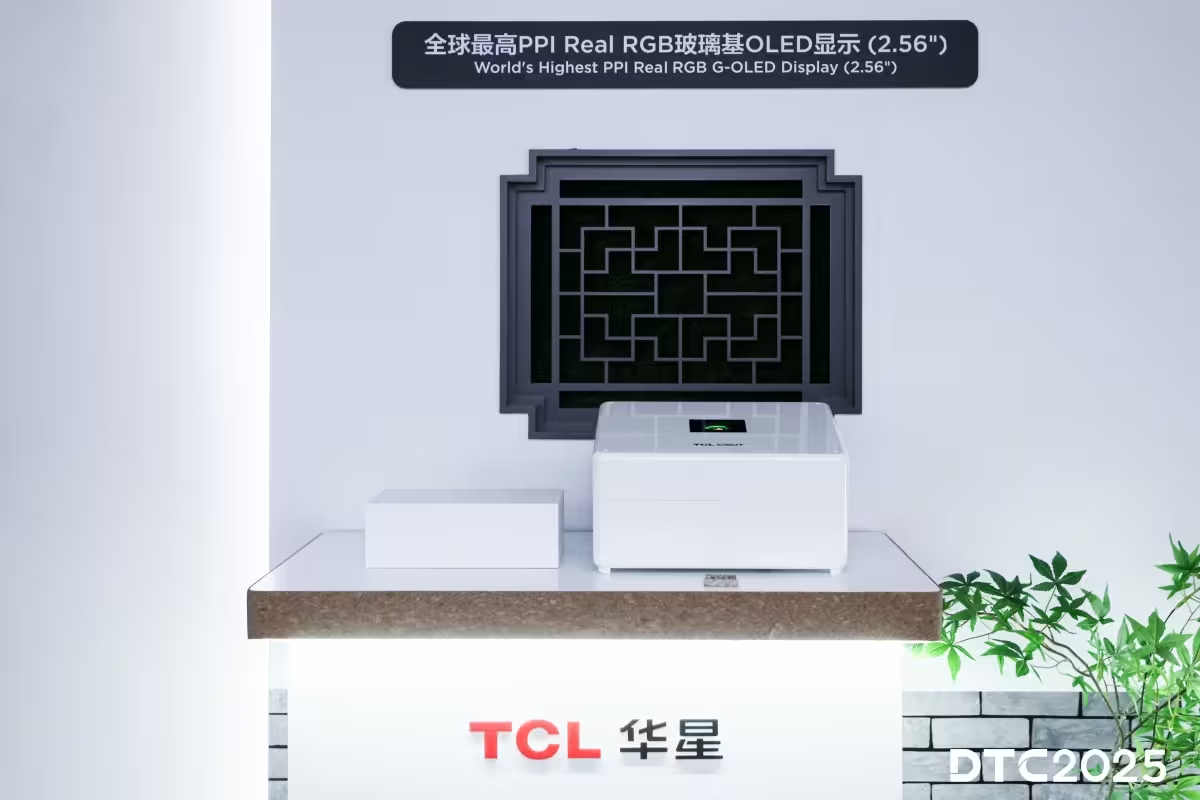
For XR and wearables, TCL unveiled compact displays that push pixel density to extremes. A 2.56‑inch Real RGB OLED reached 1512 PPI for demanding extended‑reality use cases. Even more striking is a 0.28‑inch full‑color Micro LED panel with a 1280×720 resolution delivering about 5131 PPI — aimed at AR glasses and other ultra‑small wearables.
 |  |
Gaming, laptops and tablets: high refresh meets high resolution
Gamers and creators saw big moves too. TCL showed a 16‑inch IJP OLED laptop panel with 2.5K resolution and a 240Hz refresh rate, blending smooth motion with fine detail. For hardcore gaming displays, the company demoed a 57‑inch 8K MLED panel capable of a staggering 1000Hz refresh rate, driven by its custom 6G2P driver IC and the CSPI 5.1 protocol.
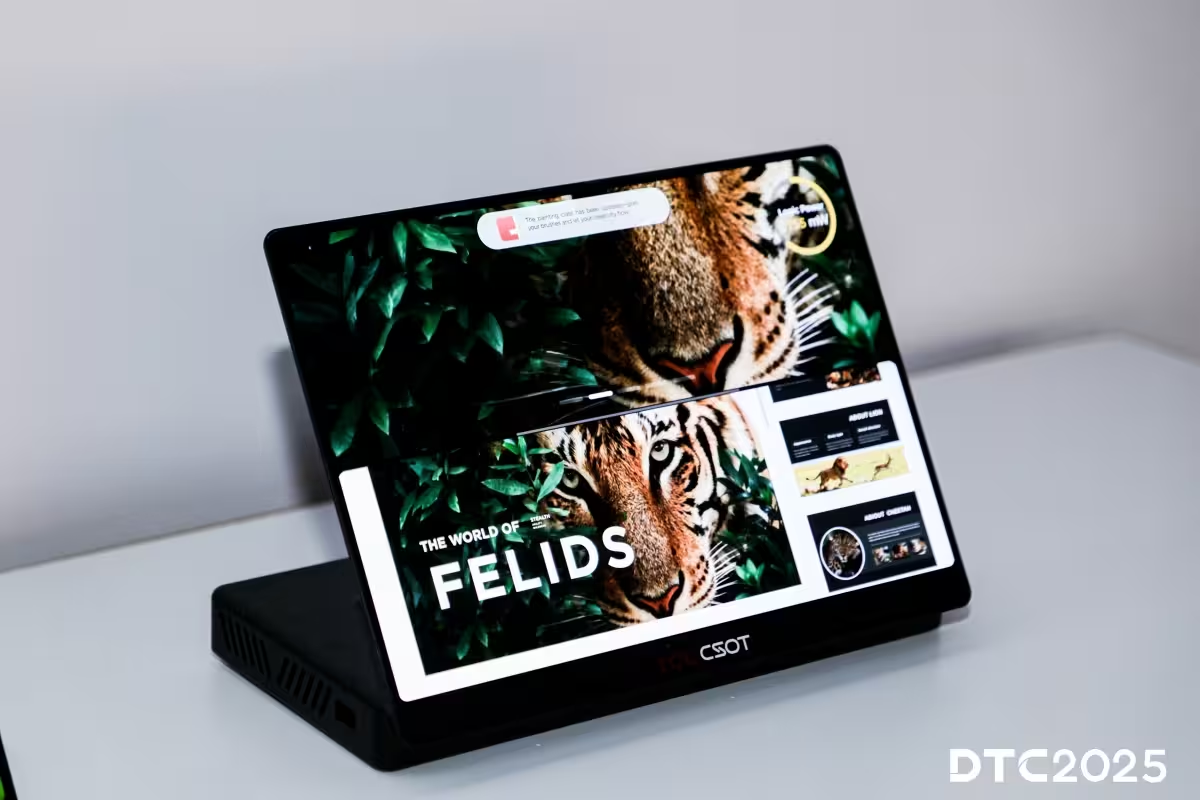
Tablets get more versatile too: a 13.2‑inch OLED with partitioned refresh zones lets different areas run at different rates, supporting variable refresh from 1Hz to 120Hz using an LTPO backplane. That makes power-efficient multitasking more practical — think video playback in one zone and a high-refresh game in another.
Foldables, tri‑folds and rugged testing
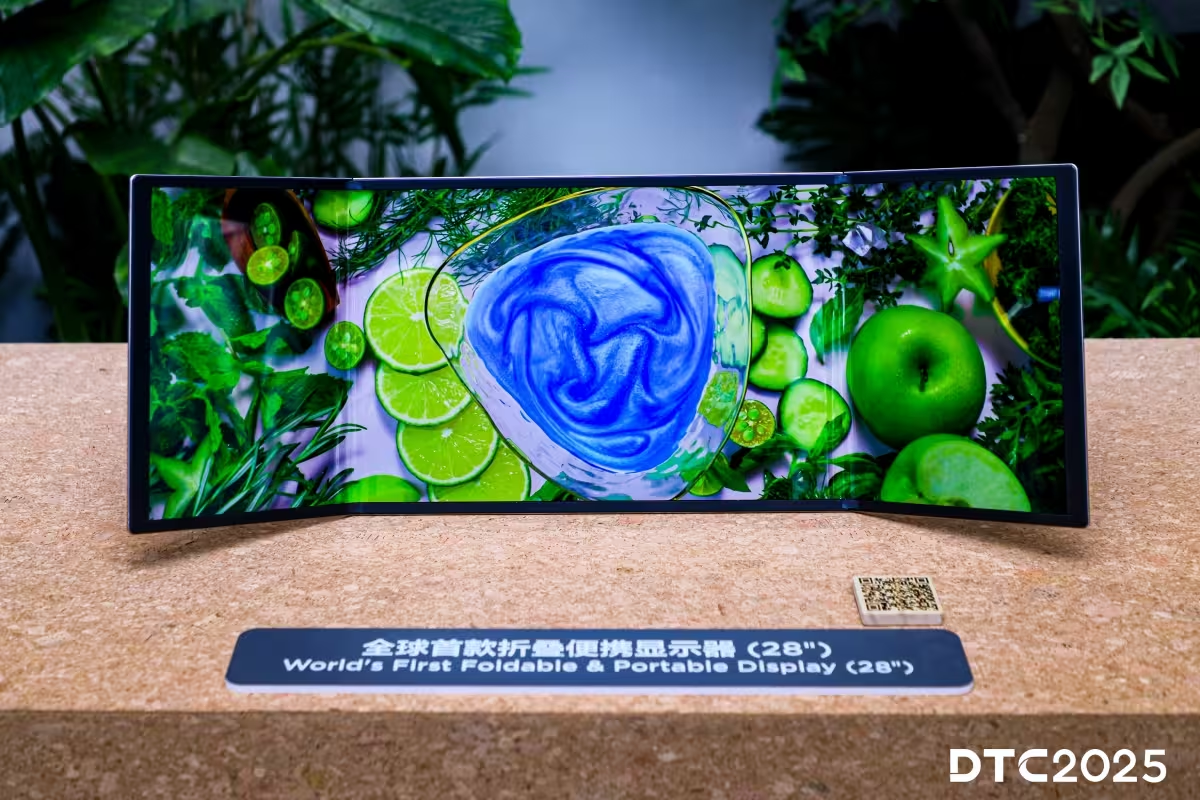
TCL also previewed flexible form factors: a 28‑inch tri‑fold OLED that collapses to a 16‑inch footprint and a 6.73‑inch folding smartphone panel with some of the narrowest bezels in its class. The company claims the foldable panel can survive up to 400,000 bends at room temperature — a headline figure for OEMs exploring durable foldables.
Large panels and installation efficiencies
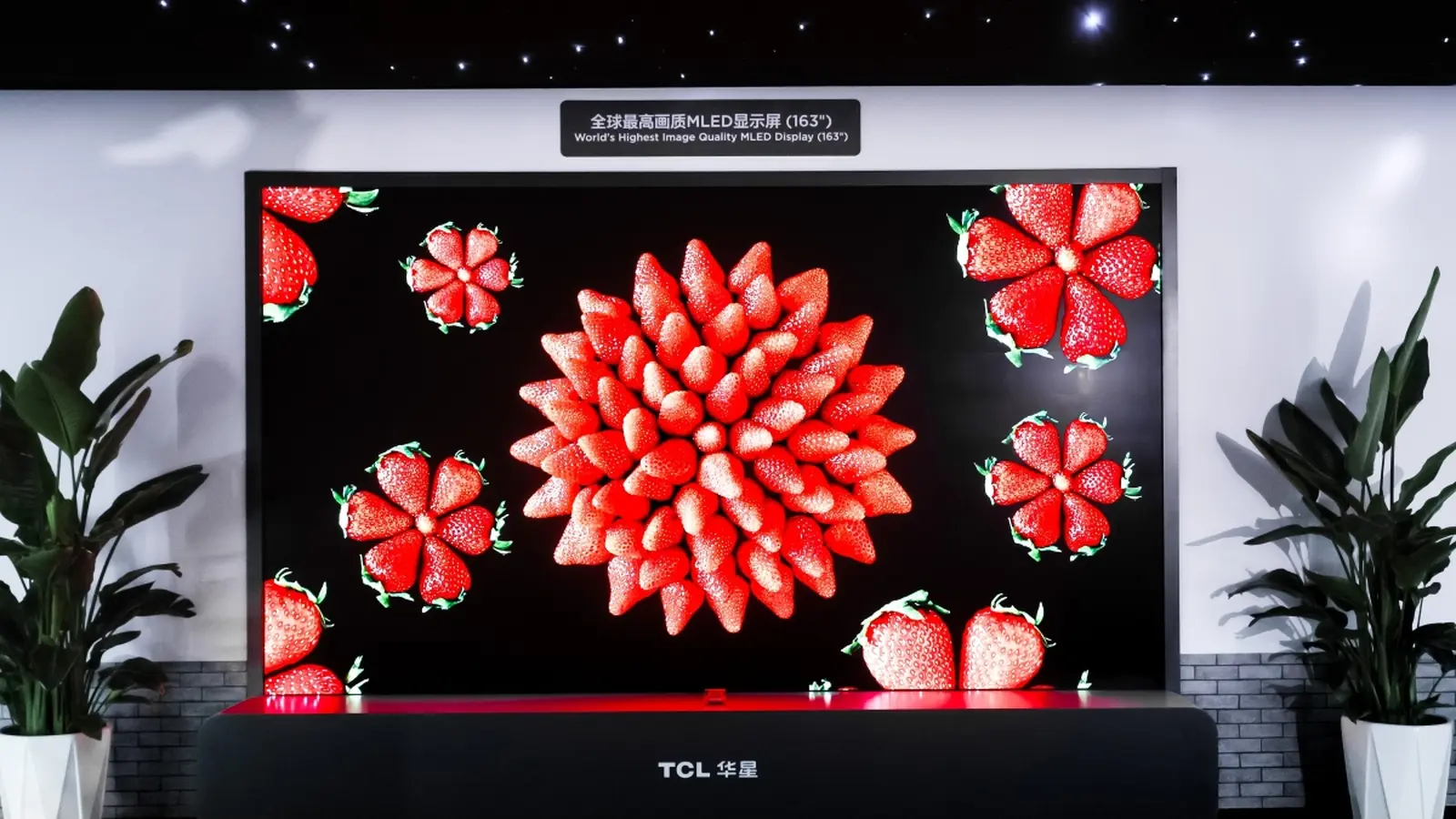
On the big end, CSOT displayed a 163‑inch panel featuring a 37,500:1 contrast ratio, ultra‑low‑reflection encapsulation, hybrid PWM+PAM driving, 24‑bit color depth, and a 144Hz refresh rate with real‑time brightness adjustment. The design also focuses on reduced bezel gaps and easier installation for commercial displays and signage.
Across the announcements, TCL CSOT emphasized ecosystem development around printed OLED and AI-driven display tech while signaling plans to expand these products across multiple categories.
In related consumer news, TCL has also launched budget-friendly T7 Series 4K QLED TVs with a 144Hz refresh rate and Google TV — a reminder that the company is aiming at both cutting-edge panels and mainstream product lines.






Leave a Comment
Comments
No comments yet. Be the first.