

3 Minutes
Could the Fortuner (SW4) evolve into an international 4Runner?
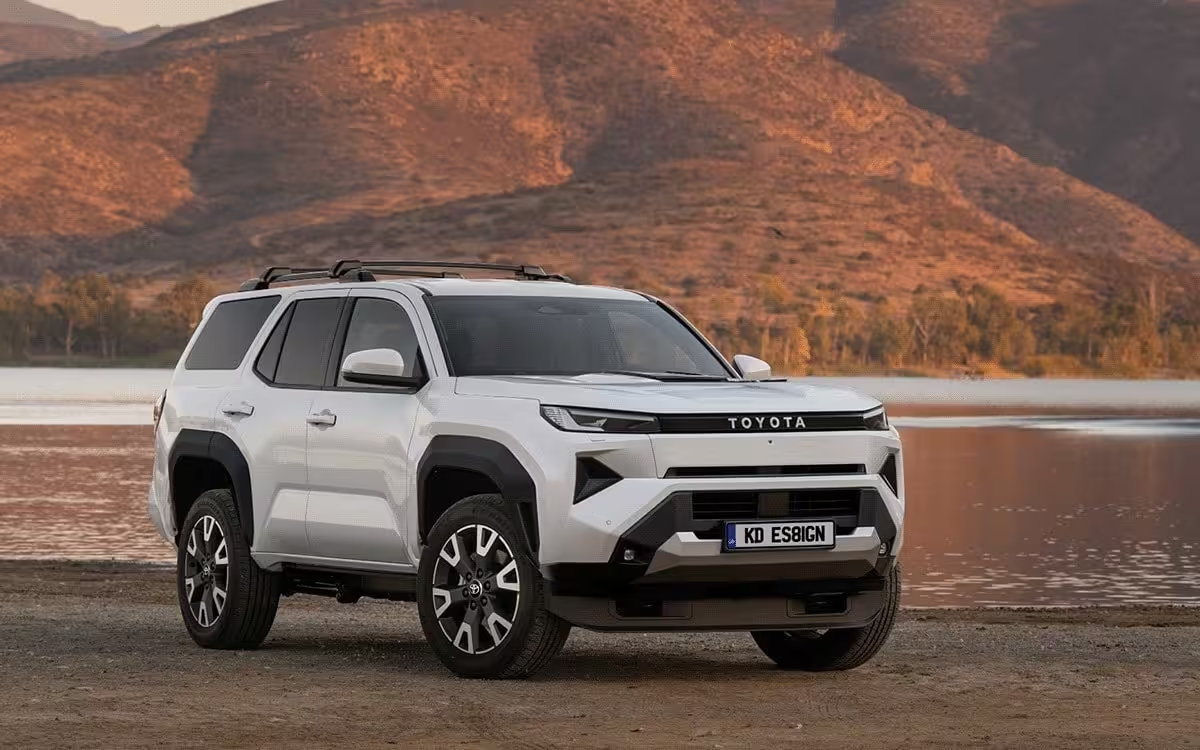
Toyota's mid-size body-on-frame lineup has been busy the last few years, and a recent CGI study has reignited debate about the future of the Fortuner (also known as the SW4). Brazilian digital artist Kleber Silva (KDesign AG) imagined a third-generation Fortuner that borrows the Hilux's fresh styling while swapping its underpinnings for the more modern TNGA-F architecture used by the N500 4Runner and other mid/full-size Toyota SUVs.
From IMV to TNGA-F: the platform question
Historically the Fortuner shared the Hilux's IMV platform — a durable, proven architecture that made the SUV affordable and broadly adaptable for markets like Australia, Latin America and parts of Asia. But Toyota's recent push with TNGA-F for the Land Cruiser, Lexus GX, Sequoia and the N500 4Runner signals a shift toward a more capable, refined body-on-frame DNA.
Switching the Fortuner to TNGA-F would bring clear benefits: improved on- and off-road dynamics, modern suspension geometry, better NVH and the ability to share advanced powertrains. The trade-off? Higher development and production costs, which could push retail prices up and change the Fortuner's value proposition in price-sensitive markets.
CGI rendering: styling versus substance
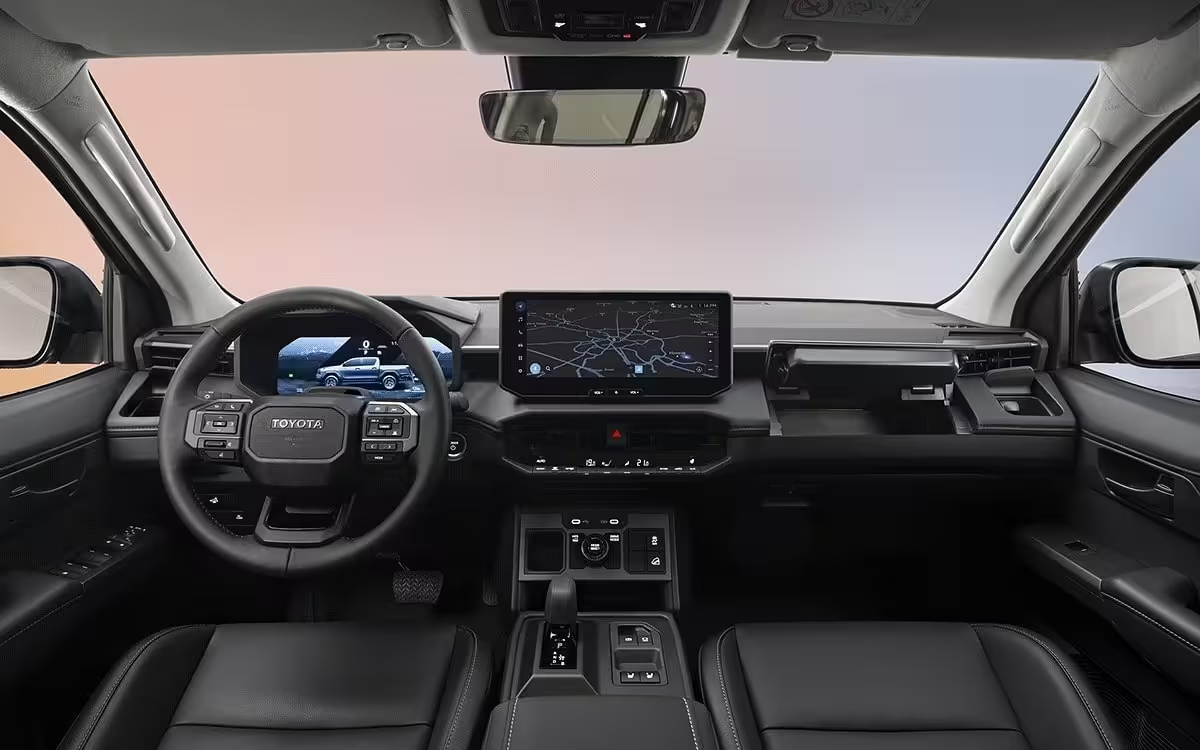
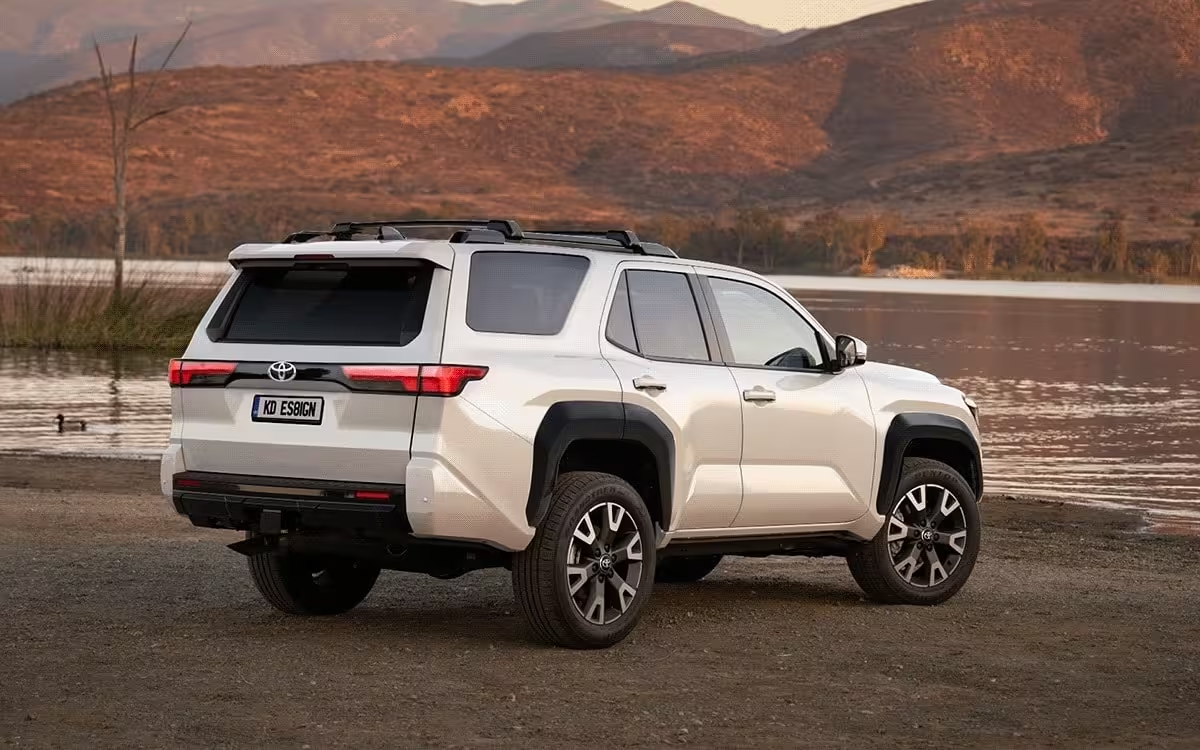
KDesign AG's render takes the all-new Hilux's face and imagines it scaled into a seven-seat SUV silhouette that feels unmistakably Toyota. The artist describes the vision as a 'modern, robust SW4 in line with Toyota's overall look.' The result highlights how a Fortuner with 4Runner bones could look: rugged proportions, upright stance, squared wheel arches and a squatter hood — all cues for capability.
Highlights from the CGI concept:
- Exterior styling inspired by the new Hilux grille and lighting signature
- TNGA-F platform influences: higher stance, wider track, and likely better suspension travel
- Seven-seat interior packaging that keeps family utility in focus
Market positioning and practical considerations
There are real-world signals that Toyota is rethinking where the Fortuner belongs. Reports suggest the Hilux-based Fortuner could be discontinued in some markets like Australia, while Europe may receive only the double-cab Hilux pickup. Yet Latin America — a stronghold for the SW4 — could still get a new generation adapted to regional needs.
Would Toyota justify moving the SW4 to TNGA-F? Considerations include:
- Customer expectations: buyers wanting premium feel and capability may accept a price increase
- Dealer lineups: TNGA-F would align the Fortuner with global SUVs like the Land Cruiser and 4Runner
- Regional demand: cost-sensitive markets might prefer the IMV-based Fortuner to retain affordability
Performance and powertrain outlook
The new Hilux introduces fresh design and new powertrain options, including battery-electric (BEV) and hydrogen fuel-cell variants. If Toyota replatforms the Fortuner to TNGA-F, expect more advanced gasoline and hybrid options, improved towing capacity and potentially electrified variants, but likely phased depending on market readiness.
"A Fortuner on 4Runner DNA would be a modern, robust SW4 that matches Toyota's global approach," the CGI's premise suggests — but reality will be driven by sales volumes, production costs and regional strategy.
Bottom line
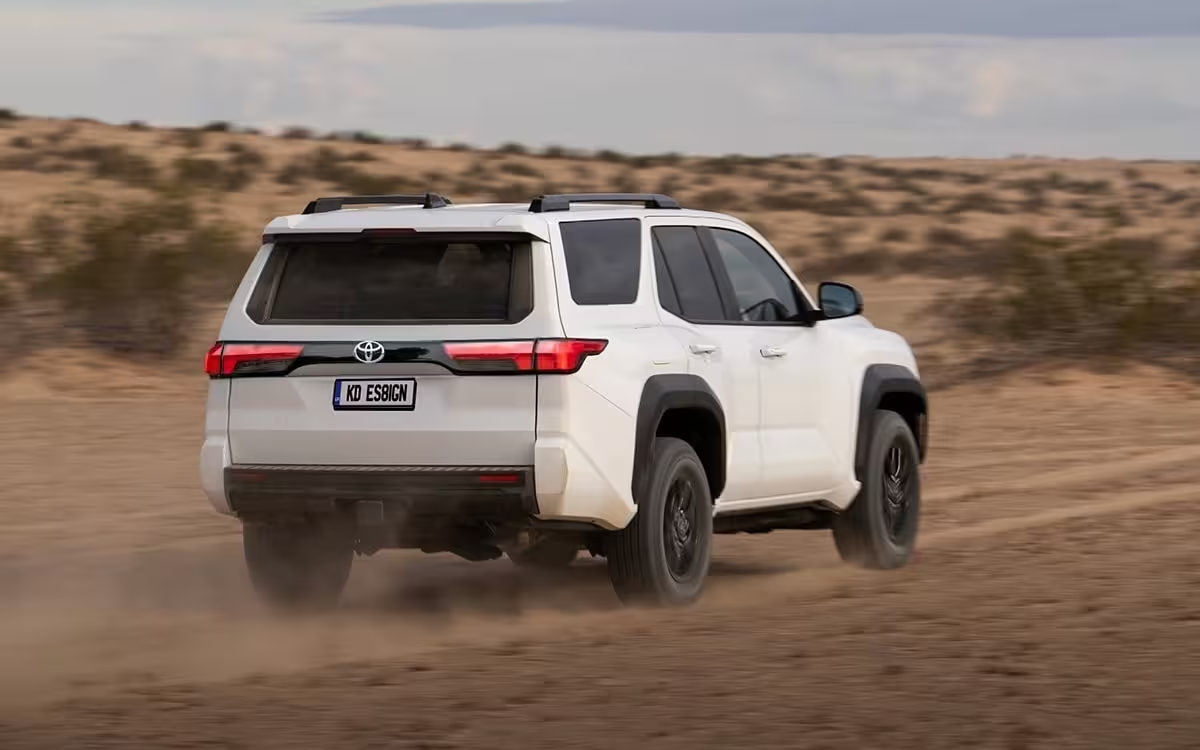
Toyota has the technical building blocks to evolve the Fortuner into a globally competitive mid-size SUV on TNGA-F, but the company must balance capability with affordability. The CGI concept by KDesign AG offers a compelling vision of what a next-gen SW4 could become: a seven-seat, 4Runner-like SUV wearing a Hilux-inspired face. Whether Toyota makes that leap will depend on market demand and whether buyers are willing to pay for the extra capability.
If you're a Fortuner fan, keep an eye on Latin America and ASEAN markets — where Toyota often tests product continuity — and watch for official signals from Toyota about platform plans and future powertrains.


Leave a Comment
Comments
No comments yet. Be the first.