
Amazon is quietly rolling out a new, ultra-fast delivery option in parts of Seattle and Philadelphia. Branded as "Amazon Now," the pilot promises to get everyday essentials — from milk and eggs to skincare and electronics — into customer hands in 30 minutes or less.
How Amazon Now works — simple, local, and tracked
Eligible customers can enable a "30-Minute Delivery" option inside the Amazon app, track their order in real time and tip drivers directly through the interface. Orders are fulfilled from small, specialized micro-fulfillment centers placed close to qualifying neighborhoods so drivers travel shorter routes and deliveries arrive faster.
What you can order
- Fresh grocery items: milk, eggs, fruit and vegetables
- Household essentials and toiletries
- Over-the-counter medicines and pet supplies
- Small electronics and everyday home goods
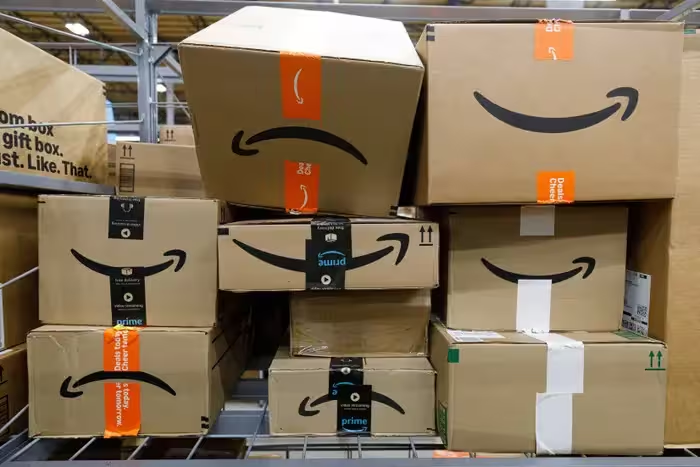
This setup helps Amazon speed up packing and improve staff safety during pick-and-pack operations, while positioning the company to compete more aggressively with DoorDash, Uber Eats and Instacart in the ultra-fast delivery market.
Pricing, limits and logistics
Delivery pricing is tiered: Prime members pay a starting fee of $3.99, non-members are charged $13.99, and orders under $15 incur an extra $1.99 small-basket fee. By operating from nearby micro-centers, Amazon reduces driver mileage and tightens delivery windows — the key to keeping that 30-minute promise.
Amazon has tested even faster options elsewhere. In the UAE the company piloted a 15-minute service that reportedly delivered some orders in as little as six minutes. Back in the U.S., this new Amazon Now rollout signals a renewed push into same-day and instant fulfillment.
Why this matters — and what’s next
The launch is part of Amazon’s long-term bet on faster delivery. The company previously backed one-hour courier start-ups in the 2000s, launched Prime Now for two-hour delivery in 2014, and later shuttered several same-day programs. Now, with plans to invest over $4 billion and triple delivery capacity by 2026, Amazon appears serious about owning the ultra-fast lane.
For consumers, the appeal is obvious: convenience and speed. For couriers and competitors, it raises the stakes on fulfillment density and local logistics. Expect Amazon Now to expand cautiously — starting with a few neighborhoods, learning fast, and then scaling if the economics and customer feedback line up.
Curious if your address qualifies? Open the Amazon app and look for the 30-Minute Delivery option — it may appear first in the test cities before widening to more metros.

Leave a Comment
Comments
No comments yet. Be the first.