
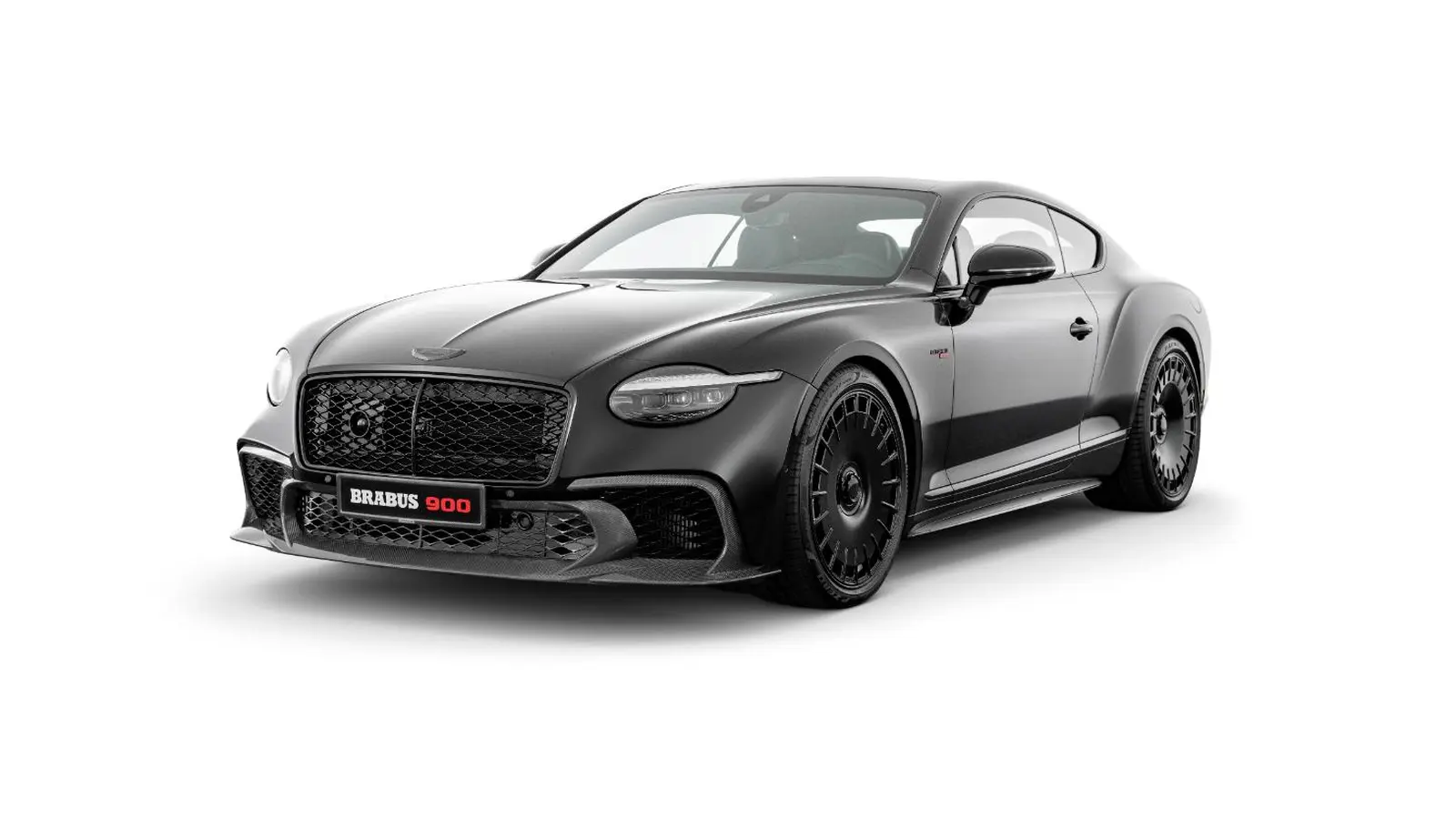
Brabus turns the Continental GT Speed into a shadowy performance icon
The Brabus 900 Superblack is not a subtle upgrade — it’s a full-blown reinterpretation of Bentley’s Continental GT Speed that swaps aristocratic restraint for theatrical menace. Based on the latest plug-in hybrid Continental GT Speed, Brabus has taken the luxe grand tourer, dipped it head to toe in black, and given it a performance overhaul that pushes the combined plug-in drivetrain to a headline-grabbing 900 PS and 1,100 Nm of torque.
This is a different kind of Bentley: the weight, the luxe materials and the refined silhouette remain, but every visual and mechanical cue has been sharpened to deliver darker looks and sharper responses. For enthusiasts tracking high-performance grand tourers, the 900 Superblack is both a statement and a technical showcase — a tuning project that balances bespoke design, carbon-fiber engineering and serious power upgrades.
Why “Superblack” and why now?
Brabus has long been synonymous with dramatic black-on-black creations. The “Superblack” label has appeared on earlier Masterpiece projects — notably on AMG-derived models — and it fits the Continental GT Speed like a glove. But this time the project also represents Brabus’ growing appetite for reimagining non-Mercedes platforms with full cosmetic and mechanical treatments.
The timing matters: the Continental GT Speed switched from a W12 to a twin-turbo 4.0-liter V8 hybrid architecture in 2024. That change opened the door for tuners to extract new levels of performance by refining forced-induction hardware and recalibrating hybrid integration. Brabus seized the opportunity to make the flagship coupe both visually more aggressive and far more potent than its factory sibling.
Design: from luxurious grand tourer to onyx predator
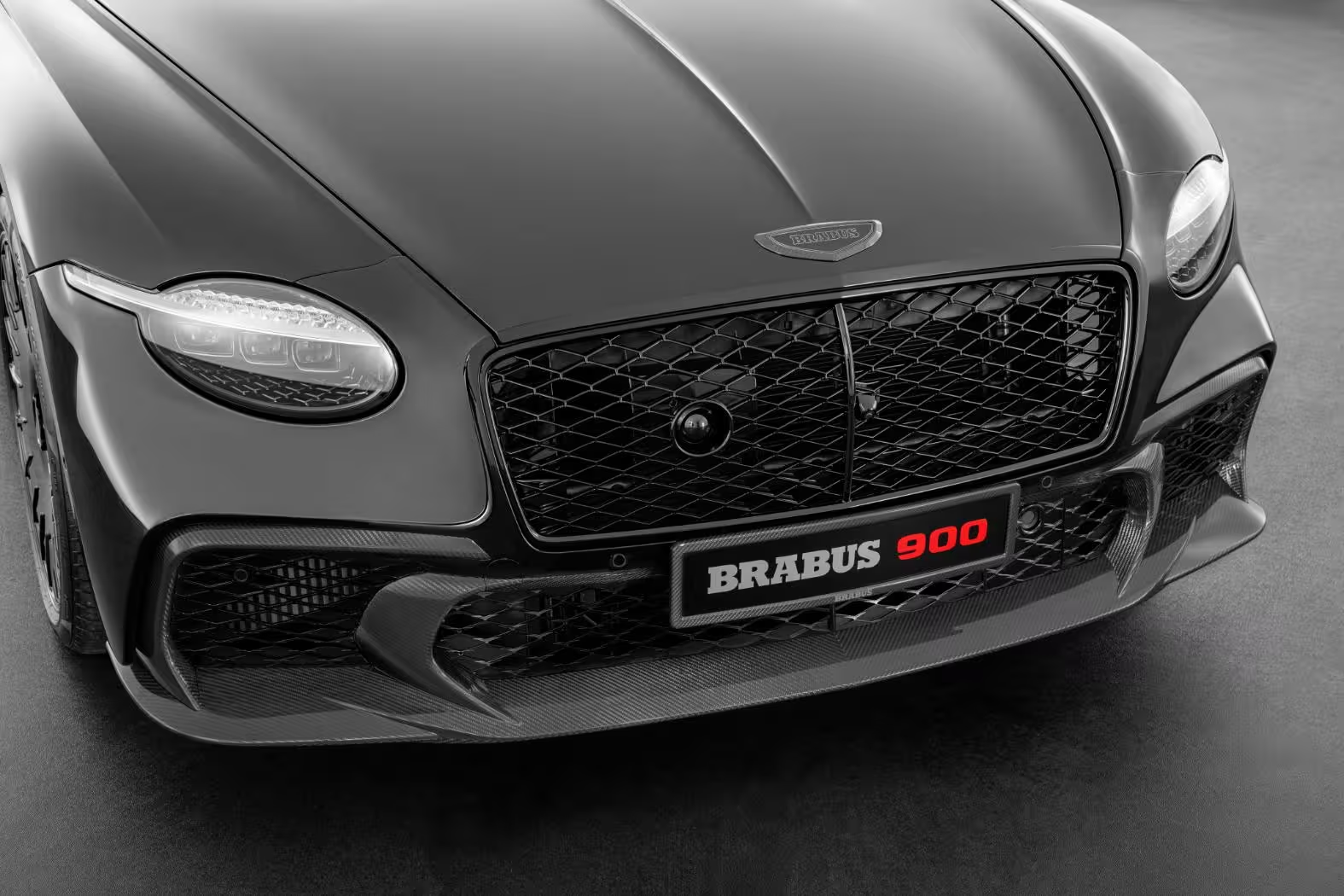
At a glance the Brabus 900 Superblack reads like a rolling shadow. Every piece of brightwork on the donor car has been turned dark: chrome trim, accents, exhaust tips and even the Bentley flying B are swapped for Brabus’ black Double-B signature. The effect is comprehensive — nothing is left to whisper.
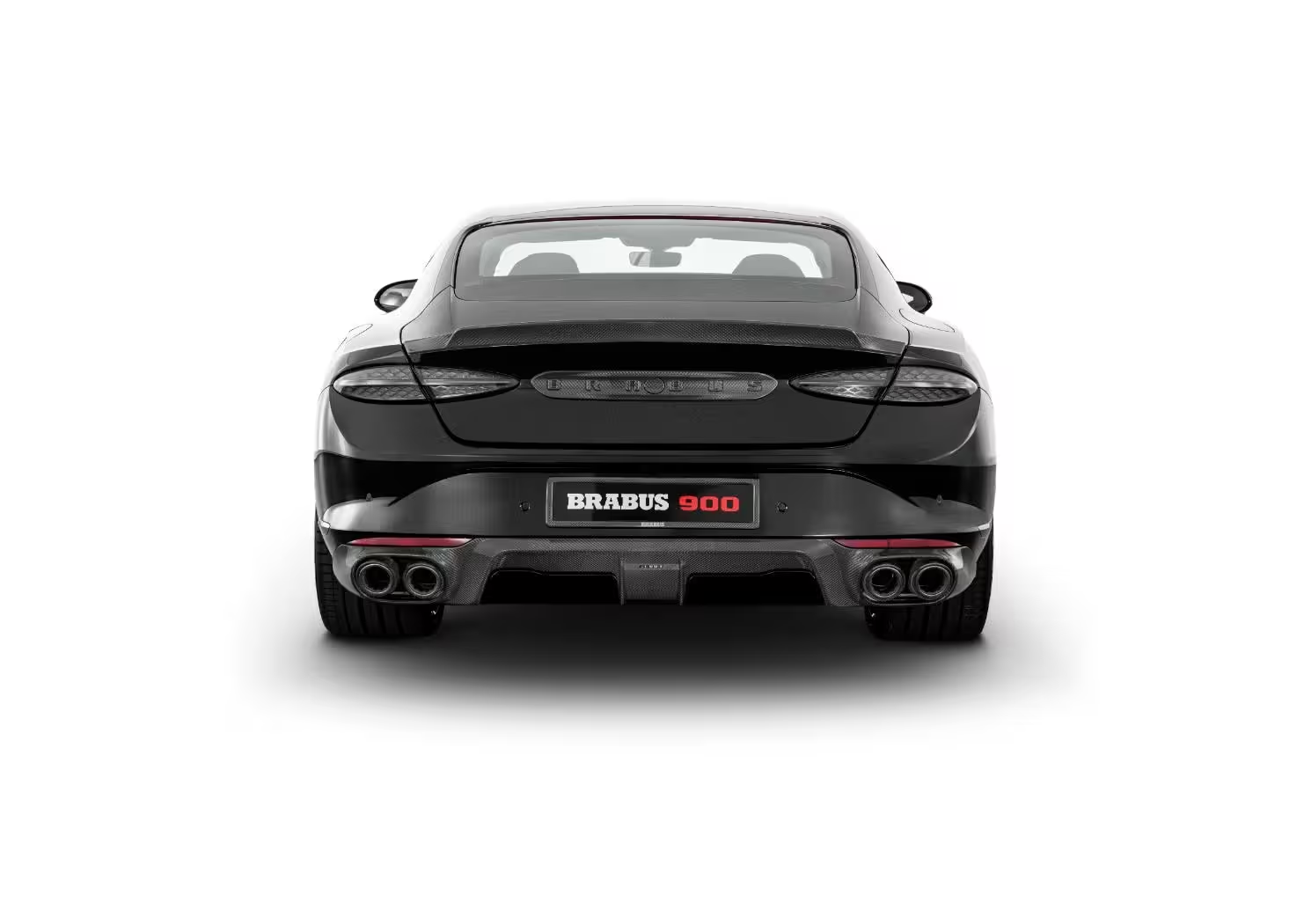
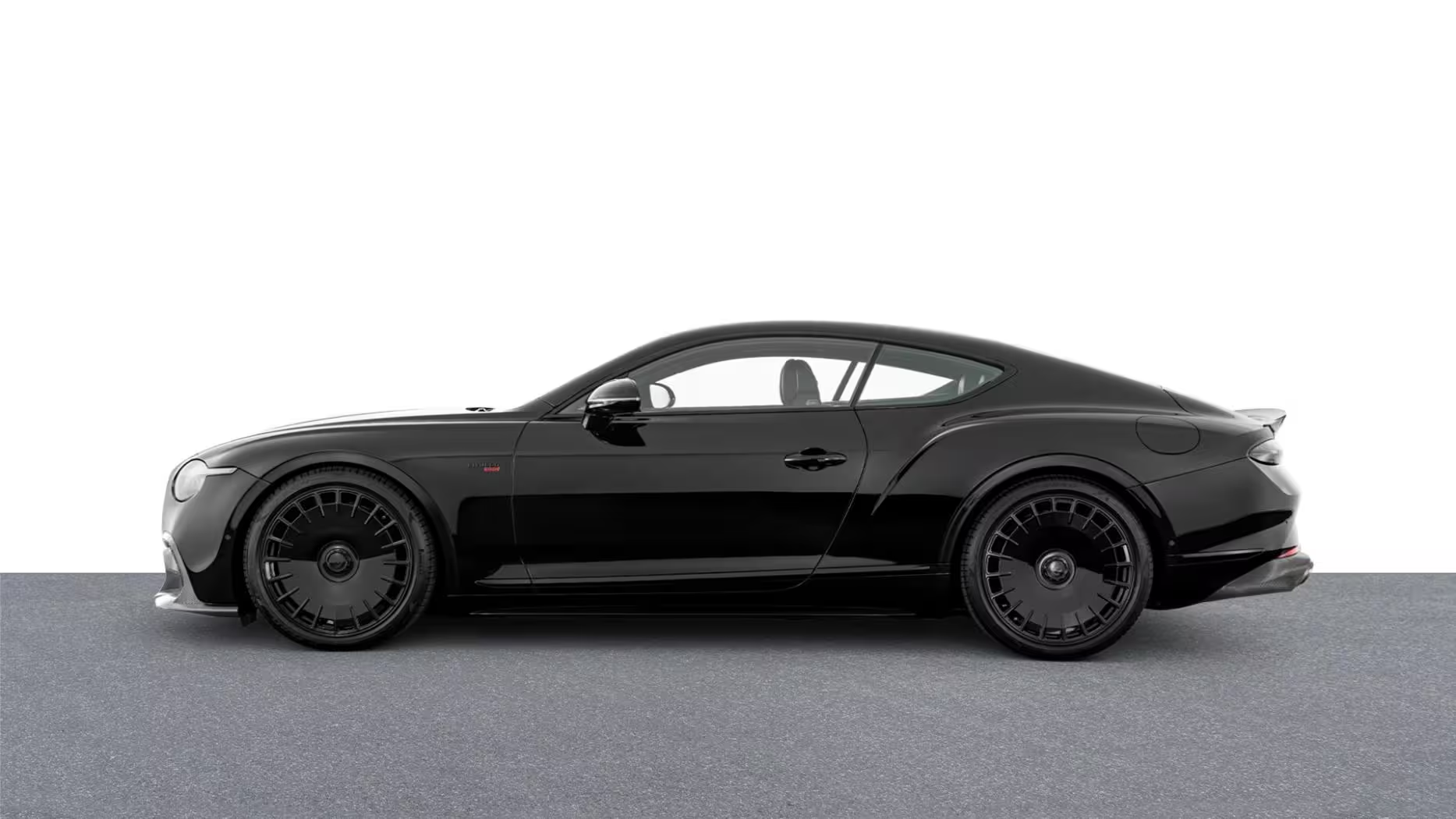
Key exterior changes include:

- Redesigned front fascia with larger, performance-focused intakes and integrated carbon front spoiler
- Exposed carbon fiber detailing across the lower front end and side skirts
- 22-inch Brabus Monoblock ZM "Platinum Edition" wheels finished in deep black
- Carbon fiber rear diffuser and four carbon/titanium tailpipe outlets in a bespoke Brabus exhaust
- 20 mm lower ride height courtesy of recalibrated air suspension
Brabus says the front fascia was sculpted to improve airflow to the engine’s cooling system and the oversized carbon-ceramic front brakes — necessary upgrades given the Conti GT Speed’s nearly 2.5-ton curb weight in plug-in form. The black 22-inch alloys are forged and CNC-machined, giving them premium strength and precise fitment to accommodate the massive brakes and revised wheel arch treatment.
Inside, the theme continues. Brabus reupholstered the cabin in deep black leather with lavish shell-pattern quilting and meticulous perforation. The center console and dashboard receive exposed carbon and anodized aluminum finishes in darker tones, while illuminated carbon door sills and a redesigned dashboard clock add bespoke touches. Even the luggage compartment gets matching leatherwork — a reminder Brabus treats the interior as completely configurable rather than merely modified.
"It’s more villain’s lair than aristocratic GT," one enthusiast quipped when first seeing the press photos — and that description isn’t far off.
Performance upgrades: where the ‘900’ comes from
Under the skin, Brabus focused on the internal combustion side of the plug-in V8 system. The stock Continental GT Speed pairs a twin-turbo 4.0-liter V8 with an electric motor and a 25.9 kWh lithium-ion battery, yielding factory figures around 782 PS and 1,000 Nm in the 2026 spec. Brabus’ engineers set out to substantially raise the V8’s contribution.
Major mechanical changes include:
- A pair of bespoke Brabus turbochargers replacing the factory units
- Flow-optimized carbon Brabus airbox and intake plumbing
- Reworked ECU mapping for ignition timing, injection strategy and boost control
- High-flow stainless-steel performance exhaust with valve control (multiple sound modes)
Those interventions deliver 710 PS (700 hp) from the combustion V8 alone. When combined with the electric motor, the plug-in hybrid system now produces 900 PS (888 hp) and 1,100 Nm (811 lb-ft) of torque. The drivetrain remains an all-wheel-drive layout routed through an 8-speed dual-clutch transmission.
Performance at a glance:

- Combined output: 900 PS (888 hp)
- Combined torque: 1,100 Nm (811 lb-ft)
- 0–100 km/h (0–62 mph): 2.9 seconds
- Top speed: 335 km/h (208 mph)
Those are supercar-baiting numbers that in real-world terms make the Brabus 900 Superblack one of the quickest heavy grand tourers on the market. The tuning house also tunes the exhaust valve mapping from a quiet "Coming Home" setting to a full-throated, motorsport-inspired V8 bark — giving drivers the option to dial in civility or spectacle.
Chassis and braking
To harness the newfound power, Brabus recalibrated the air suspension and retained the Continental’s gargantuan carbon ceramic brakes — which were already some of the largest you can fit outside hypercars like the Bugatti Chiron. Lowering the ride height by 20 mm sharpens the center of gravity and improves high-speed stability, while the bespoke wheels and tires are chosen to optimize load capability and contact patch under heavy acceleration.
Context: Brabus’ evolution and Bentley’s hybrid era
Brabus began in 1977 in Bottrop, Germany, as a Mercedes-Benz tuner. Founded by Bodo Buschmann and Klaus Brackmann, the company name is a portmanteau of the founders’ names and has evolved into more than a tuner: Brabus produces limited-run Masterpiece models and sometimes issues cars with their own VINs. Historically focused on Mercedes, Brabus now applies its expertise to a wider array of luxury and performance vehicles, occasionally working through its Startech subsidiary for different brands.
The Continental GT Speed’s shift from a W12 to a 4.0-liter V8 plug-in hybrid in 2024 marked a turning point. The V8 hybrid architecture offered tuners room to extract dramatic gains via boosted forced induction and recalibration while the battery-assisted torque delivery retains the GT’s characteristic grunt. Brabus’ 900 Superblack is an example of how a tuner can reframe a brand-new factory approach into a bespoke halo product.
How the Brabus 900 Superblack compares
Against the standard Continental GT Speed, the 900 Superblack is markedly more aggressive both to look at and to drive. Compared to the former W12 Speed models, the Brabus 900 is quicker in a straight line thanks to its extraordinary combined output, but it carries the extra mass of the hybrid battery — which Brabus tackles through suspension tuning and aerodynamic refinements.
Rivals in the luxury tuning space include boutique houses that focus on bespoke upgrades for Bentley, Rolls-Royce and high-end German marques. However, few match Brabus’ blend of visual cohesion, carbon-fiber detailing and outright power. For buyers who want a dramatic aesthetic and supercar-class acceleration while keeping the essence of a grand tourer, the 900 Superblack is a compelling option.
Market positioning and availability
Brabus tends to offer its Masterpiece builds in very limited runs, often priced well above the donor car due to bespoke materials, extensive labor and performance hardware. While Brabus has not published global production numbers for the 900 Superblack, the brand’s history suggests exclusivity: custom interiors, carbon work and drivetrain upgrades are expensive both in parts and in craftsmanship.
Potential buyers should expect bespoke buyer consultations, personalization options (Brabus readily adapts color and trim choices despite the Superblack theme) and a delivery lead time that reflects the project’s hand-built nature. The coupe’s dramatic black-on-black styling will appeal to clients who want a statement vehicle with both presence and pace.
What to consider before buying a Brabus 900 Superblack
- Operating weight: the hybrid system and performance hardware make the car heavy, which impacts fuel consumption and handling nuances
- Servicing: bespoke components may require specialized maintenance at authorized Brabus locations
- Noise and emissions: adjustable exhaust modes help, but the car’s performance tuning increases sound and potential emissions relative to stock settings
Final thoughts
The Brabus 900 Superblack is a vivid example of what an elite tuner can do when given a modern hybrid grand tourer as a canvas. It preserves the Continental’s luxury essence — plush leather, quiet cruising capability and long-distance comfort — while amplifying the drama through dark styling and an aggressive power upgrade. For buyers seeking a Bentley that aggressively diverges from patrician elegance toward something more theatrical and performance-focused, the 900 Superblack will be hard to ignore.
Whether you view it as artful customization or overt automotive theatre, Brabus’ work on the Continental GT Speed proves hybrid architectures can be tuned to produce visceral, high-powered grand tourers that still feel at home on the highway and on the open road.
Highlights:
- 900 PS combined output, 1,100 Nm torque
- 0–100 km/h in 2.9 seconds, top speed 335 km/h
- Full black design theme with carbon interior and 22-inch forged wheels
- Bespoke Brabus turbochargers, airbox and ECU remap
Limited-run, highly bespoke Masterpiece-level project

Leave a Comment
Comments (3)
Looks killer, but feels a bit theatrical. Brabus nails the drama, yet practicality? not convinced. Still, would love a test drive lol
900 PS ok, but is the quoted 2.9s 0-100 realistic for a 2.5t hybrid? Also how's the battery life after tuning and service costs? sounds spicy tho
Holy... 900 PS in a Bentley? That's insane! Looks like a villain car, love it but wonder about weight and range, hybrid battery.. still, what a statement