
5 Minutes
Volkswagen confirms production name: Tukan
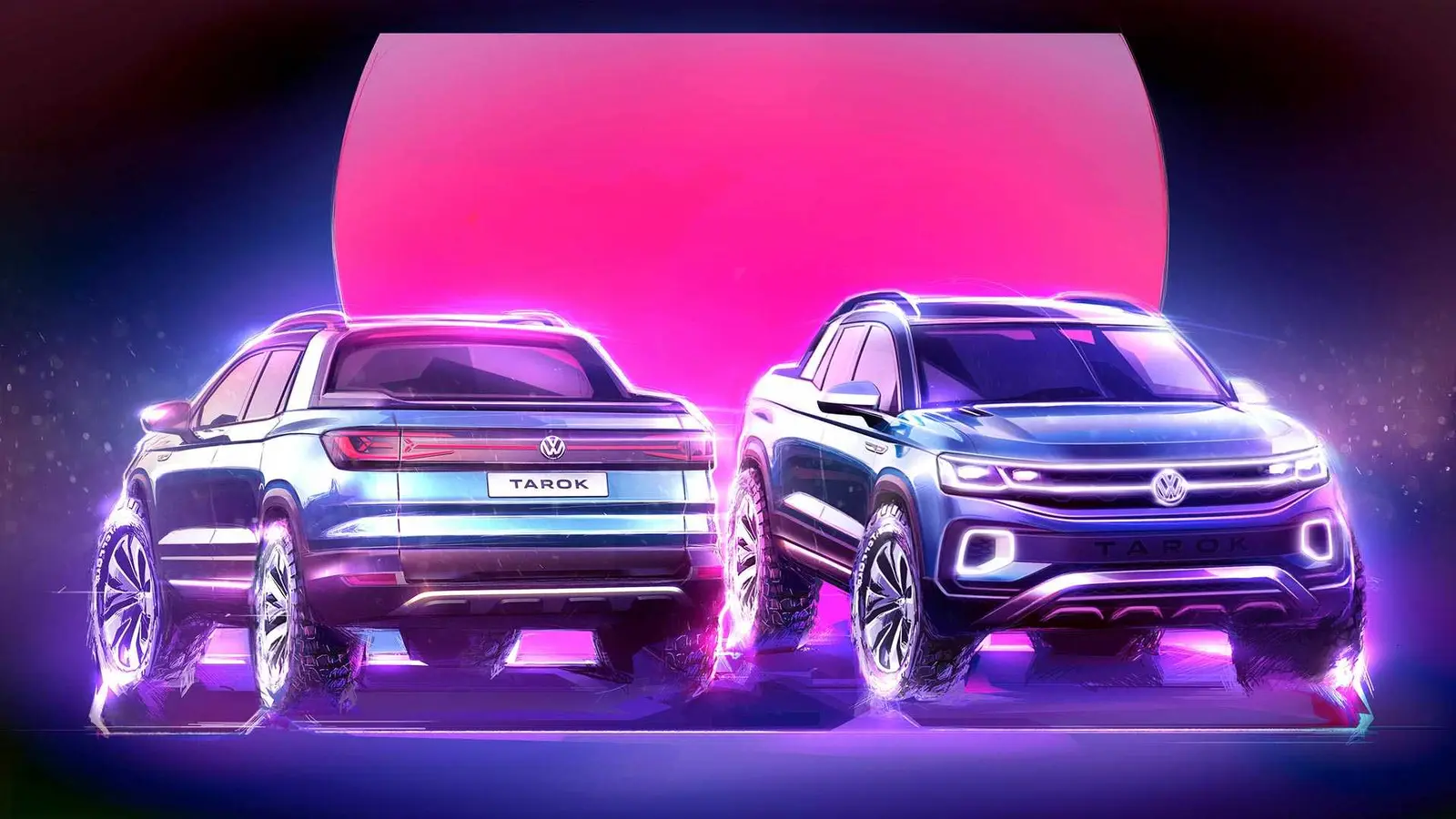
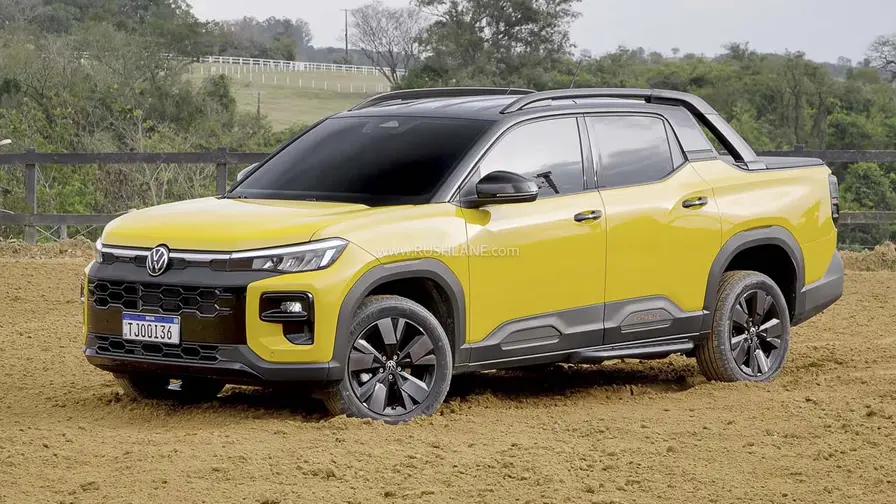
Volkswagen has officially named the production version of its Tarok concept the Tukan — a compact, unibody pickup developed and built in Brazil. Revealed as a concept in 2018 at the São Paulo Motor Show, the Tarok spent years in development before morphing into this production model slated to arrive as early as 2027. Volkswagen plans to manufacture the Tukan at its São José dos Pinhais plant in Paraná, and the project has been tracked internally as VW 247 or Udara.
.avif)
From Tarok concept to road-ready Tukan
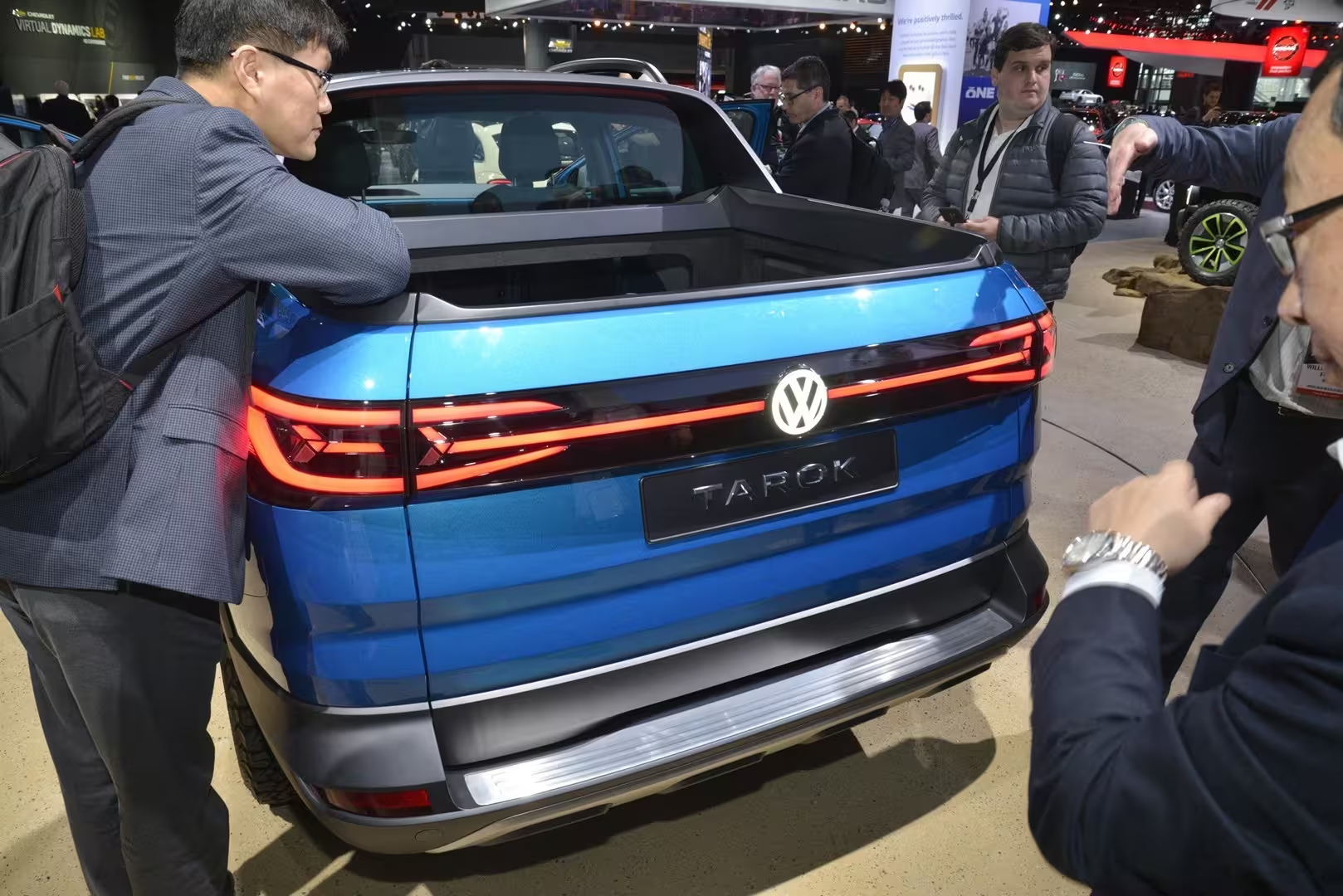
The new images released by Volkswagen show a vehicle that carries over much of the Tarok’s silhouette: short rear overhang, pronounced rear fenders and compact proportions. Small but telling details have changed — the silver C-pillar treatment seen on the concept is gone — but the overall profile remains familiar. That continuity suggests the Tukan is more evolution than reinvention, blending concept styling with production practicality.
Platform and cost-saving choices
To manage development costs and speed time to market, Volkswagen reportedly used the T-Cross front structure up to the B-pillar. In effect, the Tukan shares the MQB A0 architecture with the T-Cross, but adapts it to an uncommon unibody pickup body. Local Brazilian sources indicate Volkswagen retained as much commonality as possible while engineering the Tukan’s unique rear section.
.avif)
Three notable departures for the MQB A0 platform
The Tukan brings several features to the MQB A0 family not seen before on that platform:
- A 1.5-liter TSI evo2 internal combustion engine, produced locally at São Carlos, configured as a flex-fuel unit to run on gasoline and ethanol in any proportion.
- A 48V mild-hybrid system paired with that TSI to improve fuel economy — a notable addition for the Brazilian market.
- A live rear axle with leaf springs on single-cab variants to maximize load capacity and durability, a pragmatic choice for buyers who use pickups for work.
Powertrain and drivetrain choices

Volkswagen will introduce the 1.5 TSI evo2 in Brazil via the Tukan. While the engine is already known in European markets, Brazilian tuning is expected to deliver higher output figures than the European spec, and the native flex-fuel calibration allows compatibility with ethanol blends. The 48V mild-hybrid system is a first for this segment locally and should improve low-speed efficiency and fuel consumption in mixed-city driving.
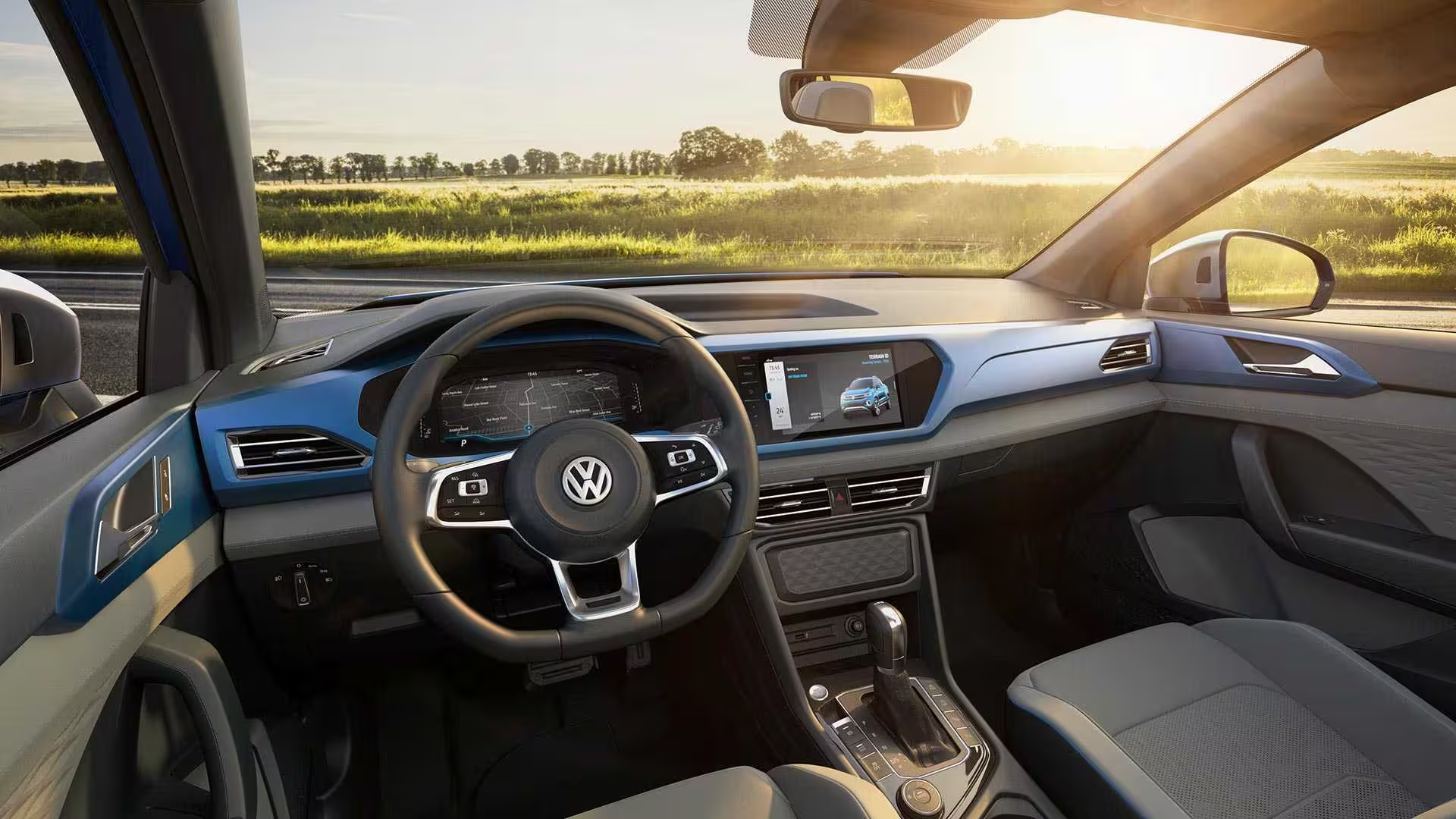
In a somewhat surprising decision, Volkswagen plans to offer a 7-speed DSG dual-clutch gearbox — the same unit used in the Jetta — rather than a conventional 6-speed automatic or an 8-speed Aisin automatic, which some competitors use to prioritize fuel economy. The DSG choice reflects VW’s strategy of leveraging existing components for refinement and driving feel, even if it bucks local market conventions.
Design and practicality: what the Tukan keeps (and loses)
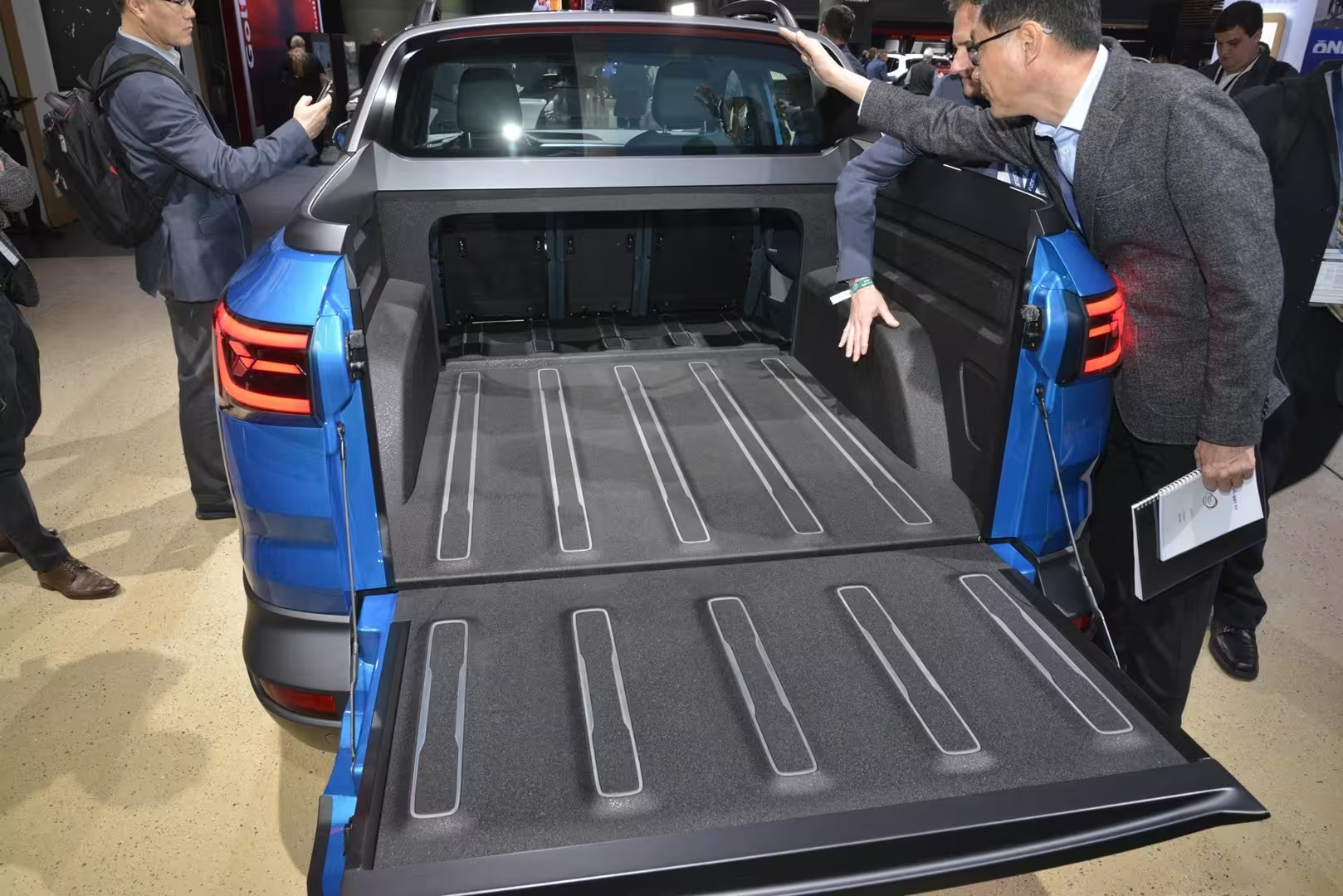
One detail enthusiasts asked about was the Tarok’s midgate — a fold-down section that would let owners extend the load bed into the cabin, similar to the Chevrolet Avalanche. Current evidence suggests Volkswagen removed that feature from the production Tukan, likely to reduce cost and long-term maintenance complexity. The result is a conventional pickup bed design, but with compact dimensions and a strong visual identity tied to the T-Cross and Tarok styling cues.
Interior, trim and ride targets appear to differ between single-cab and double-cab versions. Single-cab Tukans will use the more rugged live axle and leaf spring setup to maximize payload, while double-cab models are expected to receive a more refined rear suspension aimed at ride comfort and handling for family and urban buyers.
Market positioning: who is the Tukan aimed at?
Volkswagen’s strategy looks twofold:
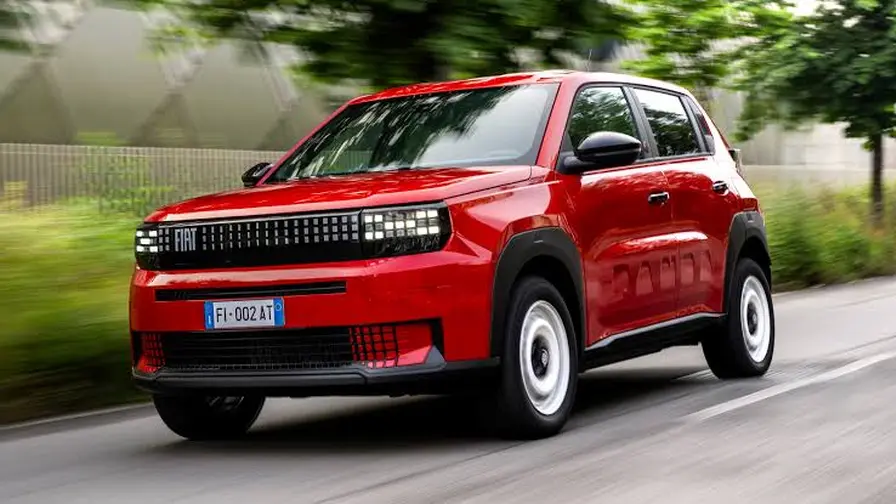
- Single-cab Tukan variants will go head-to-head with the Fiat Strada, Brazil’s best-selling small pickup known for its utility and reliability.
- Double-cab Tukans will target buyers who currently consider the Fiat Toro, offering more passenger-focused comfort and a higher specification level.
To capture broader demand, VW will likely offer a range of trims, including value-focused double-cab versions designed to undercut competitors on price while retaining core Tukan capabilities. Expect the Tukan to replace the aging Saveiro in Volkswagen showrooms — the Saveiro has been on sale since 2010 and is due for retirement once Tukan arrives.
Export potential and trade considerations
Automakers in Brazil often build models with export markets in mind. The Tukan could reach Mexico, Argentina, Chile and other Latin American markets. The recent Mercosur-EU trade developments may even open the door to some European sales.
However, the Tukan’s prospects for the United States are limited. Volkswagen’s Chattanooga plant doesn’t produce MQB A0 models, and importing a Brazilian-built MQB A0 pickup into the US would likely run afoul of tariffs like the so-called Chicken Tax — so American buyers will probably only encounter the Tukan when traveling abroad or through parallel imports.
What this means for buyers and the segment
The Tukan represents Volkswagen’s comprehensive attempt to bring a modern, locally engineered unibody pickup to markets where utility and fuel flexibility matter. Key takeaways for buyers:
- Flex-fuel 1.5 TSI evo2 plus 48V mild-hybrid: improved fuel economy and ethanol capability.
- DSG 7-speed gearbox: a driving-focused choice that may stand out among rivals.
- Practical rear suspension choices: live axle/leaf springs for work-oriented single-cabs; refined suspension for double-cabs.
"The Tukan is Volkswagen’s pragmatic answer to a growing unibody pickup segment in Latin America — designed for both work and family life," said one industry analyst. "It blends platform sharing with targeted engineering choices that prioritize local needs."
Quick specs and highlights
- Platform: MQB A0 (shared with T-Cross up to B-pillar)
- Engine: 1.5-liter TSI evo2 (flex-fuel, Brazil)
- Hybrid: 48V mild-hybrid assistance
- Transmission: 7-speed DSG (dual-clutch)
- Body styles: single-cab and double-cab
- Rear suspension: live axle with leaf springs (single-cab), refined setup for double-cab
Final thought
The Volkswagen Tukan is shaping up to be a strategically designed compact pickup that leverages existing Volkswagen architecture while introducing local powertrain innovations. It’s poised to replace the Saveiro, challenge segment leaders like the Fiat Strada, and offer an alternative for buyers who want a modern, fuel-efficient small pickup tailored to Latin American markets. Expect more details — including official power and payload figures — as Volkswagen moves closer to the Tukan’s market debut in 2027.

Leave a Comment
Comments (2)
Love that VW kept the Tarok look, finally a modern small pickup for Brazil. Live axle for single cab makes sense, hope pricing is aggressive!
A DSG in a flex-fuel pickup? curious but skeptical. 48V mild-hybrid sounds nice, but will it beat Fiat on reliability and costs? Also where's the midgate… missed chance imo