
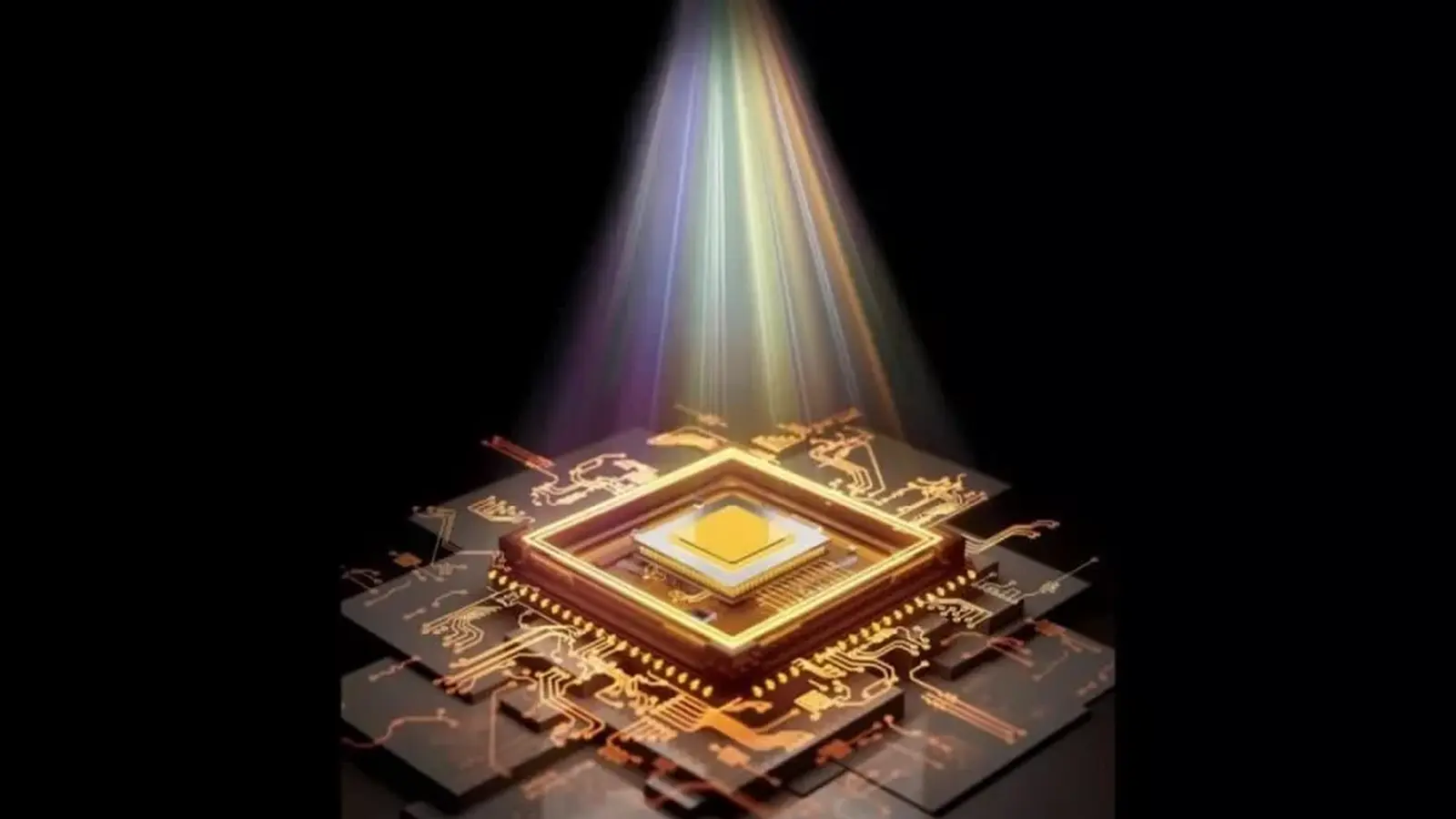
Chinese researchers say they have built a new class of photonic AI chips that dramatically speed up specific machine‑learning tasks — in some cases claiming performance over 100× that of conventional GPUs while using far less energy. These devices aren’t drop‑in replacements for general‑purpose accelerators, but they could reshape how we handle image, video and vision workloads.
What are these photonic AI chips?
Two standout prototypes have emerged from top Chinese universities. ACCEL, developed at Tsinghua University, is a hybrid design combining photonic elements with analog electronic circuits. Built with SMIC manufacturing processes, the team reports ACCEL can hit around 4.6 petaflops on certain analog workloads while drawing only a fraction of the power used by typical GPUs.
The other project, LightGen — a collaboration between Shanghai Jiao Tong and Tsinghua — is a fully optical chip packing more than two million "photonic neurons." According to the researchers, LightGen delivers large speed and efficiency gains in narrowly defined tasks such as image generation, style transfer, denoising and 3D image processing.
Why photonics can outpace electrons for some AI tasks
Modern GPUs like Nvidia’s A100 rely on electron flow through billions of transistors. That architecture excels at step‑by‑step execution and flexible programming, but it also brings high energy use, significant heat output, and dependence on advanced fabrication nodes.
Photonic chips, by contrast, compute with light. They perform operations via optical interference and analog transformations, which can execute certain math operations in parallel at the speed of light. That makes them exceptionally fast and efficient for pre‑defined, matrix‑heavy workloads — and they can sometimes be fabricated with more mature process technology.
Real gains — but in a narrow lane
Reports suggest ACCEL and LightGen beat mainstream GPUs by large margins in specific benchmarks tied to vision and generative tasks. However, the teams are careful to stress limits: these photonic processors run predefined analog computations and aren’t suitable for general code execution or memory‑intensive operations. In short, they’re specialized accelerators rather than universal GPU replacements.
- Strengths: Extremely fast on matrix and convolution‑style ops, much lower energy per operation, and strong potential for image/video/vision pipelines.
- Limitations: Poor fit for general‑purpose workloads, limited programmability, and constrained memory handling.
What this means for AI hardware
Imagine AI pipelines where the heaviest visual processing is offloaded to low‑power photonic nodes, while GPUs handle flexible training, memory management and broader workloads. That hybrid approach could reduce energy costs and accelerate real‑time applications like on‑device inference, video processing farms and certain generative services.
Importantly, the Chinese teams published their findings in Science, underscoring the academic validation behind the claims. The path from lab prototype to mass deployment remains challenging: integration, cost, programming models and ecosystem support are all hurdles to clear.
So should the industry panic? Not yet. Photonic AI chips look poised to complement GPUs in targeted domains rather than displace them across the board. But for companies focused on visual AI at scale, these developments are worth watching closely.


Leave a Comment
Comments
No comments yet. Be the first.