
3 Minutes
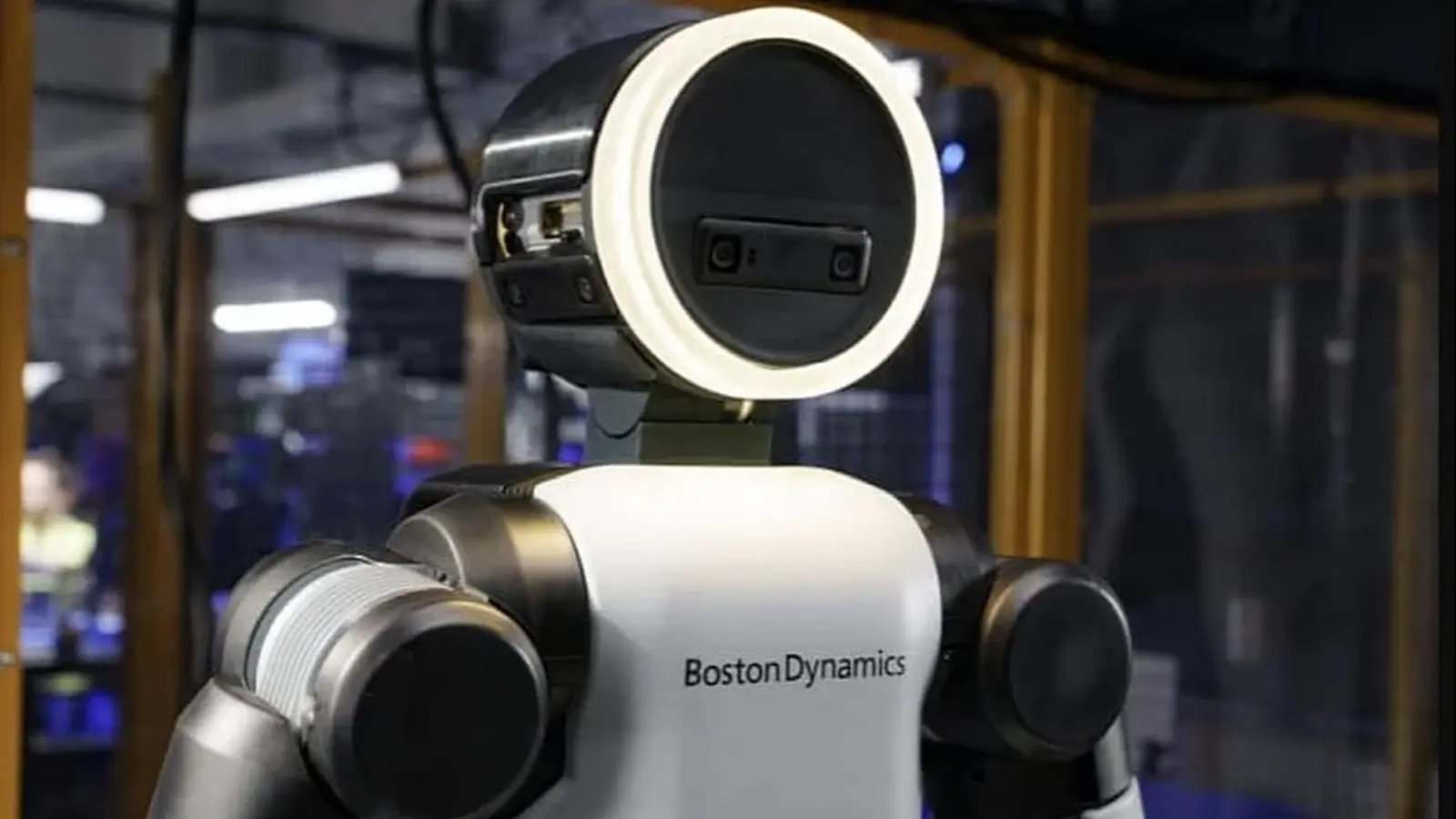
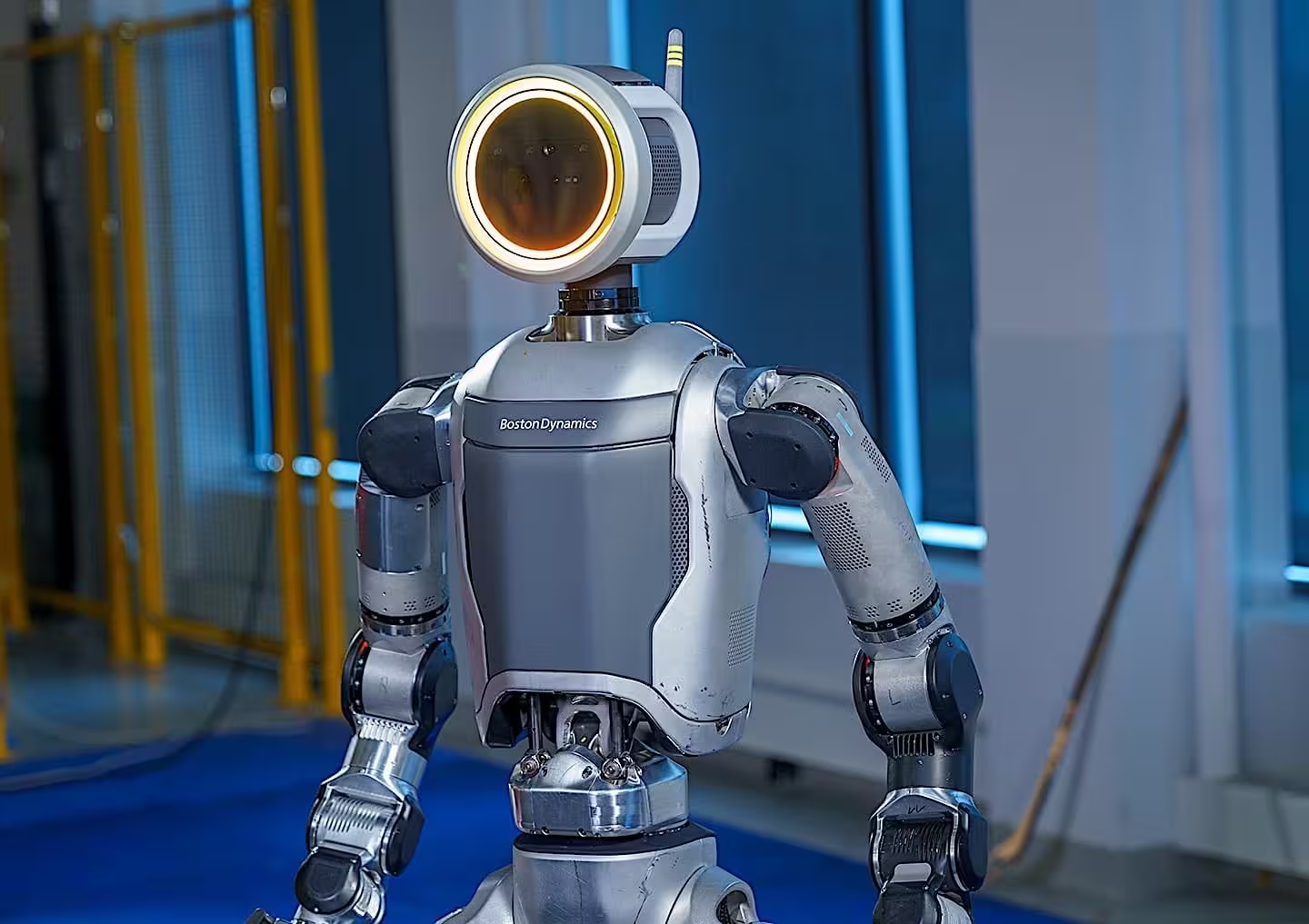
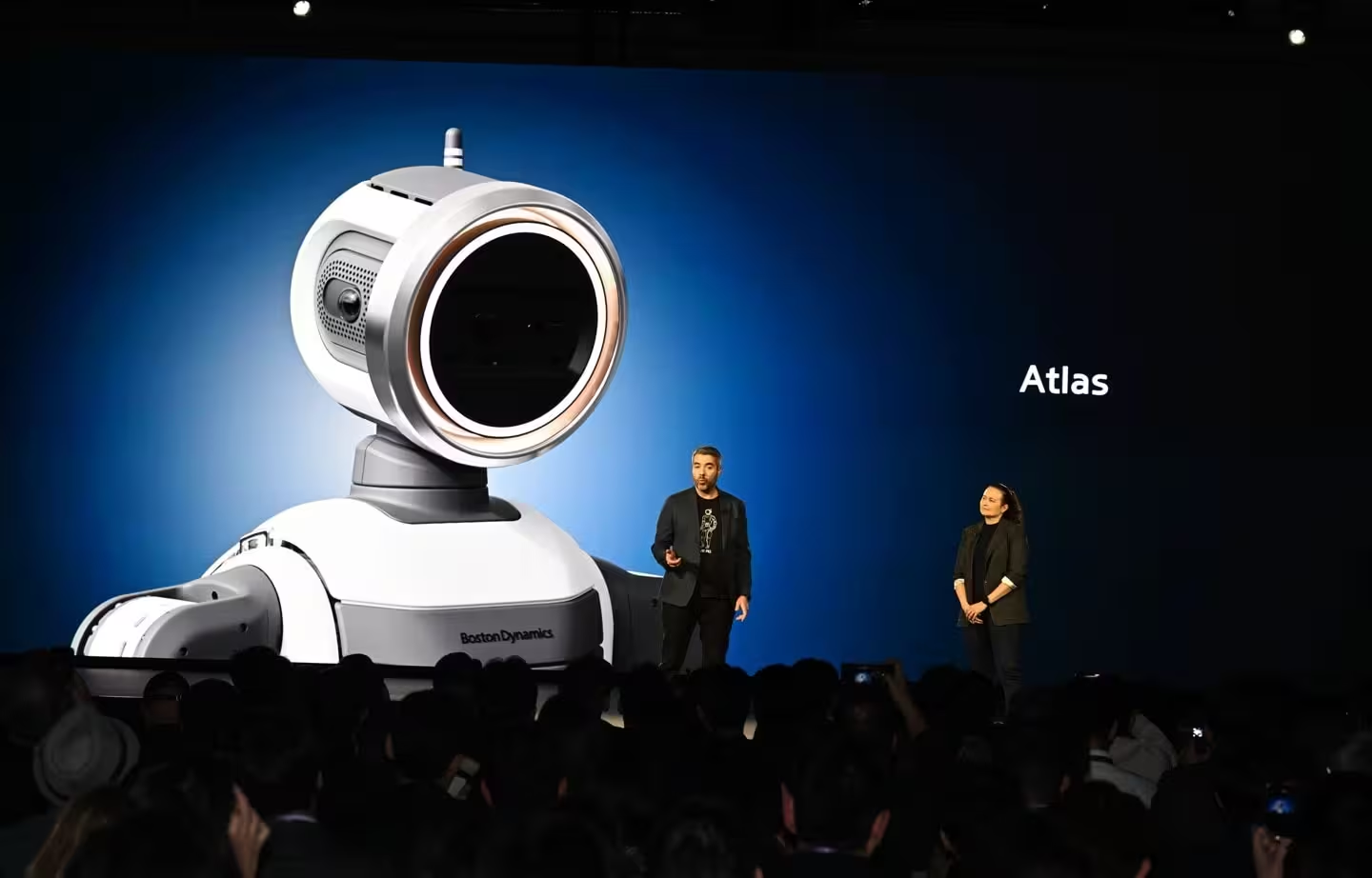
Boston Dynamics has unveiled a product-ready Atlas — the first humanoid robot it plans to mass-produce — and it isn't a sci-fi distant dream anymore. Revealed at CES and backed by Hyundai, Atlas is being positioned as a factory-ready, collaborative biped that could appear on assembly lines within years.
From DARPA prototype to a production line
Atlas began life in 2013 as a DARPA challenge entry: a heavy, hydraulics-driven research platform designed to prove bipedal mobility. Over the past decade it evolved steadily, and the latest model swaps hydraulics for electric actuation. That change delivers smoother, more precise motion while reducing complexity — a necessary step toward reliable, repeatable production.
What the production plan looks like
Hyundai, which acquired Boston Dynamics' parent company, announced a multibillion-dollar push into U.S. robotics manufacturing. Part of that plan includes a factory capable of producing tens of thousands of robots annually — a headline number often cited is 30,000 units per year once scale is reached. Initial production starts immediately at Boston Dynamics' headquarters, with early deployments earmarked for Hyundai Group facilities.
Specs and capabilities that matter on the factory floor
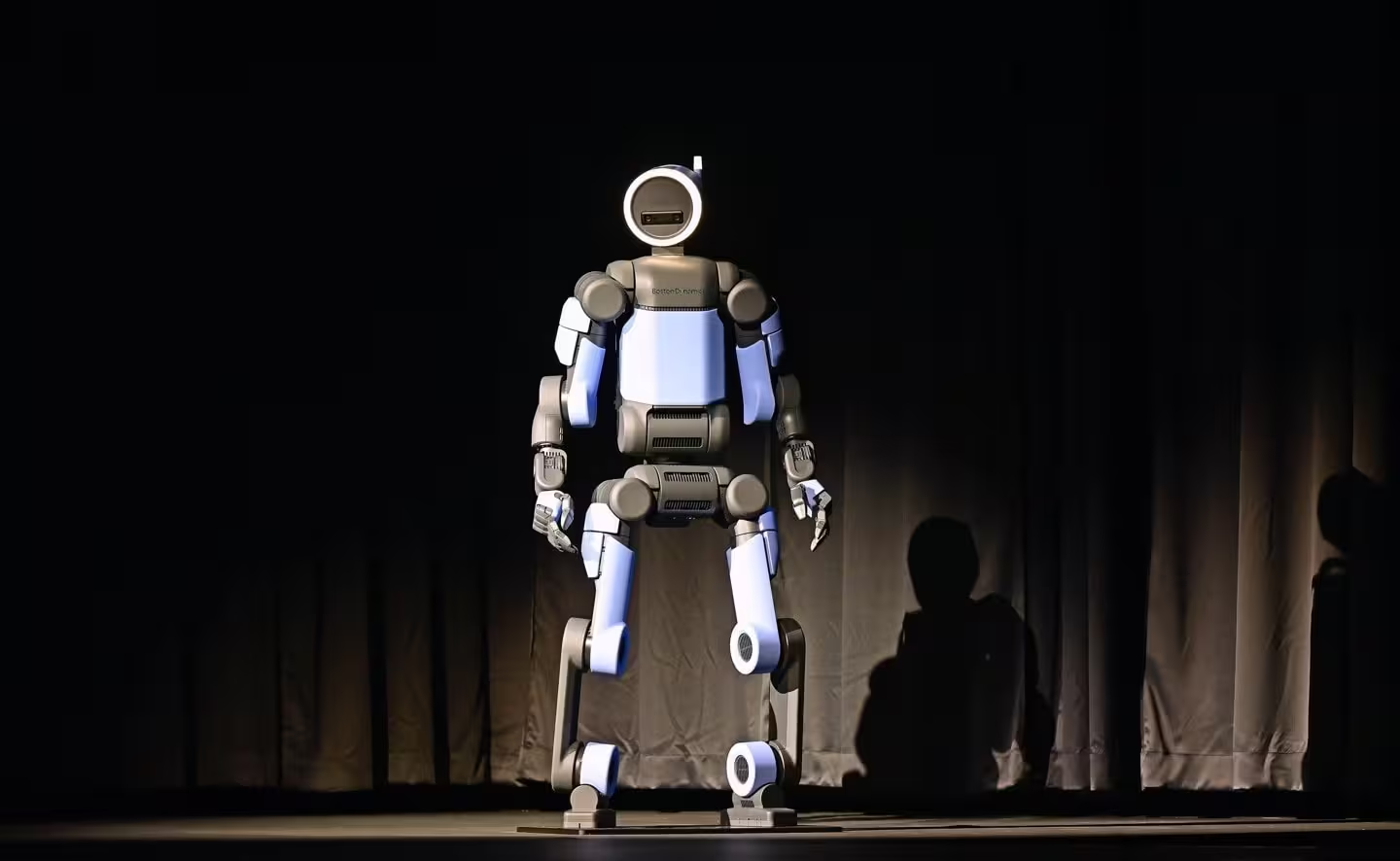
The new Atlas is a compact, industrial-form humanoid. It stands about five feet tall, weighs roughly 196 pounds, and combines titanium and aluminum 3D-printed parts for strength and lightness. Its electrically powered architecture provides 56 degrees of freedom via 28 fully rotational joints, allowing it to reach and manipulate objects up to roughly 2.3 meters away and lift payloads near 50 kilograms.
Built to handle real-world plant conditions, Atlas is water-resistant, operates across a wide temperature range, and can navigate uneven, unstructured terrain. Safety is central: the robot includes human detection and fenceless-guarding modes so it can share space with people, and it offers three control modes — autonomous, teleoperated, or tablet-guided.
Practical jobs, fleet learning and autonomous charging
Early use cases focus on repetitive but essential tasks: parts sequencing, simple material handling, and other line-side jobs that free human workers for higher-skill activities. Hyundai plans initial rollouts in 2028, with more advanced assembly and heavy-load operations expected to follow as software matures.
Atlas also supports fleet learning: when one robot masters a task, that routine can be pushed across the entire fleet, dramatically shortening deployment cycles. Battery management is handled autonomously too — Atlas can navigate to a charger, swap its depleted battery for a charged one, and resume work without human intervention.
AI training, partners and price expectations
Boston Dynamics has already said many of the first production units are allocated to partners, including Hyundai and Google DeepMind. DeepMind will help train Atlas’ control systems, potentially creating one of the first widely deployed physical embodiments of advanced AI.
Price hasn’t been disclosed, but don't expect low-cost consumer figures. Boston Dynamics' Spot robot starts around $80,000 today, so Atlas — a humanoid with industrial-grade hardware and autonomy — will likely command a premium.
Why this matters
Imagine routine, risky, or monotonous tasks handled reliably by robots that work alongside humans. That’s the pitch here: higher productivity, fewer injuries, and faster scaling of complex operations. At the same time, mass-produced humanoids raise real questions about workforce shifts, safety standards, and regulatory oversight — debates that will accelerate as Atlas moves from demo stage to day-to-day reality.


Leave a Comment
Comments
No comments yet. Be the first.