
3 Minutes
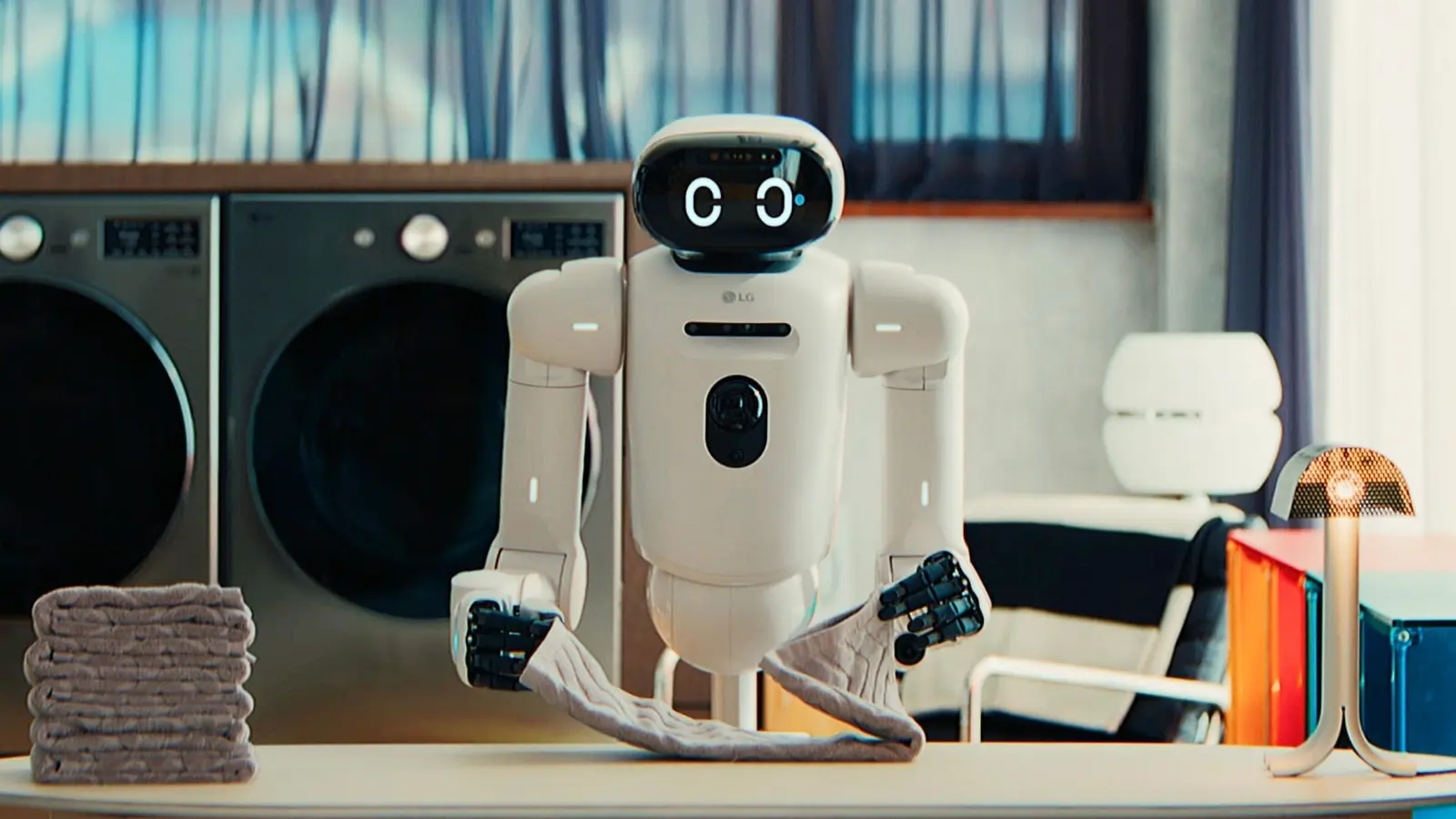
LG Electronics is bringing a new kind of household helper to CES 2026: LG CLOiD, an AI-powered home robot that teams up with smart appliances to cut the time and physical effort of routine chores. It’s built to understand daily habits, not just follow fixed commands.
Real-world demos: breakfast to laundry
At CES, LG will stage realistic home scenes to show CLOiD in action. In one demo the robot takes milk from a fridge and slides a croissant into an oven to prepare breakfast. Later, after occupants leave, CLOiD starts a laundry cycle, then folds and stacks clothes once they're dry. The point is to demonstrate habit-based automation — the robot predicts and coordinates tasks across devices, rather than waiting for manual instructions.
Design tailored for living spaces
CLOiD’s form is explicitly made for homes. Its head houses the main chipset, display, cameras, speaker, and multiple sensors — plus voice-based generative AI — so it can talk, show expressions, and learn a home's layout. The torso includes two articulated arms and a tilting mechanism to change reach, while the wheeled base uses autonomous navigation tech derived from LG’s robot vacuums and the LG Q9.
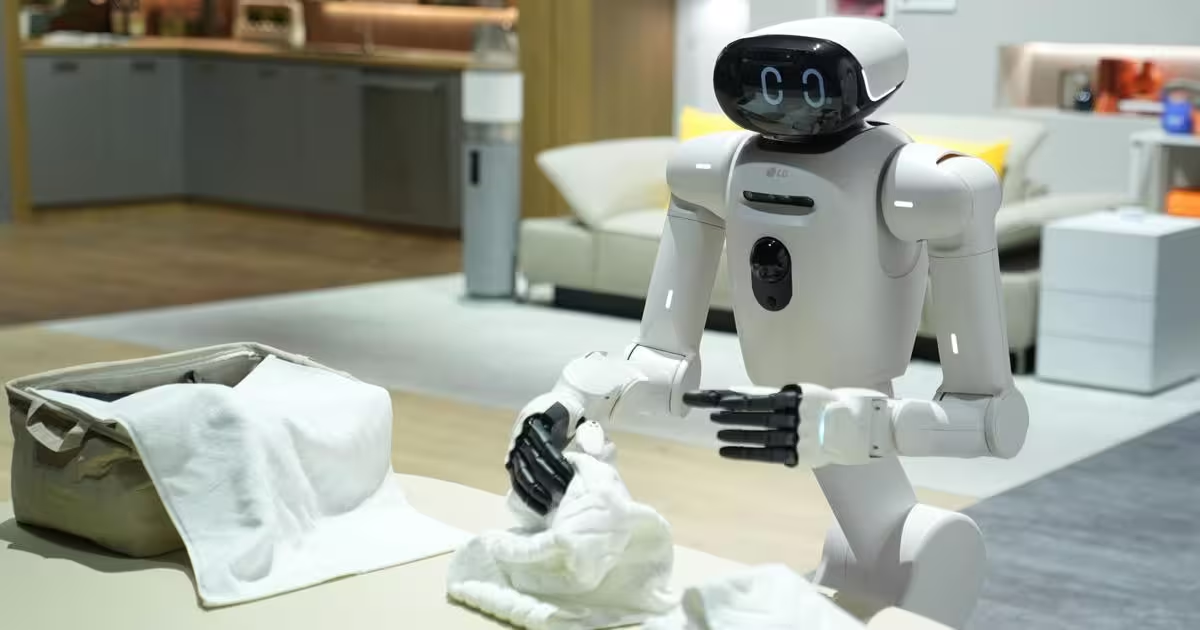
- Arms: seven degrees of freedom per arm for human-like movement.
- Hands: five independently actuated fingers for precise gripping of household items.
- Torso: a tilt mechanism to reach both low and high surfaces.
- Base: low center of gravity and collision-safe design to stay stable around children and pets.
Smarts under the hood: Physical AI and AXIUM actuators
At the core of CLOiD is LG’s Physical AI: a fusion of Vision Language Models that turn images and video into language-based understanding, and Vision Language Action models that map visual and verbal cues to physical actions. LG says these systems were trained on tens of thousands of hours of household task data so the robot can learn routines rather than relying on rigid commands.
Alongside the robot, LG announced Actuator AXIUM — a new actuator brand for service robots. Actuators combine motors, drives, and reducers and are among the most critical, costly parts of a robot. LG plans to apply its appliance manufacturing expertise to produce compact, efficient, high-torque designs that aim to lower cost and improve reliability.
Why this matters
Imagine a home assistant that quietly handles morning prep, runs laundry when you’re out, and puts away folded clothes — all while adapting to your habits. For busy households, caregivers, and people with mobility challenges, that can be a real reduction in daily workload. Of course, questions remain about privacy, long-term reliability, and price. Still, CLOiD represents a clear step toward service robots that integrate tightly with smart homes.

Leave a Comment
Comments
No comments yet. Be the first.