
5 Minutes
Europe's Valo takes a giant leap: hybrid specs revealed
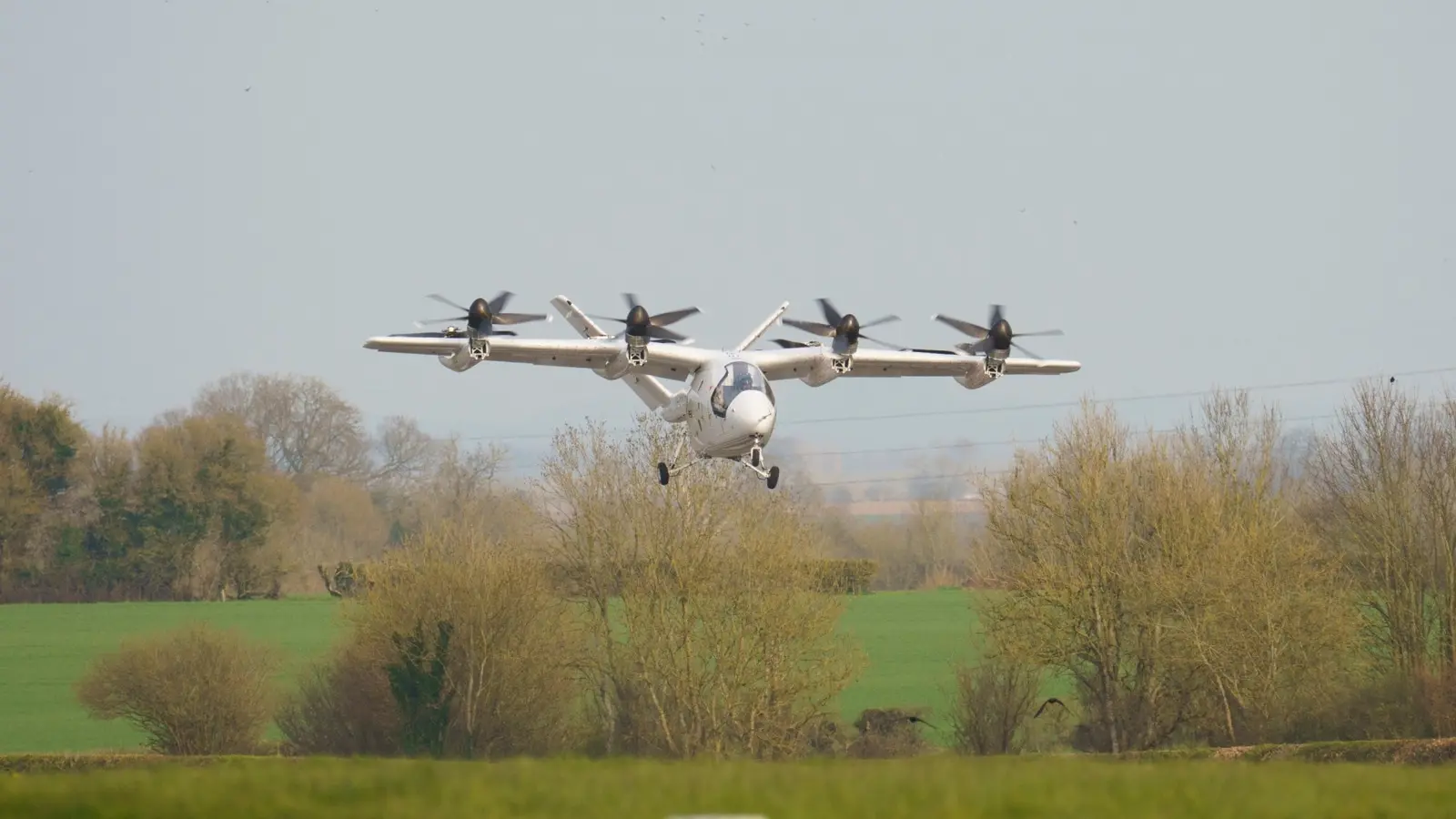
British developer Vertical Aerospace has released the first official specifications for a hybrid-electric version of its Valo eVTOL, marking a major milestone for urban air mobility and regional air taxi ambitions. The announcement, timed with the start of systems testing in late May 2026, gives the clearest picture yet of how far and heavy Valo may fly when it swaps pure batteries for a hybrid powertrain.
From commuter eVTOL to long-range hybrid
Until now the Valo — previously known as the VX4 — has been promoted primarily as an all-electric, short-range air taxi designed for urban corridors. The electric Valo runs on eight in-house battery packs driving eight Evolito electric motors, carries four passengers plus roughly 550 kg (1,200 lb) of cargo, and promises a maximum range of about 100 miles (161 km) with a top speed near 150 mph (241 km/h).

The newly disclosed hybrid variant is a different proposition. With a turbine-powered generator that can run on sustainable aviation fuel (SAF) paired with electric systems, Vertical claims the hybrid Valo will extend range dramatically — up to approximately 1,000 miles (1,610 km) — while doubling the maximum payload to around 1,100 kg (2,425 lb). That leap in capability positions the hybrid Valo for roles beyond short hop urban flights: longer regional routes, logistical missions, and even military support applications.
Performance, redundancy and mission flexibility
Vertical’s hybrid design targets both piloted and autonomous operations, integrating a Honeywell-supplied flight control architecture to manage transitions, system response and fault modes. For defense or security operations, the company highlights low-noise and reduced-heat-signature operating modes and emphasizes built-in redundancy and damage tolerance that could allow the aircraft to sustain some level of damage and still return safely.

Quote highlight:
- 'Full system integration and validation of the hybrid powertrain is underway, including turbine, generator and electrical systems,' the company said as it prepared for ground and flight testing at Cotswold Airport.
What riders and operators should expect
Key specs and takeaways:
- Electric Valo: ~100 miles (161 km) range, 4 passengers, ~550 kg cargo, top speed ~150 mph (241 km/h).
- Hybrid Valo: up to ~1,000 miles (1,610 km) range, ~1,100 kg payload, turbine + generator running on SAF.
- Flight control: Honeywell systems enabling piloted and autonomous modes.
- Suppliers: Hyundai WIA and Stirling Dynamics are developing bespoke landing gear.
.avif "Toyota-Backed Joby eVTOL to Showcase Electric Air Taxi at EXPO 2025 Osaka")
These figures suggest a two-pronged market strategy: a battery-only Valo for dense metro-to-metro commutes, and a hybrid for longer regional legs, freight, or specialized missions. The hybrid’s range and payload make it uniquely suited for routes where charging infrastructure is limited or response time and endurance are critical.

Testing, certification and the road to service
Vertical has begun systems testing of the hybrid powertrain and expects to move into flight trials soon. The company is assembling seven electric Valo airframes to support a critical design review and global certification process with EASA, the FAA, ANAC (Brazil) and JCAB (Japan). Flight demonstrations are scheduled to start publicly at air shows, beginning with Farnborough in July.
A prototype hybrid is anticipated to fly from Vertical’s Cotswold Airport base in the near term, though precise timelines for certification and commercial service remain dependent on test outcomes and regulators' reviews.
Market positioning and partnerships
Vertical expects the Valo to enter service around 2028. Initial commercial routes under consideration include Canary Wharf to Heathrow in London and a premium JFK-to-Manhattan shuttle in the US. Fleet rollouts could be sizeable: Vertical projects around 1,500 Valos in service within a few years, with launch customers and partners such as American Airlines, Avolon, GOL and Japan Airlines already involved. Discussions are ongoing with additional operators in India and Japan.
From an industry perspective, the hybrid Valo helps bridge the gap between eVTOL urban air mobility and more conventional regional aircraft. Its combination of electric propulsion and a turbine generator running on SAF addresses range anxiety and operational flexibility — two major barriers to broader adoption.
Industry context and competitive landscape
Valo’s recent two-way piloted thrustborne transition — taking off vertically, transitioning to wing-borne flight, then reverting to vertical landing — was only the second such public achievement after Joby Aviation’s 2025 milestone. That engineering feat is central to what makes eVTOLs commercially useful but remains technically demanding.
Meanwhile, Vertical is locked in a legal dispute with Archer Aviation, which alleges the Valo borrows design and flight-control elements from Archer’s Midnight. Vertical has strongly denied those claims, maintaining the Valo is the result of proprietary technology and an international IP portfolio.

Why this matters to automotive and mobility watchers
Automotive industry observers should follow Valo's evolution because the platform intersects with broader mobility trends: electrification, autonomy, micromobility integration and multi-modal network planning. Automakers and airlines are already partnering with eVTOL developers to add vertical mobility to urban transport ecosystems — and a hybrid variant changes the calculus by offering flexible range and payload for new logistics and passenger services.
In short, Vertical Aerospace’s hybrid Valo could be the practical bridge between city air taxis and longer-distance airborne mobility. If testing and certification go smoothly, the hybrid Valo will expand use cases and bring airborne regional transport closer to mainstream reality.

Leave a Comment
Comments (2)
Wow this could actually change travel! Hybrid kills range anxiety, but 2028 launch seems optimistic... noise, regs, cost - big unknowns. fingers crossed
is this even real? 1,000 mile range from a hybrid Valo sounds wild, but what's the fuel burn, maintenance & operational cost? if that holds, wow.